Prefer AI? Summarize this with ChatGPT,
Claude,
Google AI Overview, or
Perplexity.
Most founders hear "publish on Medium" and assume it is an easy SEO win. It usually is not.
If you want to learn how to get backlinks from Medium, the first thing to understand is that Medium is better as a distribution channel than a direct link-equity play. The link itself usually will not do much heavy SEO lifting. The upside is the visibility around the article: readers, shares, mentions, and the occasional secondary backlink from someone who finds your piece and cites it elsewhere.
Quick answer: Medium links are
nofollow— direct SEO value is minimal. The real play is referral traffic and secondary backlinks when readers cite your work elsewhere. Publish on your site first, wait for indexing, then import to Medium with canonical handling. Keep links to one or two per article, placed only where they genuinely help the reader.
Why Medium backlinks work differently
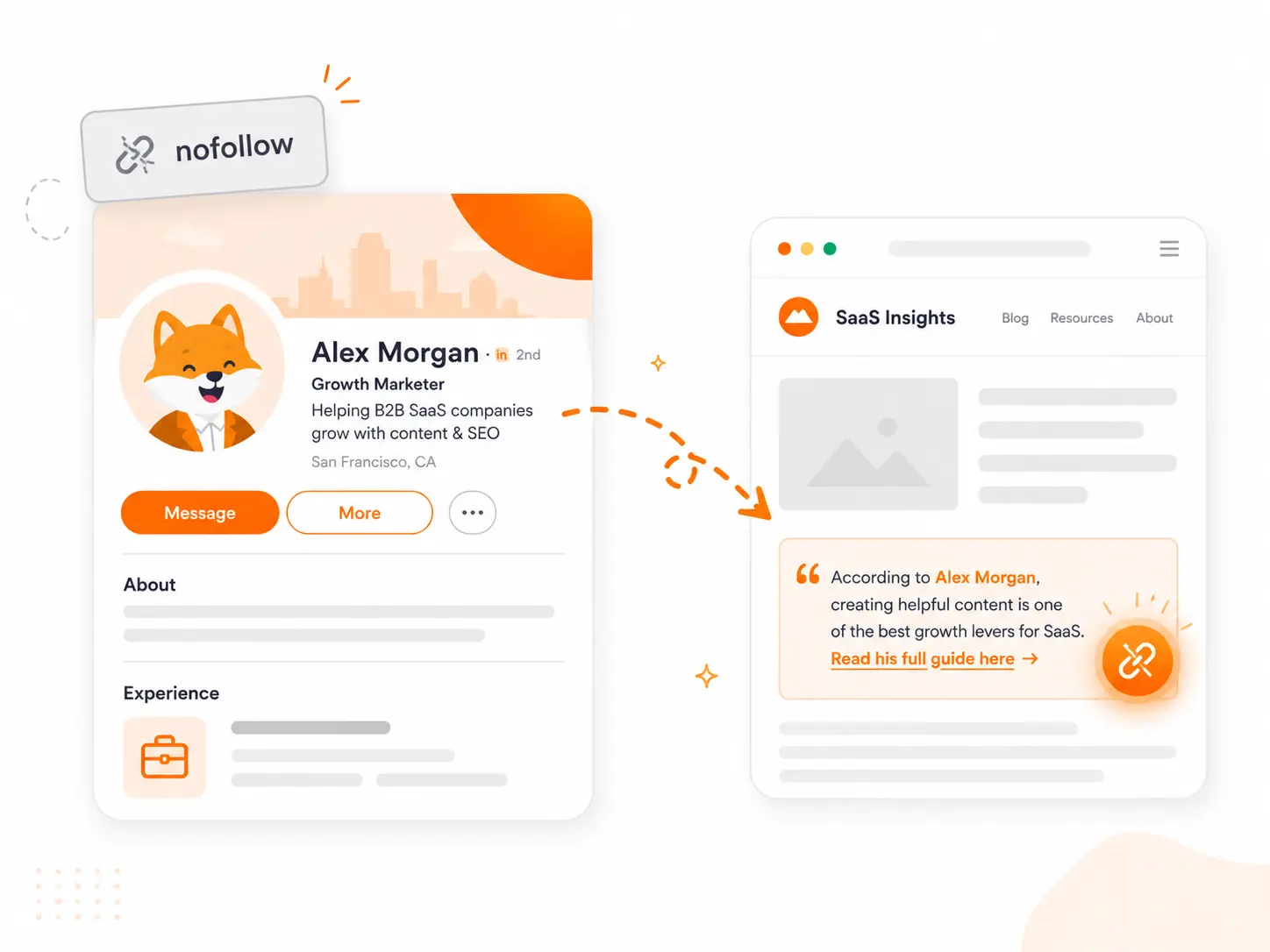
Medium outbound links are generally nofollow, so you should not treat them like a traditional backlink source.
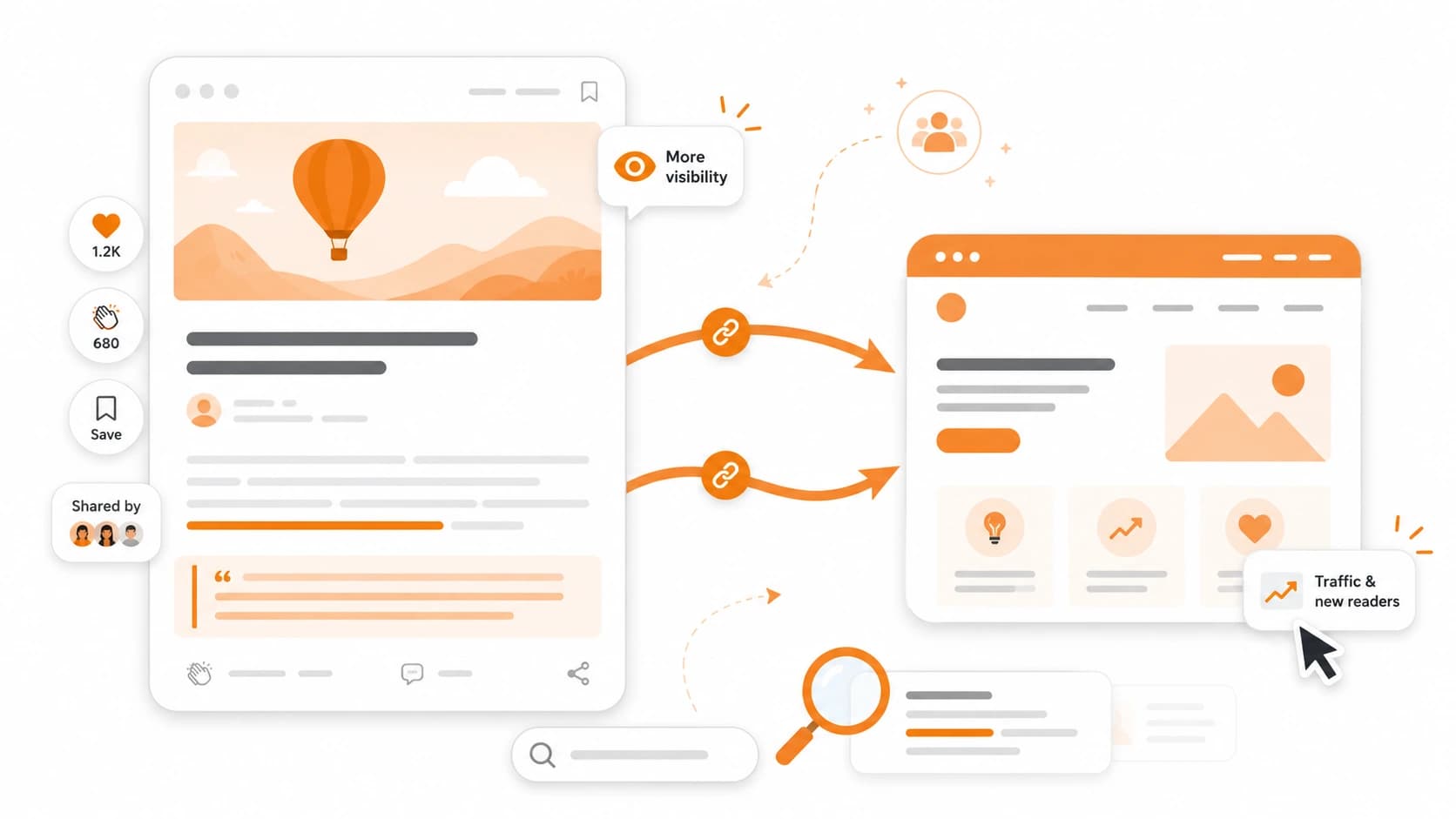
That does not make them useless. A good Medium article can still:
- Drive referral traffic
- Put your brand in front of relevant readers
- Help more people discover and reference your original content
- Give you a shot at ranking on Medium's domain for long-tail searches
The mistake is expecting the Medium URL itself to act like a powerful dofollow backlink. In most cases, the real value comes later if the article gets picked up, shared, or cited somewhere else.
Medium's domain authority is among the highest of any publishing platform. That means a well-written Medium post can surface in Google results faster than the same article would on a new domain. That is the actual SEO angle worth pursuing: not the outbound link, but the chance the Medium post itself ranks and funnels readers back to you.
Start with a useful article, not a link goal
The best Medium backlink strategy is simple: publish something worth reading.
Thin reposts, keyword-stuffed opinion pieces, and articles written mainly to hold a link usually go nowhere. What works better is a standalone post that solves a real problem, teaches something specific, or shares a useful point of view.
If you want the backlink to matter, the article itself has to earn attention first.
That usually means:
- Picking a topic your audience already searches for
- Writing an original post instead of a lazy rewrite
- Adding a link only where it genuinely helps the reader go deeper
One good contextual link inside a useful article is stronger than five forced links in a weak one.
Publish on your site first if the article already belongs there
If the article is really part of your main content strategy, publish it on your own site first.
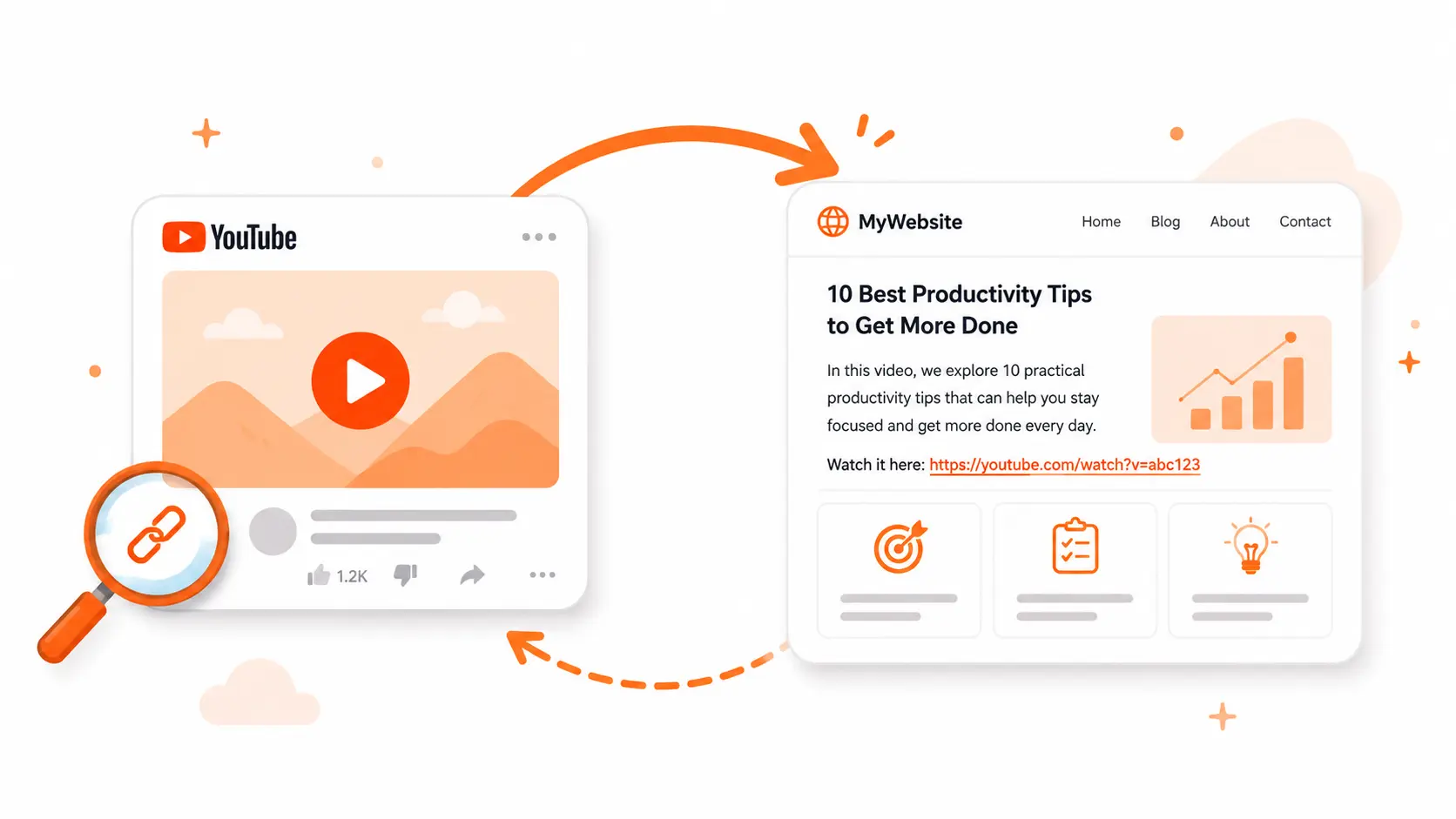
Then wait for Google to index the original page before reposting it on Medium. When you do repost, use Medium's Import Tool or canonical settings so your site stays the source of truth.
This matters because copy-pasting the same article without canonical handling can create duplicate-content confusion. When you skip this step, Google may index the Medium version as the original — especially if it crawls Medium before your site. That means Medium's domain, not yours, gets the ranking credit. Medium's Import Tool handles this automatically by injecting a rel="canonical" tag pointing back to your original URL. If you paste manually, you need to set it yourself in Medium's story settings. Google's canonical URL documentation covers how duplicate signals are resolved if you want to go deeper on the mechanics.
The cleaner workflow is:
- Publish on your site first.
- Wait for the original to get indexed.
- Import it into Medium or set the canonical URL correctly.
- Adjust the Medium headline and description if needed for discovery.
If you are creating a Medium-first article instead, keep it original and make the on-site link a supporting resource, not the whole reason the post exists.
Add links naturally and sparingly
This is where most Medium backlink advice goes wrong.
Do not cram links into every section. Do not force exact-match anchors. Do not treat Medium like a link farm.
Instead:
- Use one or two links at most
- Place them where the reader would logically want more detail
- Prefer branded or descriptive anchor text over keyword-stuffed anchors
- Keep the link connected to the point you are making
For example, if you mention a process, checklist, or deeper tutorial on your site, linking to that resource makes sense. Dropping a homepage link for no reason does not. If you already have a broader guide on how to find backlink opportunities, that is the kind of supporting resource that fits naturally.
The rule is easy to remember: earn the click before you place the link.
Reach matters more than the link itself
Publishing on an empty Medium profile and walking away will not do much.
If you want better results, improve the distribution layer around the article:
- Set up a real profile with your name, photo, bio, and site link
- Submit to relevant Medium publications when possible
- Share the post on social channels and in relevant communities
- Engage with other writers in your niche instead of only posting your own work
This is where Medium becomes useful. A strong post inside a relevant publication can get more readers, more engagement, and more chances for someone else to reference your work.
That is also why Medium works best for amplification, not as your whole backlink strategy. If you want other platform-specific plays — Pinterest backlinks for visual search discovery, or the full backlinks-from hub for the rest — that's the better place to branch out.
What to avoid
- Republishing without canonical planning. Google may index the Medium version as the original, demoting your own page in rankings and splitting engagement signals across two URLs.
- Stuffing multiple links into one article. Medium's curation algorithm deprioritizes self-promotional content, so over-linked posts get less distribution — the opposite of what you want.
- Exact-match commercial anchors. "Best link building tool" reads as spam to Medium moderators and sends a manipulative anchor pattern signal if Google evaluates it across a domain.
- Expecting direct SEO gains from the link. The
nofollowattribute means no PageRank flows. Treat Medium as a traffic and visibility play, not a link-equity source. - Thin content written to hold a link. Medium's curation system actively surfaces quality. A thin post gets zero distribution, zero secondary backlinks, and zero return on the time spent.
If your article would be weak without the link, it is probably the wrong article.
A simple founder workflow
If you want a repeatable way to get backlinks from Medium, use this process:
- Pick a topic your audience already cares about.
- Write a useful Medium post that stands on its own.
- Add one or two contextual links only where they help.
- Use canonical handling if the original lives on your site.
- Publish under a solid profile and submit to a relevant publication if possible.
- Promote the post so it can earn discovery, mentions, and secondary backlinks.
That is the real play. Medium can help distribute a good idea, but it is rarely the best place to build an entire backlink strategy from scratch.
If you want a steadier flow of qualified outreach opportunities, Mentiohunt helps you find websites and communities where your content is a better fit, then gives you the rationale and outreach prep so you know what to do next.
This guide was written by the Mentiohunt team. We build tools for founders doing their own link building and community outreach.

Founder of Mentiohunt. Built the company's own backlink pipeline using the same methods covered here — expert quote outreach, journalist sourcing platforms, and citation-worthy assets. Writes about link prospecting and founder-led distribution.
@nicolasmore_Turn platform research into a recurring opportunity queue.
Mentiohunt helps founders turn article URLs, competitors, keywords, and product context into qualified backlink opportunities with fit rationale and outreach prep.