Prefer AI? Summarize this with ChatGPT,
Claude,
Google AI Overview, or
Perplexity.
If you are searching for the best Semrush Link Building Tool alternative for founders, the real question is not "which tool has more SEO data?" It is "do I actually need a full SEO stack to find and act on backlink opportunities?"
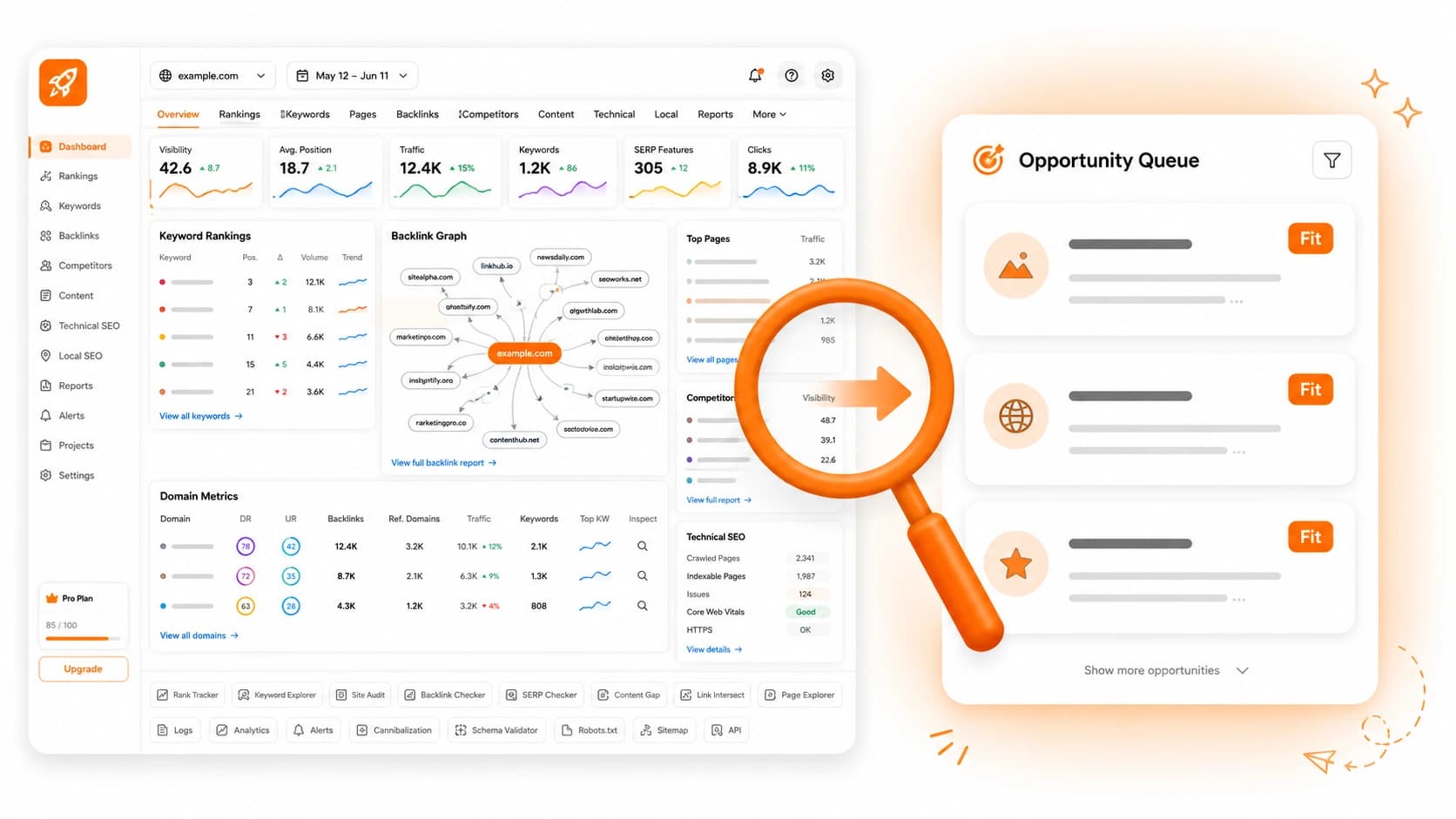
Semrush Link Building Tool is a module inside Semrush's SEO Toolkit. It helps teams discover prospects from competitor backlink graphs, run Gmail-based outreach campaigns, and track whether links go live or break — all inside the same platform used for keyword research and backlink audits. Mentiohunt is built for founders and small teams who want a lighter workflow: backlink opportunities with article-level fit rationale and outreach prep in one queue.
This comparison is about fit. Semrush is the right call if you already use it for SEO and want link building to live inside that ecosystem. Mentiohunt is the better fit if you want a focused discovery workflow without committing to a $140–$500 per month SEO suite.
Quick Verdict
Choose
Semrush Link Building Tool
- You already use Semrush for keyword research, backlink audits, or position tracking.
- You want prospects drawn from competitor backlink graphs and SEO domain-quality signals.
- You need a structured Prospects → In Progress → Monitor campaign workflow.
- You are an agency or in-house SEO team managing multi-client link-building campaigns.
- You want contact retrieval and Gmail outreach inside one SEO platform.
Choose
Mentiohunt
- You are a founder or small marketing team without a dedicated SEO operator.
- You want backlink opportunities with article-level fit rationale in one queue.
- You want to understand why each site fits before preparing outreach.
- You prefer a lighter self-serve workflow over a bundled SEO platform.
- You want outreach prep focused on fit rationale, not campaign volume.
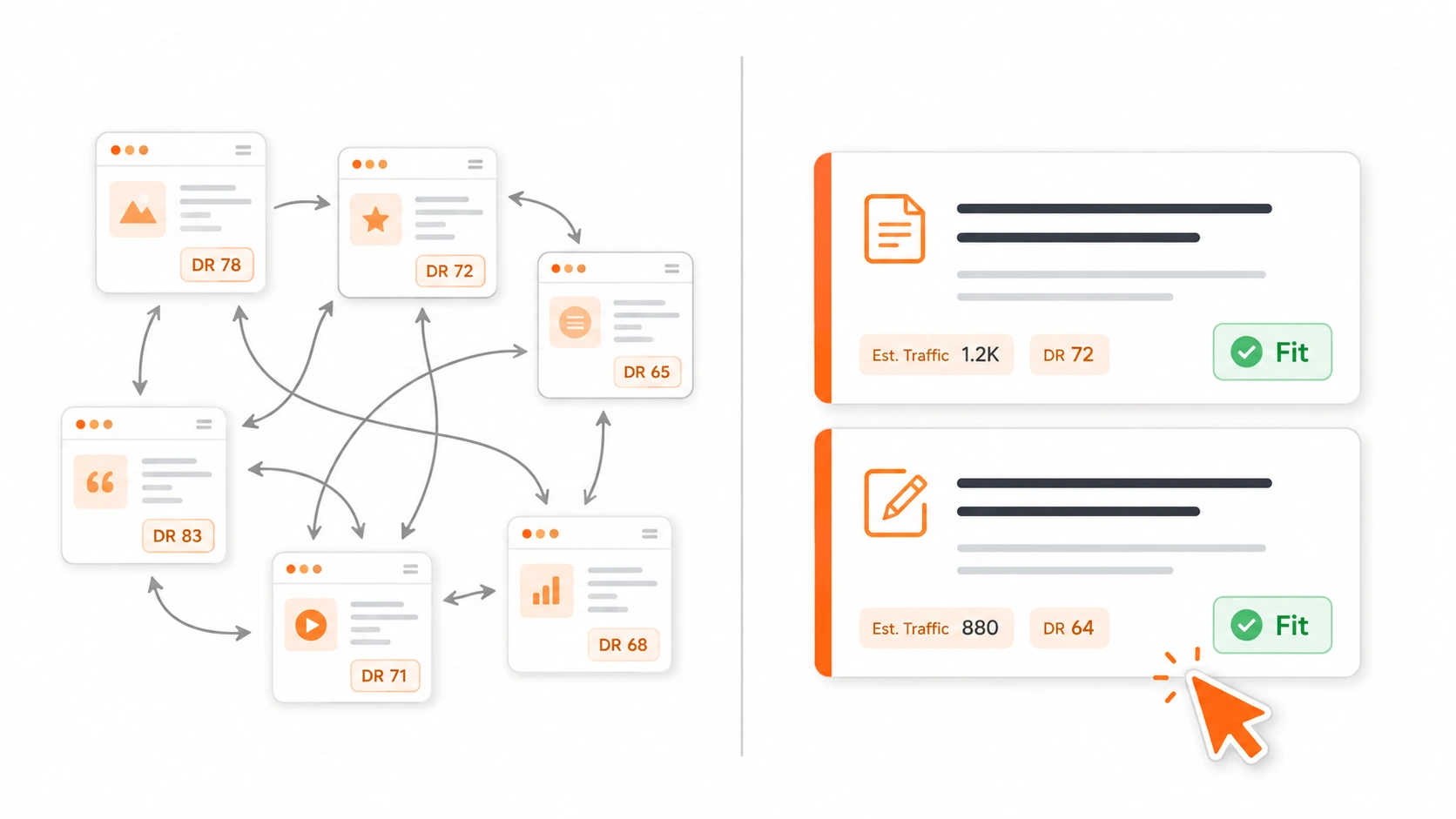
Semrush Link Building Tool vs Mentiohunt at a Glance
| Category | Semrush Link Building Tool | Mentiohunt |
|---|---|---|
| Primary use case | SEO-driven link-building workflow inside the Semrush platform | Founder-led distribution opportunity queue |
| Best fit | SEO managers, agencies, and in-house teams already using Semrush | Founders and small teams that need clear next actions |
| Prospecting input | Target domain, keywords, and competitor domains; surfaces referral-domain prospects from Semrush's index | Sitemap or article URLs, competitors, keywords, and product context |
| Backlink discovery | Yes, competitor-backlink-driven with domain-quality signals and SEO metric filtering | Yes, focused on article-to-site fit |
| Contact discovery | Auto-retrieves contact emails for target domains where exposed | Contact details surfaced for relevant opportunities |
| Outreach prep | Gmail integration with templates, reply tracking, and basic status flags | Fit rationale, recipient context, and ready-to-send draft prep |
| Outreach sending | Gmail-connected email sending, 500 emails per day per connected address | Automatic sequence from a warmed pool, stopping at the first reply |
| Pricing | Requires SEO Toolkit: $139.95–$499.95/mo. No standalone Link Building Tool plan. | Free to start |
What Semrush Link Building Tool Does Well
Semrush Link Building Tool is strongest when link building is already part of a structured SEO workflow. Its campaign model covers competitor analysis, prospect discovery, contact retrieval, Gmail outreach, reply tracking, and link status monitoring — all connected to the same backlink and keyword data you would use for technical SEO and content work.
Semrush Link Building Tool
- Discover prospects from competitor backlink profiles and Semrush's referring-domain index
- Filter and score prospects using domain-quality signals alongside keyword relevance
- Auto-retrieve contact emails for target domains to reduce manual research
- Send outreach emails via connected Gmail with reply tracking and status flags
- Track whether contacted prospects convert into live, broken, or lost backlinks
- Move lost or broken links back into the active campaign for re-outreach
- Access prospect data alongside Backlink Gap, Backlink Audit, Position Tracking, and Site Audit in one platform
That matters if you are running SEO as an ongoing operation. Being able to move from a Backlink Gap analysis to a prospect list to an outreach queue without leaving Semrush reduces context switching for teams that already manage campaigns, keywords, and audits in the same tool.
The tradeoff is that Semrush Link Building Tool is not a standalone product. It is a module. Its value depends heavily on whether you already have or want the surrounding platform.
Where Semrush Can Be Heavy for Founders
The most direct limitation for founders is pricing structure. Semrush Link Building Tool is not available on its own. Access requires purchasing the full SEO Toolkit, which starts at $139.95 per month for SEO Pro, $249.95 for SEO Guru, or $499.95 for SEO Business. There is no link-building-only checkout. If you mainly want outreach and discovery — not keyword research, backlink audits, or position tracking — the platform may be more than you need.
Prospect quality is another practical constraint. Community discussions on Reddit note that Semrush prospect lists can be broad, especially when a keyword or industry overlaps with unrelated sites. Some founders report spending significant time filtering before finding prospects worth pursuing. That filtering work is fine when you have a dedicated SEO operator. It adds friction when you are doing it yourself.
The outreach workflow is also email-centric with real limits. Semrush's Gmail integration allows 500 emails per day per connected address. That cap is not a problem for structured, quality-focused campaigns, but it can require workarounds for higher-volume sending. There are also no advanced deliverability controls such as email rotation, inbox placement monitoring, or spam testing that dedicated outreach tools provide.
What Mentiohunt Does Differently
Mentiohunt starts from a different question. Instead of "which domains link to my competitors?" it asks "which sites have a clear reason to reference this specific article?"
You provide article URLs or a sitemap, and Mentiohunt focuses on finding sites where each piece of content could be a relevant fit. The fit rationale is close to each opportunity — so before you write an outreach email, you already know why the site might care.
That backlink opportunity queue is designed around the founder's real question: "What should I do next, and why?"
Prospecting: SEO Link Graph vs Article-Level Fit
Semrush Link Building Tool builds prospect lists from competitor backlink profiles and Semrush's referring-domain index. You set up a campaign with a domain, keywords, and competitors, and the tool surfaces sites that already link to those competitors. From there, you filter by relevance and domain-quality signals and move the best candidates to your active outreach list.
That approach is well-suited for experienced SEO operators who can interpret domain-quality metrics and who already know the competitive landscape. The breadth of data is a strength. The challenge is that a broad prospect list still needs real triage before outreach is worth sending.
Mentiohunt's prospecting is narrower by design. You give it content — specific articles or a full sitemap — and it focuses on which sites might have a natural reason to mention or link to that content. The intent is to reduce the gap between "found a prospect" and "understood why this prospect is relevant."
Neither approach guarantees a backlink. The practical difference is where the decision-making work happens. Semrush surfaces a large pool and asks you to filter. Mentiohunt surfaces a smaller pool with rationale already attached. For founders without a dedicated SEO operator, that trade-off often favors the narrower, more opinionated queue.
If you want a quick starting point before building a full opportunity workflow, the free directory submission sites tool can help you find startup directories where your product may be worth submitting.
Outreach Prep and Sending
Semrush's outreach workflow is built around Gmail. You connect an inbox, draft or use a template, send directly from Semrush, and track reply status and link outcomes inside the same campaign view. That is useful for teams that want outreach data and SEO data in one place.
The workflow has real limits at the edges. The 500-emails-per-day Gmail cap means high-volume campaigns need multiple connected addresses or workarounds.
Mentiohunt handles both sides, but differently. For each backlink opportunity it surfaces the fit rationale, the outreach angle, and contact context, then drafts the message and sends it on a sequence scheduled at discovery — from its own warmed sending pool, so you are not spending your domain's reputation or hitting a Gmail cap.
The goal is the same in both tools: reduce the time between finding an opportunity and acting on it. The approaches differ. Semrush gives you a campaign console and expects you to run it. Mentiohunt runs the sequence itself and stops at the first reply, at which point the thread moves to your own connected inbox and you take the conversation from there.
Because outreach goes out without a per-email approval step, the review that matters happens earlier: watch the queue and cancel opportunities where the fit is wrong. Outreach works when it is specific and useful to the recipient, and a bad-fit prospect is not something better copy can rescue.
Pricing
Semrush Link Building Tool — plans
SEO Pro
$139.95/mo
SEO Guru
$249.95/mo
SEO Business
$499.95/mo
Semrush One
see pricing page
Semrush Link Building Tool is included in the SEO Toolkit plans listed above. There is no standalone plan for the Link Building Tool. Annual billing is approximately 17% cheaper than monthly. A 7-day free trial is available, but data exports are disabled during trials. Prices from Semrush's official pricing page as of May 2026.
For founders evaluating fit-for-cost, the important detail is that the entry price for Semrush Link Building Tool access is $139.95 per month — not for the link-building module alone, but for the full SEO Toolkit. Higher tiers add more keywords, websites, report records, and user seats. Additional users cost $45–$100 per seat depending on plan.
That cost structure fits teams that get value from Semrush's full platform. For founders who mainly want discovery and outreach prep, the overhead may not match the use case. Mentiohunt is free to start and is built around a self-serve opportunity queue rather than an integrated SEO platform.
When to Choose Semrush Link Building Tool
Choose Semrush Link Building Tool if:
- You already use Semrush for keyword research, backlink audits, or technical SEO.
- You want to run competitor-driven prospecting using Semrush's backlink index.
- You need a structured campaign workflow with Prospects, In Progress, and Monitor stages.
- You are an SEO manager or agency running link-building campaigns for multiple clients.
- You want Gmail-based outreach tracking and link status monitoring inside one SEO platform.
When to Choose Mentiohunt
Choose Mentiohunt if:
- You are a founder or small marketing team without a dedicated SEO operator.
- You want a lighter queue of backlink opportunities with article-level fit rationale.
- You prefer to start free and build a distribution habit before committing to a full SEO stack.
- You want outreach prep focused on why an opportunity fits, not campaign volume.
Final Recommendation
Semrush Link Building Tool is a strong choice if you already use Semrush for SEO and want link building to live inside that same ecosystem. The workflow — competitor analysis, prospect discovery, Gmail outreach, link status monitoring — is well-built for SEO-focused teams that treat backlinks as part of a structured, ongoing operation.
Mentiohunt is the better Semrush Link Building Tool alternative for founders who want a focused distribution workflow without the full SEO platform. If you mainly need to find where your articles fit and understand why they fit, that workflow does not require a $140–$500 per month SEO toolkit. You can start free and build from there.
No tool can guarantee backlinks or rankings. The right tool should make it easier to find relevant opportunities, understand why they fit, and take consistent action. For founders, that usually starts with a clear, lightweight queue — not a full-scale SEO campaign engine.
If you are also evaluating other SEO platform alternatives, see how Mentiohunt compares to Ahrefs, the best Pitchbox alternative, Respona, and the best BuzzStream alternative — or see the full budget-tiered link building tool stack for a wider view.
Frequently Asked Questions
Does Semrush Link Building Tool have a free plan?
No. Semrush Link Building Tool is included in the SEO Toolkit, which starts at $139.95 per month. Semrush offers a 7-day free trial that includes access to the Link Building Tool, but data exports are disabled during the trial period. There is no permanently free tier for the Link Building Tool.
Can I use Semrush just for link building without the full SEO Toolkit?
No. Semrush Link Building Tool is a module inside the SEO Toolkit or Semrush One, not a standalone product. There is no separate checkout or feature-only plan for link building. If you want access, you need to purchase one of the SEO Toolkit plans, which also include keyword research, backlink audits, position tracking, site audits, and other SEO tools.
How does Semrush Link Building Tool find backlink prospects?
Semrush surfaces prospects by analyzing sites that already link to your domain or your specified competitors, drawing from its referring-domain index. You set up a campaign with a target domain, keywords, and competitor domains, and Semrush generates a list of referral domains as prospective link targets. Prospects can be filtered by relevance and domain-quality signals before being moved to active outreach.
Does Mentiohunt replace Semrush Link Building Tool entirely?
No. Mentiohunt does not do keyword research, competitor backlink audits, or Gmail-based campaign sending. It focuses on article-level fit: finding sites with a specific reason to reference your content, scoring that fit, and preparing outreach.

Founder at Mentiohunt. Building distribution tools for founders and small marketing teams. Writes about backlink building and founder-led growth.
@nicolasmore_Want one queue for backlink opportunities and community mentions?
Mentiohunt helps founders turn articles, keywords, competitors, and product context into distribution opportunities they can review and act on.
Start free