Prefer AI? Summarize this with ChatGPT,
Claude,
Google AI Overview, or
Perplexity.
Most founders assume news site backlinks require a PR agency, a $10,000 retainer, or a press contact built up over years. None of that is true.
What news site backlinks actually require is being a citable source — someone a journalist needs to reference to make their article credible. That is a different skill than traditional link building, and any founder can learn it.
This discipline is called Digital PR. It works differently from how you'd approach Reddit or Quora. The tactics that land a comment in a niche community do not land you in TechCrunch. But the frameworks below do.
Quick answer: News site backlinks require being a citable source, not a good pitch writer. Three routes work without an agency: data-driven campaigns where you own an original finding, reactive PR on sourcing platforms like Connectively and Qwoted, and newsjacking with expert commentary within 1–2 hours of a breaking story. Lead every pitch with the data or quote — never with your company background.
Why news site backlinks are worth the effort
News site links sit at the top of the authority spectrum. Most major publications have domain ratings above 70. Contextual editorial links from those outlets can move rankings faster than a dozen mid-tier placements.
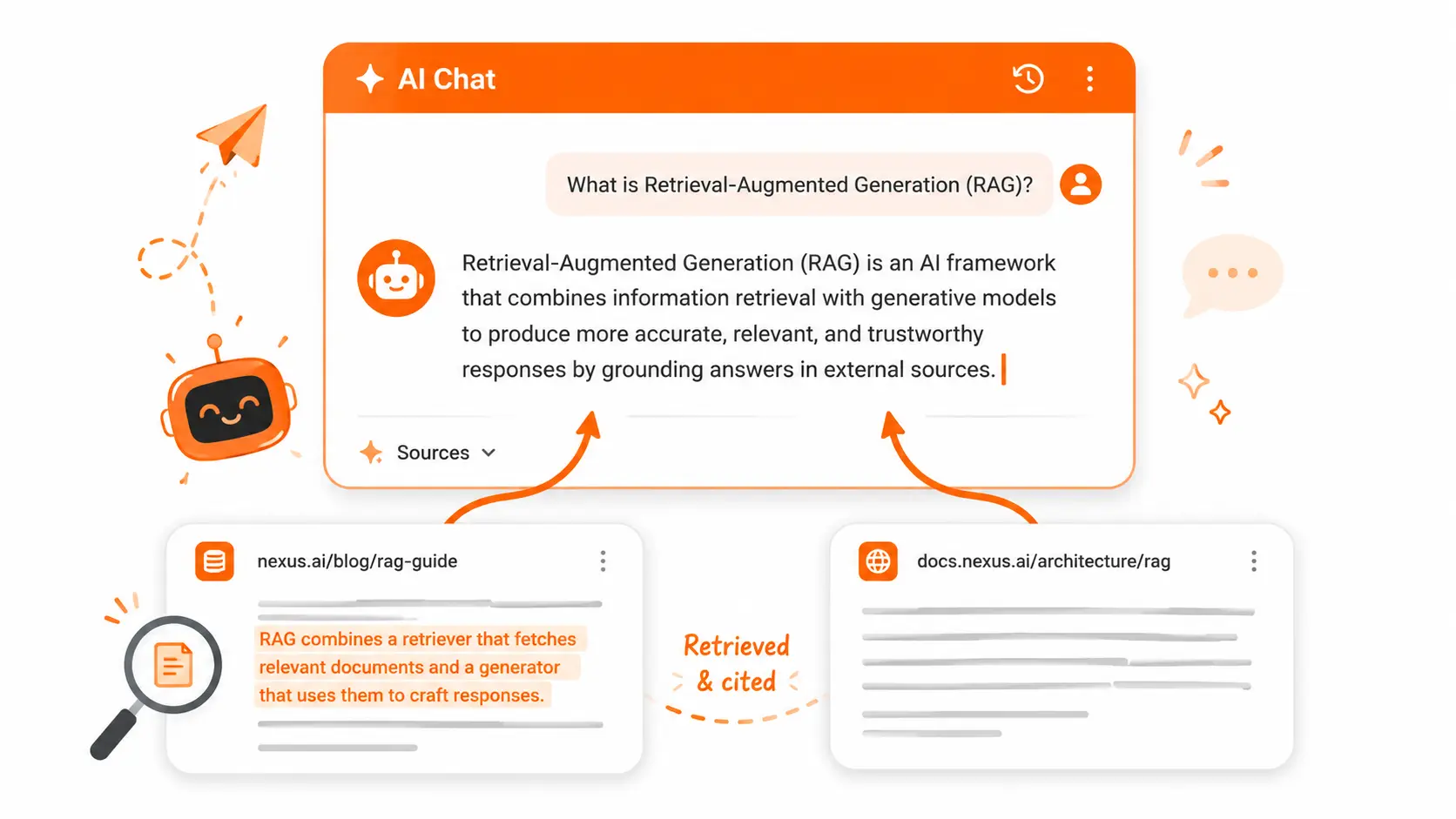
There's a second angle that matters now: AI search visibility. ChatGPT, Perplexity, and Google AI Overviews pull from credible sources when assembling answers. Brand mentions in authoritative news outlets correlate with being cited by those systems. Building this kind of editorial presence feeds both traditional SEO and generative engine optimization simultaneously.
The tradeoff is effort. News site links are harder to earn than community links and require a different kind of asset. But a single data-driven campaign can yield dozens of linking domains, and the citation value compounds as other blogs and newsletters reference the original coverage.
Three frameworks that actually work
1. Data-driven campaigns
Journalists are transactional. They need data to back up headlines. If you own a proprietary finding, they have to link to you as the primary source.
You don't need a big budget to produce citable data:
- Scrape public datasets and identify a non-obvious trend
- Run a short survey within your niche — even 200–500 responses can be newsworthy
- Analyze anonymized data from your own product
- Aggregate public signals from Google Trends, job postings, or pricing pages
Once you have a clear finding, build a simple landing page: key headline, methodology, 2–3 downloadable charts, and a press contact link. This becomes the asset journalists reference.
The pitch hook should lead with the data: "We analyzed 500,000 posts and found that SaaS pricing pages are hiding costs at twice the rate they were two years ago." That is a headline. Give them that, and the link follows.
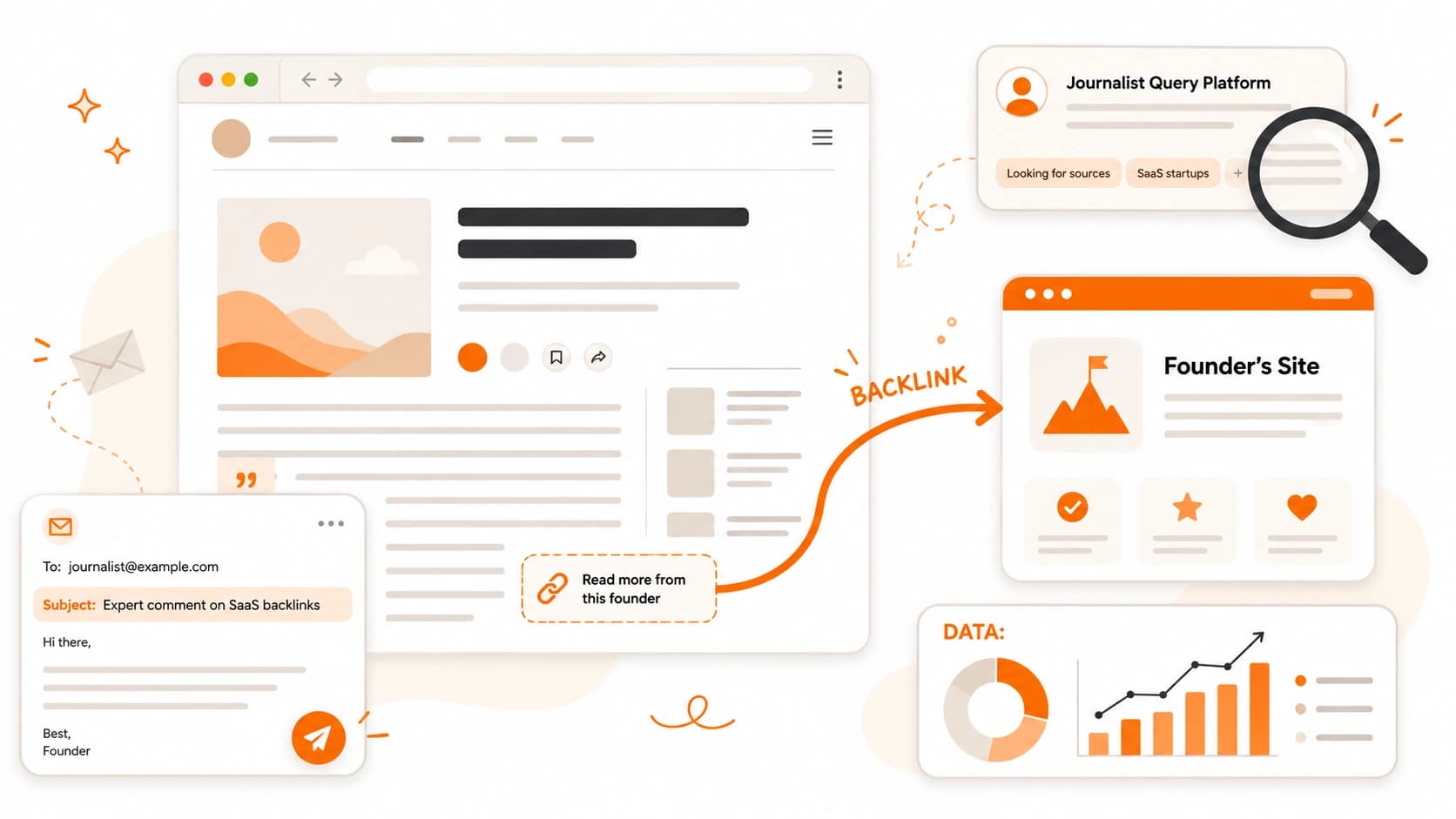
2. Reactive PR — answering journalist queries
Instead of creating news, you position yourself as an expert source for stories journalists are already writing.
Sourcing platforms where journalists post active queries:
- Qwoted and Featured — business, tech, and niche expert matching
- Connectively — the evolved version of HARO; sends queries multiple times a day
- Help a B2B Writer — focused on SaaS, marketing, and B2B tech
Speed determines who gets quoted. When a relevant query appears, respond within the hour. Lead with your punchiest quote in the first sentence. Journalists do not have time to read three paragraphs of background before finding the useful part.
3. Newsjacking
When a significant event breaks in your industry, you have a short window — often 1–2 hours — to offer expert commentary that journalists can use in their next update.
The format is simple: a 2–3 paragraph breakdown explaining why the event matters or what happens next. Send it to journalists actively covering the story. If the pitch fits their angle and arrives in time, you get quoted.
Keep a short boilerplate ready: your name, title, one-sentence credential, and the quote. The faster you can assemble a credible response, the more often this works.
The pitch template journalists respond to
Major publications receive hundreds of pitches per day. If your outreach reads like a press release or a marketing email, it goes to trash.
Guardrails:
- Keep it under 300 words. Most journalists prefer pitches under 150.
- Write an editorial subject line — something that looks like a realistic headline, not a marketing hook.
- Lead with the asset or quote. Don't build up to it.
- Include a press-ready package link: charts, fact sheet, high-res images, methodology. Journalists should not have to email you twice.
Template:
Hi Maya,
Saw your recent piece on AI tool budgets inside software teams.
One data point that may fit your follow-up: Stack Overflow's 2024 Developer Survey reported that 76% of respondents are using or planning to use AI tools in development.
Two angles stood out:
- Adoption is now mainstream enough that "whether teams use AI" is less interesting than "where teams allow it."
- The trust gap still matters; developers are trying AI, but many remain cautious about accuracy and workflow fit.
Source: https://survey.stackoverflow.co/2024/ai/
Happy to provide a founder quote on why AI rollout is becoming an operations problem, not just a tooling decision.
Nico
Put credentials last. The finding earns the read. The bio earns the credibility check after.
Reclaiming unlinked mentions
If your brand has any web presence, there's a good chance someone has mentioned you in an article without adding a link. This is the highest-conversion tactic in the playbook — the mention already exists, you're just asking to formalize it.
Use Google Alerts or Ahrefs to monitor brand mentions. When you find one without a link, send a short email to the author with the exact anchor text and URL you'd like added. One sentence explaining the context is enough. This often converts within days.
Tools worth knowing
| Purpose | Tools |
|---|---|
| Journalist sourcing | Qwoted, Featured, Connectively, Help a B2B Writer |
| Contact finding | BuzzStream, Hunter.io |
| Mention monitoring | Google Alerts, Ahrefs, Semrush |
Don't overinvest in tools early. One sourcing platform and one monitoring alert is enough to start. Systemize once you've validated that a tactic is working.
What to avoid
- Buying undisclosed editorial links. Google's link spam policies explicitly target paid placements. Beyond the penalty risk, paid links are routinely removed during publisher audits, leaving you with a worse link profile than before.
- Sending promotional press releases for non-news. Journalists receive hundreds per day. Anything that reads like a company announcement without a newsworthy hook gets ignored or — worse — gets your domain flagged as a PR spam source.
- Generic subject lines like "Partnership opportunity" or "Guest post inquiry". These read as mass outreach. Journalists don't open them. Write an editorial subject line that looks like a realistic article headline.
- Pitching outside your expertise. A one-sentence credential check exposes it immediately. Stick to topics where you have direct experience, proprietary data, or a defensible point of view. Borrowed opinions don't get quoted.
- Measuring success by domain authority alone. Track dofollow percentage, referral traffic from each placement, and whether the link appeared in a topically relevant article. DA signals potential; those metrics measure actual value.
A repeatable workflow
- Build one linkable asset. A short survey, a benchmark, or a trend analysis. Publish it on your site with a clear headline finding and downloadable charts.
- Set up sourcing alerts. Sign up for Connectively and one other platform. Set filters for your niche.
- Respond fast. When a relevant query appears, respond within the hour with the quote first.
- Pitch targeted journalists. Find 5–8 reporters covering your beat. Send the data hook. Follow up once after 3–5 days.
- Reclaim existing mentions. Use Google Alerts to catch new unlinked mentions and convert them.
The unlinked mention step is where Mentiohunt can help. Add your site, and Mentiohunt's backlink building helps identify where your content is being referenced and surfaces outreach opportunities — so you're not manually scanning for mentions across dozens of publications.
What makes news sites different from other platforms
News site backlinks sit at the PR end of the distribution spectrum. They're harder to earn than Reddit or Quora links, but they carry different weight — both for rankings and for brand credibility. Forbes is the clearest single-publication example of this same playbook, with its own contributor and journalist-pitch routes.
The pattern that earns news links — own a citable asset, respond fast, pitch with specificity — is transferable. Once you've done it once, the second campaign is faster. The third faster still.
This guide was written by the Mentiohunt team. We build tools for founders doing their own link building and community outreach.

Founder of Mentiohunt. Built the company's own backlink pipeline using the same methods covered here — expert quote outreach, journalist sourcing platforms, and citation-worthy assets. Writes about link prospecting and founder-led distribution.
@nicolasmore_Turn platform research into a recurring opportunity queue.
Mentiohunt helps founders turn article URLs, competitors, keywords, and product context into qualified backlink opportunities with fit rationale and outreach prep.