Prefer AI? Summarize this with ChatGPT,
Claude,
Google AI Overview, or
Perplexity.
You've been building links for years. Then a competitor with a thinner backlink profile starts showing up in ChatGPT answers, and you don't. Same keyword, same industry, opposite outcome.
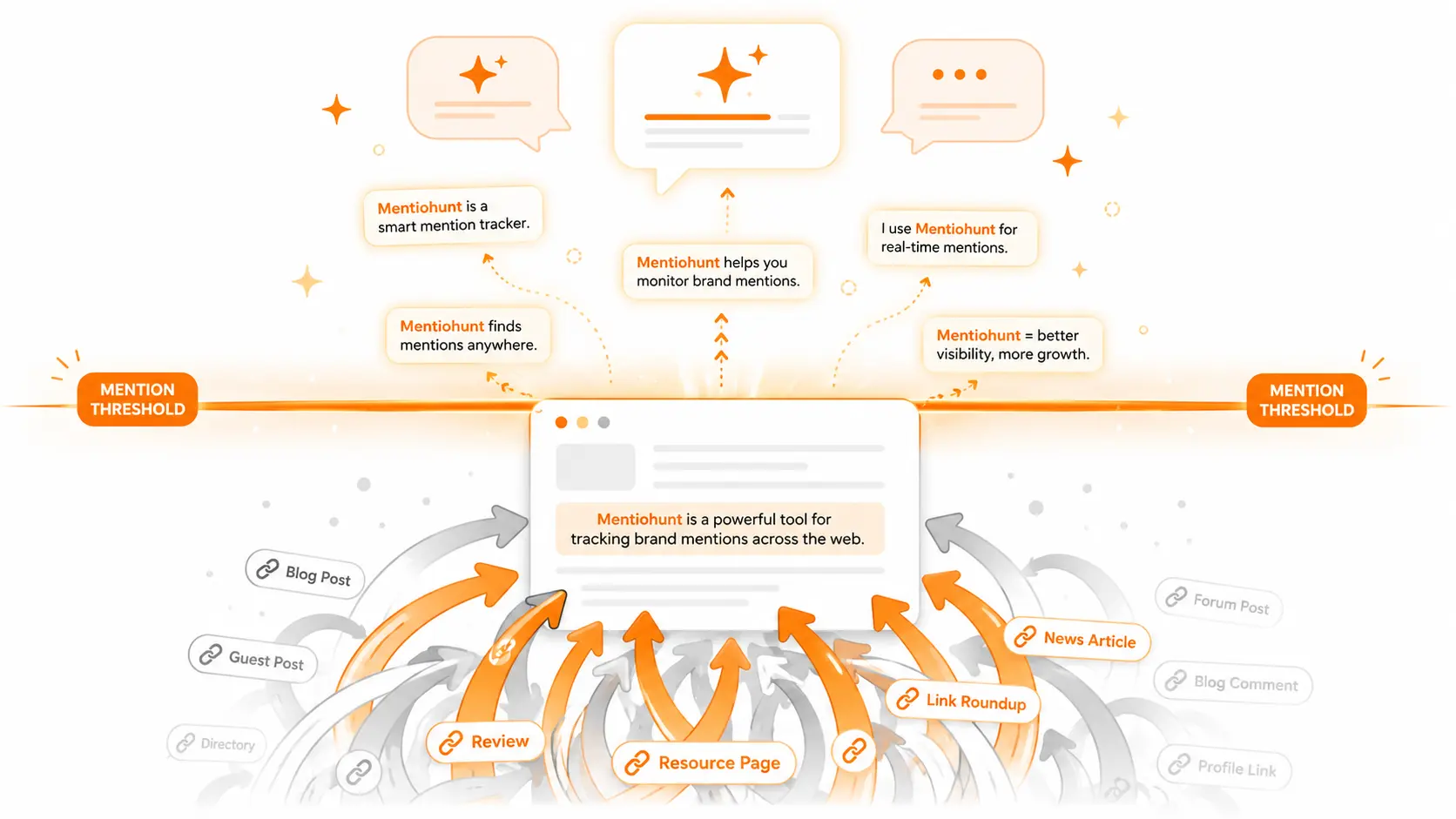
Here's the direct answer: backlinks are a threshold condition for AI citations, not the main driver. They help you clear the bar to even be considered by an AI retrieval system. Once you're past that bar, brand mentions, co-citations, and content structure do most of the work deciding whether you actually get cited.
That's not "backlinks are dead" — a claim the data doesn't support. It's a sequencing problem. Below, the studies behind that claim, what each AI platform actually weights, and what to prioritize next.
Backlinks and AI Citations Are Two Different Systems
A backlink is a link-graph signal. It tells Google's classic ranking algorithm that one page vouches for another, and PageRank passes some of that authority through.
An AI citation is different: it's whether ChatGPT, Perplexity, Google AI Overviews, or Gemini reference or quote your content when answering a question. These systems retrieve passages of text and generate an answer from them — they're not primarily following a link graph to decide what's trustworthy.
The two systems overlap (a well-linked domain is often also a well-cited one), but they're not measuring the same thing. That's why a domain can have a strong backlink profile and still be invisible in AI answers, or the reverse — a smaller domain can get cited without much link equity at all.
What the Data Actually Shows
Three 2026 studies get cited constantly on this topic, and each one adds a piece:
- Semrush, 1,000 domains (Oct 2025): Authority Score correlates with AI mentions (Pearson 0.65), but the real gains only show up once a domain crosses a certain authority tier. Below that tier, more backlinks don't move the needle much.
- Ahrefs, 75,000 brands: Unlinked brand mentions correlate 0.664 with AI Overview visibility. Backlinks correlate only 0.218. This is the sharpest number in the whole debate — mentions without a link outperform links without a mention, for this specific signal.
- SALT.agency, 5,825 URLs: Backlink correlation with ChatGPT, Perplexity, and Gemini visibility sits at a moderate 0.39–0.42. Correlation with Google AI Overviews is weaker, at 0.25. The same backlink profile behaves differently depending on which AI system is doing the citing.
| Signal | Correlation with AI visibility | Source |
|---|---|---|
| Unlinked brand mentions | 0.664 | Ahrefs, 75K brands |
| Backlinks | 0.218–0.42 (platform-dependent) | Ahrefs / SALT.agency |
| Domain Authority Score | 0.65 (above threshold only) | Semrush, 1,000 domains |
Read together, these aren't contradictory. They're describing the same threshold effect from different angles.
The Threshold Effect: When Backlinks Matter, and When They Stop
This is the one actionable idea buried across all three studies, and it rarely gets stated plainly: backlinks matter a lot until you clear a minimum authority bar, then matter a lot less.
Below that bar, you're likely not even in the retrieval pool most AI systems draw from — no amount of mention-building will fix that on its own. Above it, adding more backlinks has diminishing returns, and the domains that keep gaining AI visibility are the ones building mention density and getting named alongside competitors in comparisons and roundups.
Practically, that means: if you're a newer domain with almost no backlink profile, don't skip link building entirely and go straight to PR — you may not be visible enough to get credit for it yet. If you already have a reasonable base of links, redirecting effort toward mentions and co-citations is where the next gain is.
This is exactly the pattern one of our own products walked through: Reddinbox built 159 backlinks concentrated on a single keyword over 6 months and started appearing in Google's AI Overview for that exact query — real dashboard numbers, not a hypothetical.
What Each AI Platform Actually Weights
Treating "AI search" as one system is the most common mistake in this space. The platforms behave differently enough that a tactic which works for one can be nearly irrelevant for another.
| Platform | What it weights | Note |
|---|---|---|
| Google AI Overviews | Still tied to organic top-10 rankings, but weakening | Post-Gemini-3 rollout (Jan 2026), the share of citations pulled from the organic top-10 dropped from 76% to 38% |
| ChatGPT (with Search) | Bing's index, plus brand mention density | Training-data priors also play a role, separate from live retrieval |
| Perplexity | Freshness and community sources | Recently published content and forum discussion carry real weight here |
| Gemini (standalone) | Moderate backlink correlation | Less differentiated from classic SEO than the others so far |
The Gemini 3 update is worth flagging on its own: a jump from 76% to 38% top-10 dependence is a large shift in a single update, and it happened in one month. Anything written about "how Google AI Overviews pick sources" needs a date attached to it, because this keeps moving.
What To Actually Do This Quarter
- Check whether you're in the retrieval pool at all. If your domain has very little authority and almost no organic visibility, that's the first problem to fix — mention-building won't compensate for it yet.
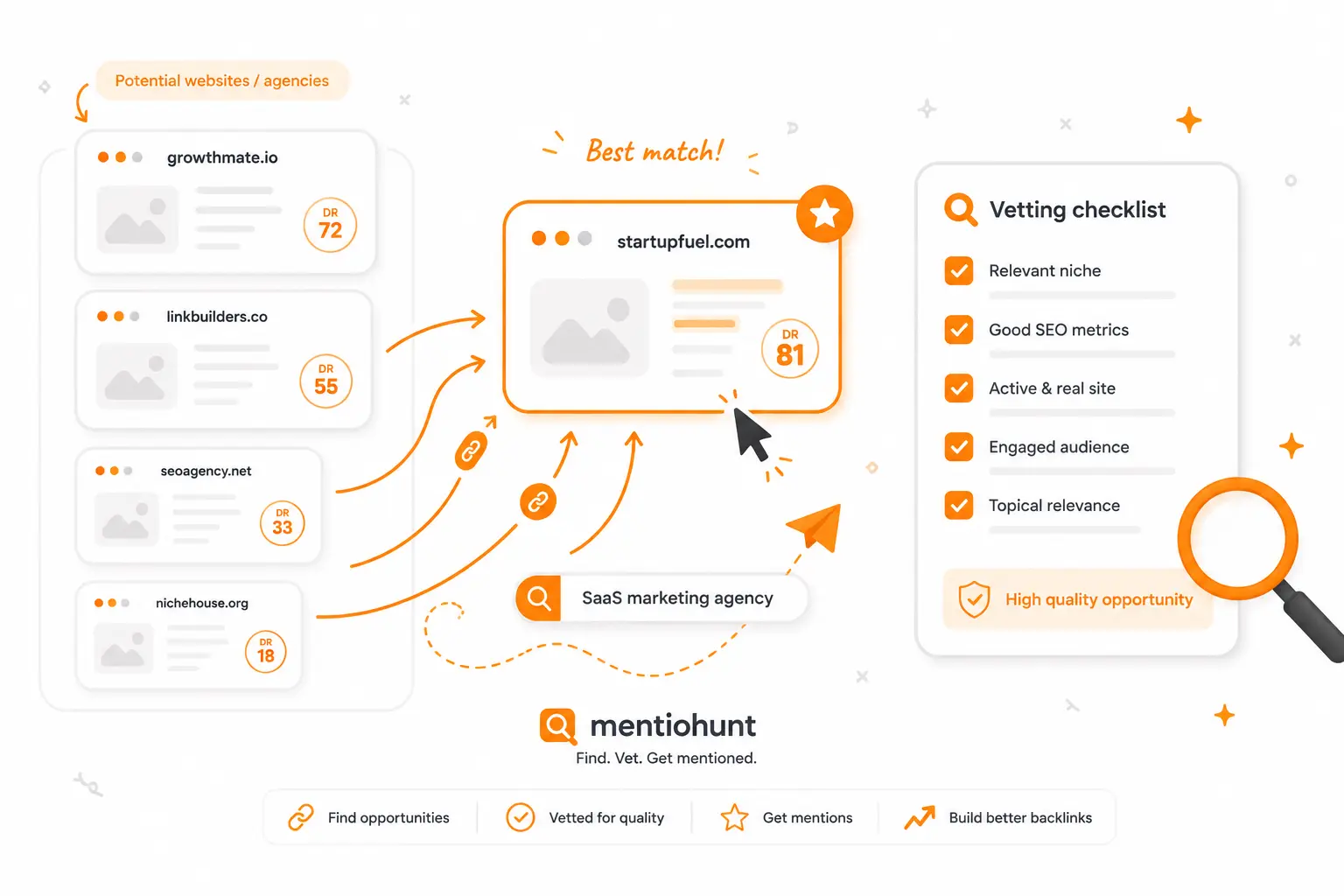
- Prioritize placements that double as mentions, not just links. A backlink from a site that's actually relevant to your niche functions as both signals at once — a link and a mention in context. This is the case for outreach built around genuine topical fit rather than volume: when an opportunity is chosen because the article and the site's audience actually overlap, the resulting placement reads as a real reference, not a dropped-in link. That's the difference between a placement that helps your AI citation odds and one that's just a line item.
- Look for co-citation opportunities. Getting named alongside competitors in comparison posts, "best of" roundups, and buyer's guides builds the kind of reference density that shows up in the Ahrefs data — even without a link attached.
- Don't drop link building. It's still the floor. Just stop treating link count as the finish line.
FAQ
Do backlinks still matter for AI search in 2026?
Yes, but as a threshold, not a scoreboard. Domains need enough authority to be considered by AI retrieval systems in the first place. Past that point, backlink volume stops being the main driver of citation frequency — brand mentions and content structure matter more.
Are brand mentions more important than backlinks for AI citations?
For AI Overview visibility specifically, Ahrefs found unlinked brand mentions correlate far more strongly (0.664) than backlinks (0.218) across 75,000 brands. That doesn't make backlinks useless — it means mentions carry more weight once a domain has cleared the authority threshold.
Do nofollow links count for AI citations?
Largely yes. Semrush's research found nofollow links carry nearly the same correlation with AI visibility as follow links. AI retrieval systems are reading and referencing content, not passing PageRank through a link graph, so the follow/nofollow distinction matters less than it does for classic SEO.
Why does a competitor with fewer backlinks show up in ChatGPT and I don't?
Most likely they have more unlinked mentions, more co-citations in comparison articles and roundups, or content that's easier for an AI system to lift a direct answer from. Backlink count alone doesn't explain citation frequency once both domains clear the basic authority bar.
The Takeaway
Backlinks get you in the room. Brand mentions and co-citations decide whether you get cited once you're there. If you're already doing outreach, the highest-leverage change isn't more volume — it's picking placements where the fit is real enough that the mention reads as genuine, because that's the version of a backlink that also works as an AI citation signal.
For a broader look at building a qualified opportunity queue instead of a spray-and-pray list, see backlink building for B2B SaaS founders. And if ChatGPT specifically is where you're trying to show up, backlinks from ChatGPT covers that platform in more depth.
Founder at Mentiohunt. Building distribution tools for founders and small marketing teams. Writes about backlink building and founder-led growth.
Turn this guide into a weekly opportunity queue.
Mentiohunt helps founders turn article URLs, competitors, keywords, and product context into qualified backlink opportunities with fit rationale and outreach prep.