Prefer AI? Summarize this with ChatGPT,
Claude,
Google AI Overview, or
Perplexity.
Most SaaS founders treat link building like a background task — something to delegate, defer, or push into a one-month campaign before forgetting about it. That pattern usually produces mediocre results, not because the tactics don't work, but because the prioritization is wrong.
The question isn't "how do I get more backlinks." It's "which opportunities are worth pursuing next, in which order, and pointing to which pages?"
This playbook answers that. It's written for B2B SaaS founders and small marketing teams who don't have a dedicated link building function — and aren't planning to build one. For the shorter, tactic-ranked version of the same question, see link building for SaaS. If you'd rather hire this out instead of running it yourself, see the best SaaS link building agencies comparison.
Why SaaS link building is different
SaaS companies have more natural link surfaces than most businesses: integration pages that belong in partner directories, comparison pages that review sites want to reference, alternatives pages that rank for competitive queries, and tools or templates that earn passive links from practitioners.
The problem most founders run into isn't a shortage of tactics. It's not knowing which opportunities produce the best return under real resource constraints, and not knowing where to direct the links that do come in.
Generic link building advice — "create great content," "do outreach" — doesn't account for the SaaS buying cycle, which is longer, more comparison-driven, and more likely to touch an alternatives page before a homepage. SaaS link building only produces compounding results when the strategy maps to how buyers actually discover and evaluate software.
Which pages to build links to first
This is the decision most guides skip. Getting a backlink to your blog post and getting a backlink to your comparison page are not equivalent actions.
| Page type | Link priority | Why |
|---|---|---|
| Comparison / alternatives pages | High | High commercial intent, close to conversion, often ranking on page 2 |
| Core feature pages | High | Drive category-level traffic; benefit most from authority signals |
| Pricing page | Medium | Rarely linked naturally, but gains from internal linking chains |
| Blog posts | Medium | Easier to earn links; need deliberate internal links to push equity down |
| Homepage | Low (organic) | Earns links from brand mentions naturally; rarely needs active targeting |
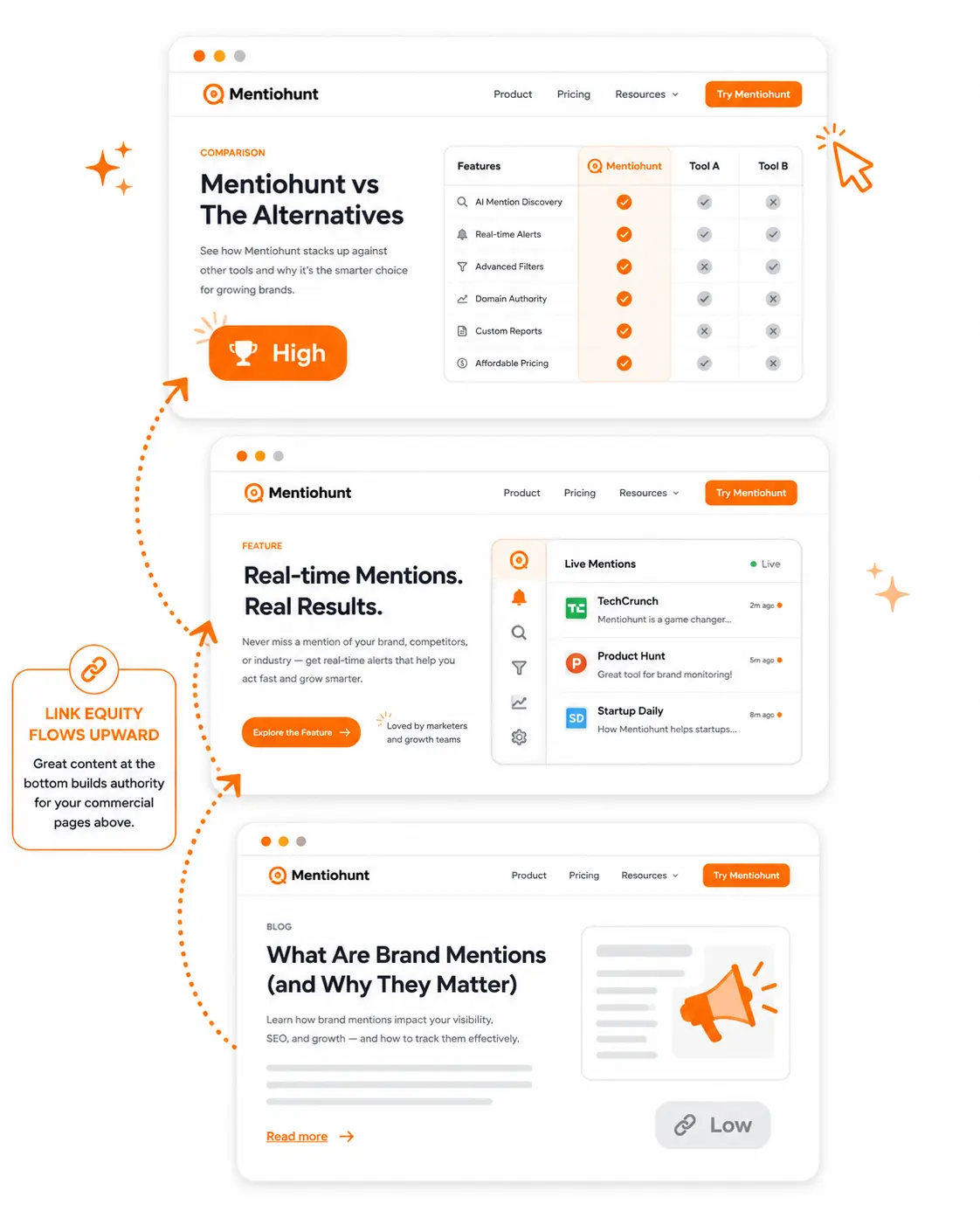
The practical rule: when you have a choice between two outreach targets and one links to your blog post while the other links to your comparison page, choose the comparison page. The equity compounds where conversions happen.
For blog posts, the move isn't to stop building links to them — it's to make sure each high-performing post has deliberate internal links to at least one commercial page. Without that path, link equity from the blog post doesn't reach the pages that drive revenue.
The opportunity stack: 7 link types ranked by founder effort
In practice, early-stage SaaS teams often waste significant time on tactics that require weeks of work before a single outreach email goes out. The stack below is ordered by effort-to-result ratio — start from the top, and move down as capacity increases.
1. Unlinked brand mentions
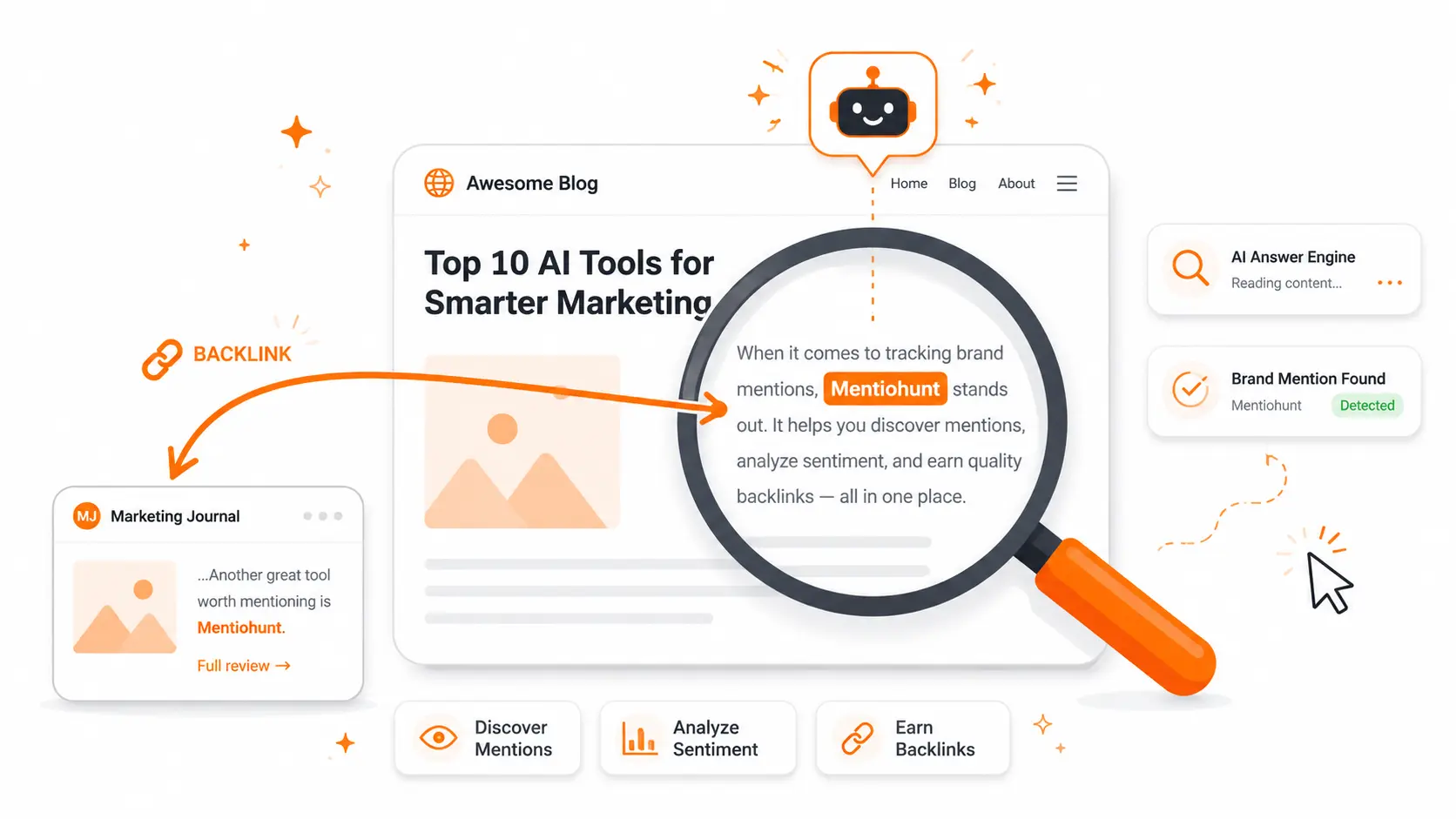
Someone already wrote about your product or named your company but didn't link to you. That's the lowest-friction backlink opportunity that exists: no cold outreach to a stranger, no content to create, no pitch to build from scratch. Just a short email asking them to make an existing mention clickable.
Search for your brand name in quotes and exclude your own domain. Ahrefs Content Explorer surfaces these at scale. Most mentions that get a link request convert at 20–40% — because the site already chose to mention you.
2. Integration and partner pages
If your product integrates with any platform — HubSpot, Slack, Notion, Zapier, Airtable, Stripe — those platforms often maintain integration directories and partner pages. A listing there typically gets you a link from a domain with DR 70–90 and genuine referral traffic from buyers who are already using the partner product.
These links require almost no outreach because the process is usually a self-serve listing form. They're also among the most topically relevant links a SaaS product can earn because the audience is pre-qualified: they use the platform your product integrates with.
3. Resource page inclusion
Resource pages are curated lists: "Best tools for X," "Useful resources for Y founders," "Our stack at [company]." They exist across niches and are maintained by bloggers, newsletters, community sites, and independent practitioners.
The fit rationale is simple: your tool belongs on the list and they haven't added it yet. Relevance matters more than DR here — a DR 35 resource page read by your exact ICP is more valuable than a DR 70 page nobody visits.
4. Comparison and alternatives inclusions
"Best [competitor] alternatives" pages are high-intent, high-traffic, and actively read by buyers during their evaluation stage. Getting included in one means your product appears in front of people who have already decided to buy — they just haven't decided from whom.
Find these pages by searching "[competitor name] alternatives" or "best [category] tools". Many maintain a submission form or contact email. This is also where a competitor backlink gap analysis pays off: find sites that link to three or four competitors in your category but haven't covered your product yet.
If you're evaluating your own link-building tool and weighing whether a full SEO platform or outreach CRM is worth the setup cost, see how a lighter, automated link building software queue compares: Ahrefs, Semrush's link building module, Pitchbox, Respona, and BuzzStream.
5. Guest posts on niche publications
Guest posts work — but only when the publication's audience overlaps your ICP meaningfully. A post on a generic SEO blog that links to your B2B SaaS product earns a backlink with low referral value and weak topical relevance.
Useful guest posts target publications your buyers already read: industry newsletters, niche practitioner blogs, community roundups. One relevant guest post beats five irrelevant ones every time, both for SEO signal and for actual referral traffic.
6. Original data and linkable assets
Benchmark reports, surveys, calculators, and free tools earn passive links because other writers want to cite them. They require the most upfront investment but compound over months and years without ongoing outreach effort.
If you have product usage data that can be anonymized and aggregated into a benchmark, that's your clearest advantage — no competitor can replicate your own data. Even a focused survey of 50–100 customers can produce a citable asset that earns links for years.
7. Digital PR and journalist queries
Expert commentary for journalists via platforms like Qwoted or Connectively (formerly HARO) can produce high-authority links from major publications. The tradeoff is low control over placement, high competition for relevant queries, and unpredictable timing.
This is a supporting tactic for teams with available bandwidth, not a primary motion for founders who are also closing deals and shipping product.
| Tactic | Effort | Time to first result | Link quality | Best for |
|---|---|---|---|---|
| Unlinked mentions | Low | 1–2 weeks | Medium–High | Any stage |
| Integration directories | Very low | Days | High | Any stage |
| Resource page outreach | Low–Medium | 2–4 weeks | Medium | Early stage |
| Comparison inclusions | Medium | 2–6 weeks | High | Early–Growth |
| Guest posts | Medium–High | 4–8 weeks | Medium–High | Growth |
| Original data / tools | High | 1–6 months | Very high | Growth+ |
| Digital PR | Medium | Unpredictable | Very high | Growth+ |
Which tactics fit your stage
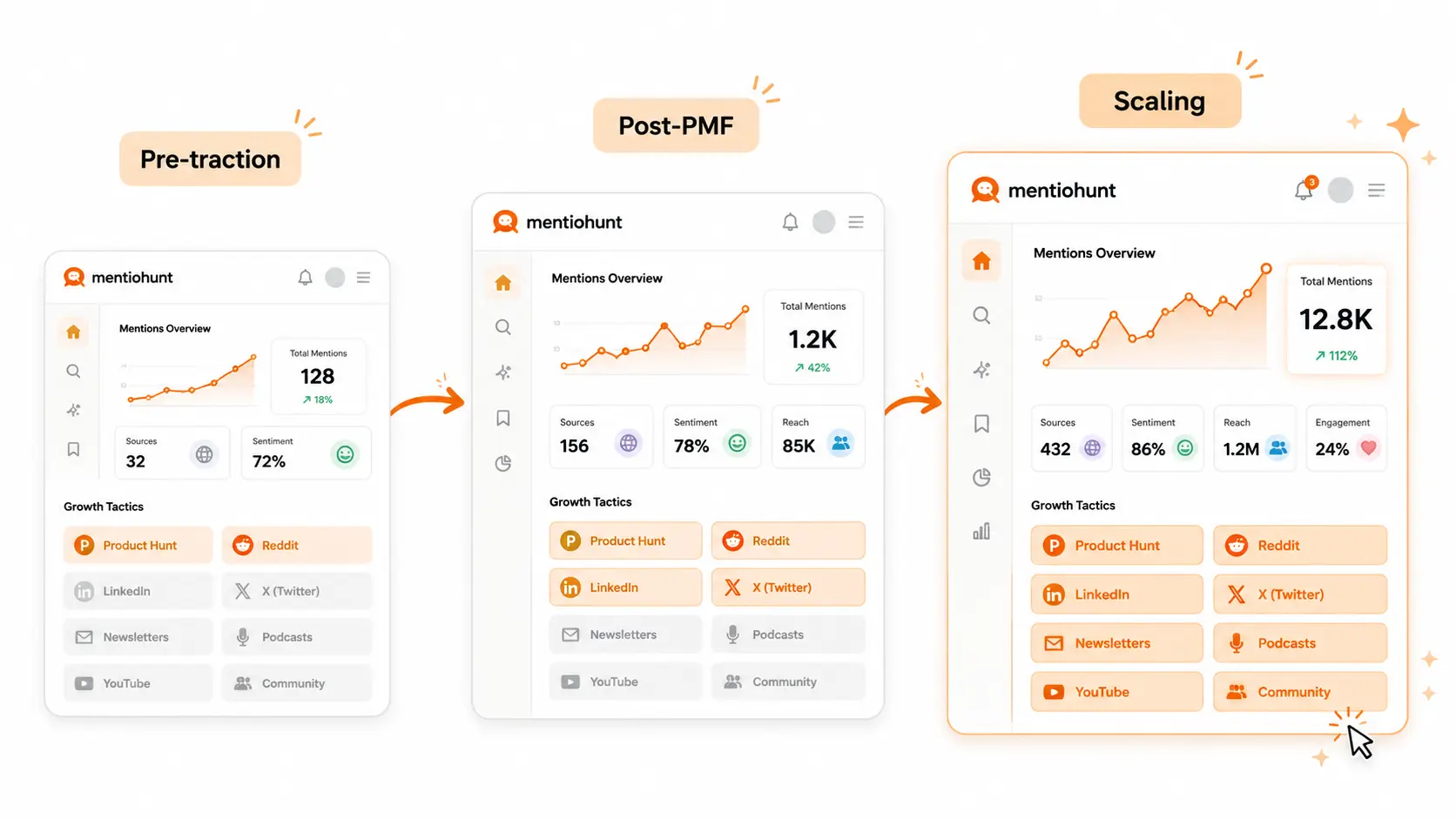
The table above shows effort and quality — but which tactics actually make sense depends on where you are. Running digital PR before you have brand recognition is a waste of time. Waiting until you have a full team before doing integration listings is leaving easy wins on the table.
Pre-traction (new domain, no brand mentions yet)
Your brand isn't being mentioned anywhere yet, so unlinked mention outreach is a dead end. Start with the two tactics that require no existing authority: integration directories and startup directories. If your product integrates with anything — even one platform — submit there first. It's the fastest path to a high-DR link with zero outreach friction.
After that, shortlist 10–15 resource pages in your niche and send short emails. The fit rationale is simple ("your list covers X, our tool does X") and response rates are reasonable even for unknown products. Don't start guest posting yet — editors want proof you exist before they give you a slot.
Post-PMF, early growth (some brand traction, consistent signups)
Now unlinked mentions are worth checking — your product is starting to appear in other people's content. Run a brand search monthly and convert any mentions you find. Simultaneously, run a competitor backlink gap analysis to find comparison and alternatives pages that list your competitors but not you. These pages have warm audiences; getting added to them typically takes one short email.
Guest posts start making sense here, but stay selective. One post on a publication your ICP reads every week beats five posts on generic SEO blogs. Prioritize by audience fit, not domain metrics.
Scaling ($100K+ MRR, team capacity for outreach)
All tactics are viable. The constraint shifts from effort to quality and volume. This is when original data assets — benchmarks, surveys, annual reports — pay off: the upfront investment is high but they earn links passively for years. Digital PR also becomes practical at this stage because your brand recognition reduces the cold-pitch friction that kills it earlier.
If you're outsourcing at this stage, your positioning needs to be tight enough that a freelancer can pitch your product without a briefing call. If it isn't, that's the constraint to fix before spending on outreach.
How to find and qualify opportunities without wasting time
Finding prospects is faster than most founders expect. The slow part is qualification — deciding which opportunities are actually worth pursuing. For the full discovery workflow — competitor gaps, search operators, resource pages, unlinked mentions, and scoring — see how to find backlink opportunities.
Finding prospects:
- Search
"best [your category] tools"and"[competitor] alternatives"to surface listicles and comparison pages - Use Ahrefs Link Intersect: enter 3–4 direct competitors and find domains that link to all of them but not to you — those are warm targets
- Set up Google Alerts for your brand name and your competitors' names to catch unlinked mentions as they appear
- Browse the integration directories for your main platform partners
Qualifying a prospect:
- Does the page have genuine organic traffic? Check Ahrefs or Semrush — a page with no organic traffic has no real audience, regardless of DR.
- Is the page's topic within two hops of what your product does?
- Would their readers care that your product exists?
- Is there a clear fit rationale — one sentence explaining why your product belongs in their content?
Once a placement goes live, don't just confirm the link exists — check whether it's actually dofollow. The free dofollow backlink checker scans any page URL and shows you in seconds, no digging through page HTML required.
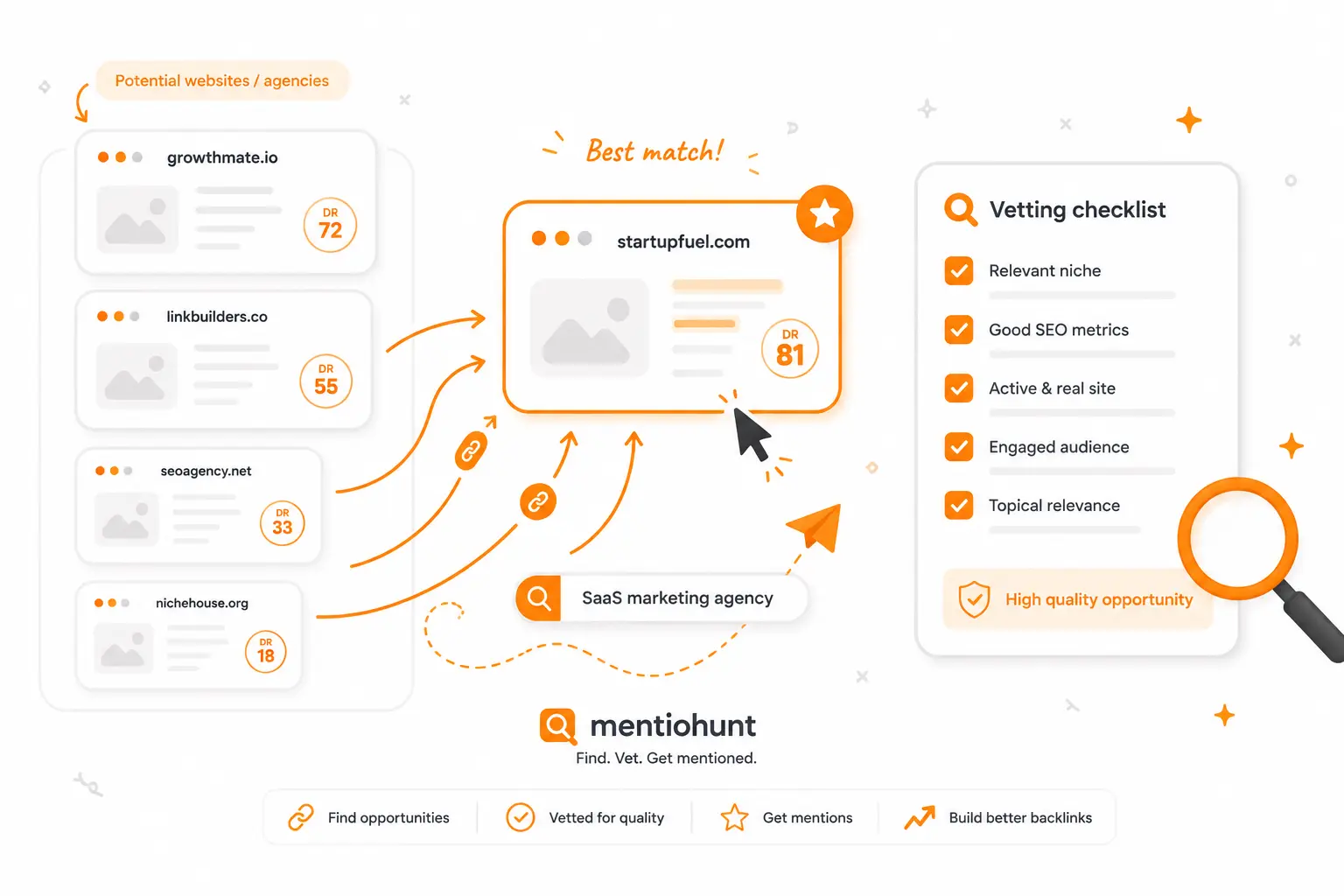
The biggest qualification mistake is over-indexing on Domain Rating. A DR 35 site with 8,000 monthly visitors in your exact niche consistently outperforms a DR 70 site with 300 monthly visitors in a vaguely related niche — in both referral value and topical relevance signal.
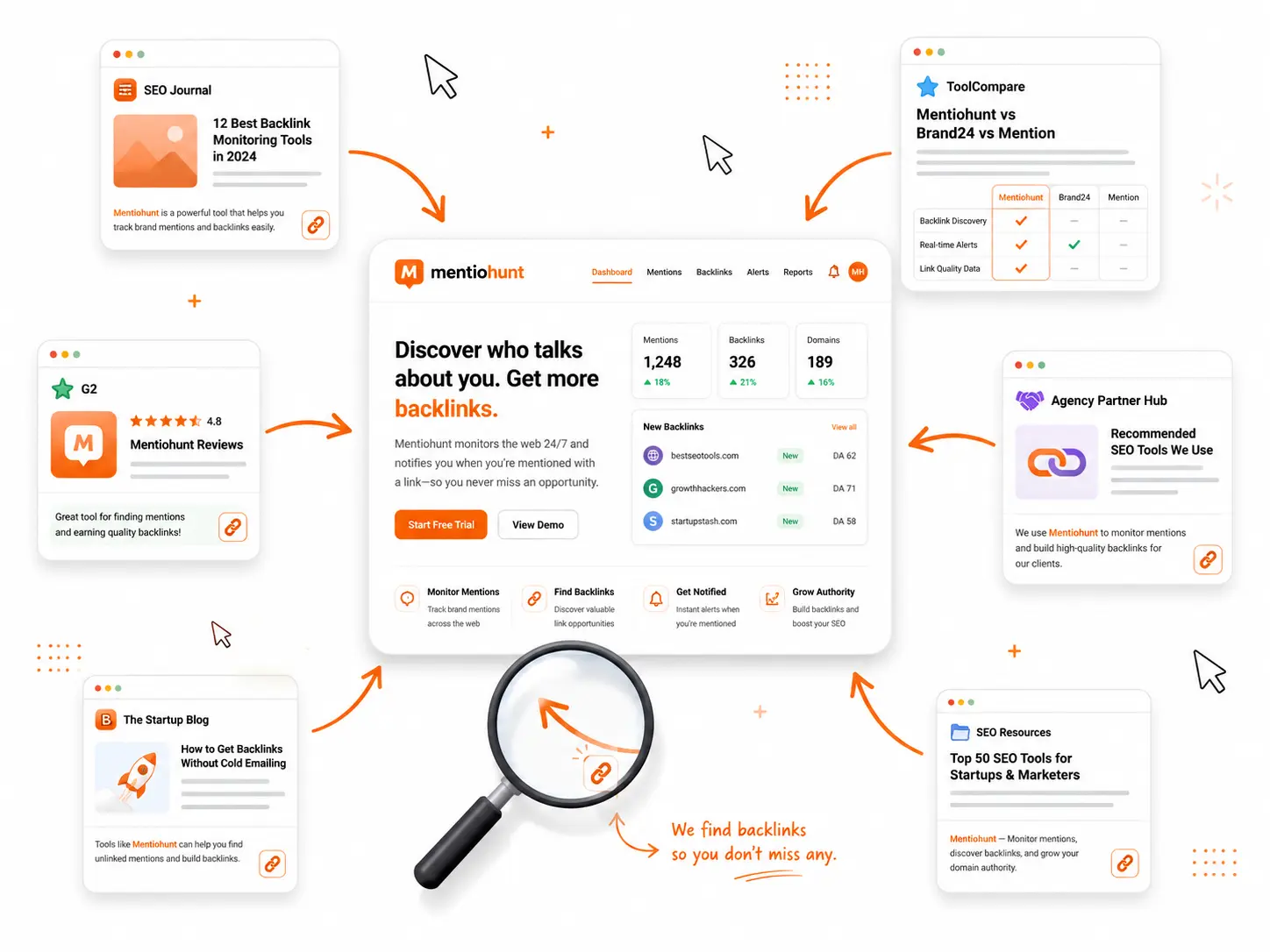
A tool like Mentiohunt automates this discovery — it scans your existing articles and pages, identifies sites where each piece fits, scores each opportunity for relevance, and prepares an outreach draft so you're not starting from zero.
Writing outreach that actually gets replies
The fit rationale — the reason your product or article belongs in their content — is the most important part of any outreach email. Templates without a real reason to exist get ignored or marked as spam. For the full playbook — templates by outreach type, follow-up sequencing, and deliverability setup — see link building outreach email.
Short, specific, founder-to-founder outreach outperforms agency-style pitch emails. The reader knows within two sentences whether this is a real message or a spray-and-pray campaign. Here's what a real one looks like:
Hi Sarah,
Found your roundup of B2B onboarding tools while researching content distribution tools for SaaS teams. Good list — we've shared the Appcues section with a few founders.
Mentiohunt might fit as a companion tool. It's specifically for teams who want to find backlink and placement opportunities from their existing content — covers the distribution side that most onboarding tools leave entirely to the user.
Worth adding, or happy to share a bit more context if that's useful.
Nico
Notice what's absent: no metrics, no DR claim, no "I'd love to explore a collaboration." The pitch is two sentences. The reason to care is specific to their list. That's the pattern that gets replies.
Getting cited in AI search alongside rankings
SaaS link building in 2026 has a second layer. Your backlink profile and brand mention footprint now influence whether AI search tools — ChatGPT, Perplexity, Google AI Overviews — surface your product alongside traditional organic rankings.
LLMs build a picture of your brand from the sources they index and retrieve from. That means the same work that earns organic backlinks — mentions on credible sites, citations in practitioner content, presence in community discussions — also increases the probability that an AI assistant recommends you when someone asks "what's a good tool for X."
A few surfaces matter more for this than traditional SEO wisdom suggests:
- Reddit and community forums. LLMs weight Reddit discussion heavily. Organic, genuine mentions in relevant subreddits — r/SaaS, r/Entrepreneur, niche community forums — contribute to your citation footprint without requiring any link at all.
- Developer directories and API marketplaces. If your product has an API or integration layer, presence in developer-adjacent directories adds technical credibility signal that shows up in LLM retrieval.
- Product roundups on well-indexed publications. Being included in a "best tools for X" article on a well-trafficked, well-indexed publication puts you into training corpora and retrieval graphs, not just Google rankings.
This isn't a separate strategy that requires a new workflow. It's a reason to prioritize quality, topical relevance, and mention diversity in the link building you're already doing — the same work produces both signals.
One example of this in practice: Reddinbox concentrated 159 backlinks on a single keyword over 6 months and started showing up in Google's AI Overview for that exact query — real campaign numbers from a product built by the same team behind Mentiohunt.
For the data behind this — including why backlinks alone don't explain AI citation frequency — see do backlinks still matter for AI citations.
What a 30-day starting cadence looks like
This is not a complete system. It's a starting point that produces real outreach in the first month without requiring a dedicated resource.
Week 1: Search your brand name in quotes, exclude your own domain. Find 10–15 unlinked mentions in recent articles. Draft short emails. Send.
Week 2: List every integration your product supports. Find the partner and integration directory pages for each. Submit where there's a self-serve form. Send a short email where there isn't.
Week 3: Search three to five competitors plus "alternatives." Identify which pages don't include your product. Check organic traffic on each. Shortlist the five most relevant.
Week 4: Write and send outreach for the shortlisted comparison pages. Review replies from week one and two. Follow up once where appropriate.
The goal at the end of month one isn't a list of live backlinks — it's a qualified pipeline of 30–50 real opportunities you can work through at a pace that fits your schedule.
Common mistakes that waste time
Chasing DR over relevance. A backlink from a DR 80 domain in an unrelated niche moves less than a DR 40 link from a publication your exact buyer reads weekly. Relevance is the primary signal, not domain metrics.
Building links to blog posts without internal links to money pages. Link equity doesn't teleport. A backlink to your blog post needs a clear internal path to your feature, comparison, or pricing page to produce commercial value.
Starting outreach before the fit rationale is clear. If you can't write one sentence explaining why their audience would care about your product or article, the email will feel generic — because it is. Slowing down on qualification makes the actual outreach take five minutes and produce better results.
Outsourcing before positioning is clear. Agencies and freelancers can't pitch a product whose differentiation they don't understand. If you can't explain in one sentence what your product does and who it's for, that's the constraint to fix before spending money on outreach.
Measuring what's working
Track leading indicators first:
- Referring domain growth to target pages — not site-wide. A link to your comparison page is different from a link to your blog index.
- Ranking movement on pages that received links — usually visible in Google Search Console within 6–12 weeks.
- Referral traffic from linked pages — a strong signal that the link came from a real site with an engaged, relevant audience.
- Reply rate on outreach — a consistently low reply rate usually signals a weak fit rationale, not a bad email template.
For benchmark reply rates by Domain Rating tier and site fit score across real outreach campaigns, see Mentiohunt's link building outreach statistics.
Don't try to attribute individual signups to specific backlinks at this stage. The compounding effect of authority signals works at a portfolio level over time, not per-link. The metrics above tell you whether your pipeline is healthy and whether your outreach is landing — that's enough to optimize from.
SaaS link building produces results when the prioritization is right: the right pages, the right opportunity types, in an order that fits your team's actual capacity. Every tactic in this playbook works. Most founders benefit most from starting with the three lowest-effort options — unlinked mentions, integration directories, and resource page outreach — before moving up the effort curve.
If you want to surface the opportunities that already exist in your content without spending hours on discovery, Mentiohunt does that automatically. It scans your articles and pages, scores each opportunity for fit, and prepares outreach drafts so your queue is ready to work.

Founder at Mentiohunt. Building distribution tools for founders and small marketing teams. Writes about backlink building and founder-led growth.
@nicolasmore_Turn this guide into a weekly opportunity queue.
Mentiohunt helps founders turn article URLs, competitors, keywords, and product context into qualified backlink opportunities with fit rationale and outreach prep.