Prefer AI? Summarize this with ChatGPT,
Claude,
Google AI Overview, or
Perplexity.
When founders talk about getting backlinks from ChatGPT, they usually mean two different things — and the distinction matters.
The first is earning real web backlinks that ChatGPT is more likely to retrieve and cite. The second is getting your pages mentioned directly inside ChatGPT answers as a source. Both are worth pursuing, and the same playbook moves both needles.
The short version: stop chasing ChatGPT. Build pages it trusts and earn backlinks from the neighborhood it already cites.
Why ChatGPT cites what it cites
ChatGPT doesn't pick sources arbitrarily. A few patterns show up consistently in the data.
Ranking still matters. In one study, the top retrieval result was cited 58.4% of the time. You do not need to be first, but being easily retrievable for a specific query is a prerequisite.
Narrow focus beats broad guides. ChatGPT often needs a specific answer. Pages that answer one question well get retrieved more than "ultimate guides" covering everything loosely.
Front-load your answer. Roughly 44% of citations come from the first 30% of an article. If your answer is buried after four paragraphs of context, you will be skipped.
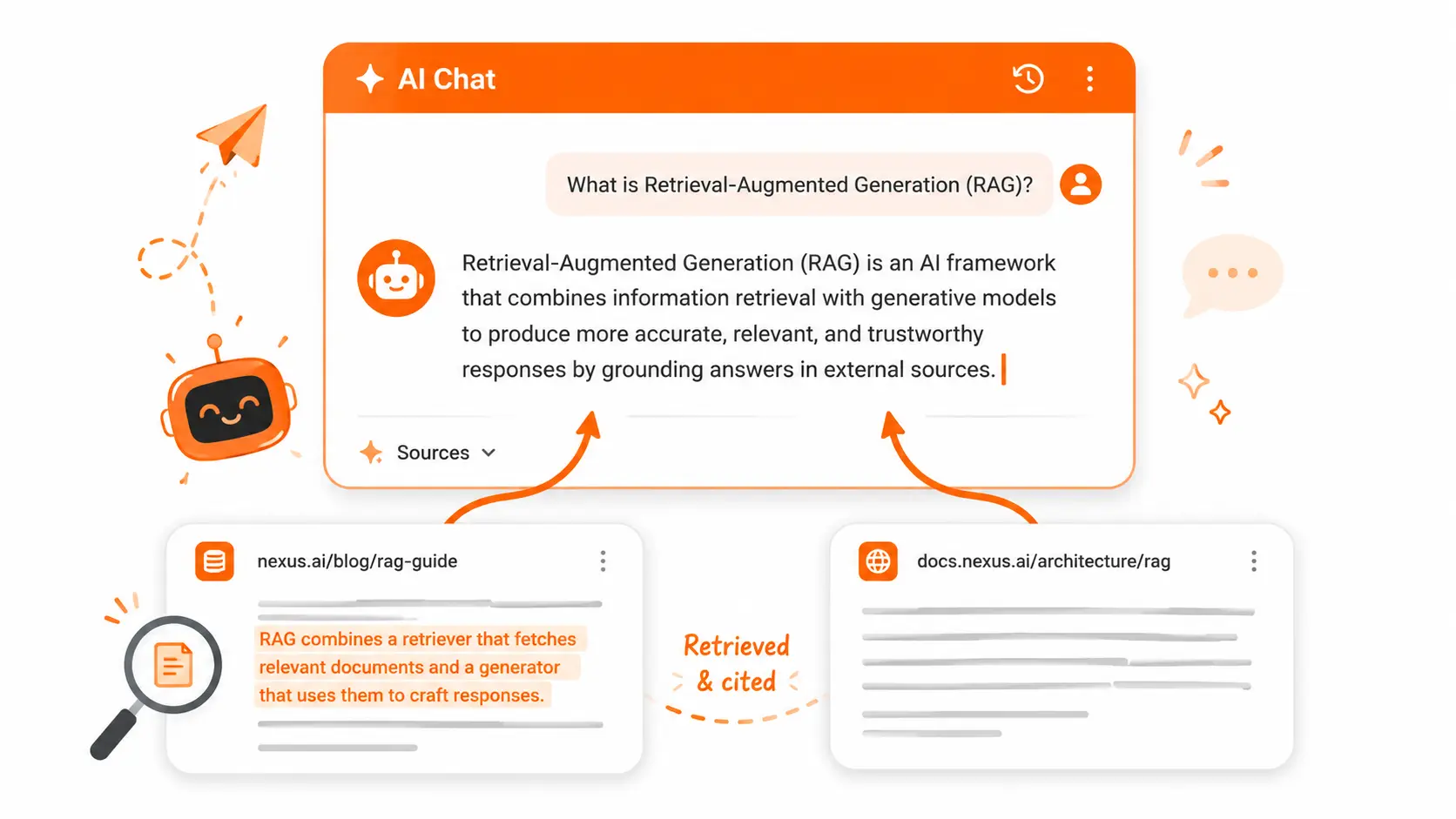
Sources travel in clusters. ChatGPT tends to cite multiple sources from the same domain neighborhood. If niche-relevant sites in your space are already being cited, earning backlinks from those same sites increases your chances of appearing alongside them.
Third-party validation multiplies your odds. Sites mentioned on Reddit, Wikipedia, niche news outlets, or major publications like Forbes are 6.5x more likely to be cited than sites relying only on their own domain. Owned content is not enough.
For the broader data on how backlinks and brand mentions each play into AI citation odds — not just ChatGPT — see do backlinks still matter for AI citations.
Build pages ChatGPT can trust and retrieve
Before chasing backlinks, the pages you want cited need to be worth citing.
One page per intent. Target "what is," "how to," and "best way to" queries with individual focused pages. Do not build one giant resource that loosely covers five different questions.
Match the query in your headings. Use exact or near-exact query wording in your H1 and H2s. ChatGPT retrieval favors headings that closely mirror what was asked.
Open with a direct answer. Put the core answer in your first two or three sentences. Do not make the model work to find your point.
Add FAQ structure and schema. Clean question-and-answer sections with JSON-LD structured data show a modest but consistent citation uplift. They also make it easier for retrieval systems to extract clean answers from your page.
Refresh periodically. Fresh pages are not the strongest performers, but pages that have never been updated fall behind. Re-visiting your top pages every few months helps.
Earn backlinks from the right neighborhood
Page quality alone is not enough. ChatGPT citation behavior is influenced by the sources it already trusts in your niche.
The highest-leverage backlink tactics here are:
- Broken link replacement — find outdated or dead resources in your topic area and offer a current replacement
- Resource page inclusion — pitch relevant roundups and tool lists in your space
- Guest posts on niche blogs — topical relevance matters more than domain authority
- Expert quotes in journalist roundups — HARO-style platforms like Qwoted and Featured are worth monitoring
A short outreach pitch for resource inclusion:
Hi Jordan,
I noticed your resource page on AI search optimization links to a few tools in the backlink and content discovery space.
We recently published a focused guide on getting cited by ChatGPT as a source — covering page structure, schema, and the backlink neighborhood that matters for LLM retrieval: https://mentiohunt.com/backlinks-from/chatgpt
It may be a useful addition if you're updating the list.
Nico
What to avoid: random high-DR links with no topical relevance, AI-generated bulk outreach, and buying link packages. Topical fit and trust matter more than raw metrics for AI search visibility.
What no longer works
- Generic "what is X" posts. ChatGPT can generate these answers itself. It has no reason to cite a page that just restates a definition.
- Blocking OpenAI crawlers. If you block OpenAI's crawlers in your
robots.txt, you lose citation eligibility entirely. No crawl, no citation. - Chasing domain authority alone. Small, niche sites frequently out-cite major brands by being more direct and specific. Relevance beats authority here.
- Bulk AI-generated outreach. Spam detection is good, and irrelevant links add no trust signal.
A simple workflow
- Pick 10–20 first questions your audience asks — "what is," "how to," "best way to."
- Create focused pages that answer each better than competitors. One page per intent.
- Add clear headings that mirror the query, FAQ sections, and JSON-LD schema.
- Find what ChatGPT already cites for those topics by testing the queries directly.
- Earn backlinks from that same domain neighborhood through outreach, guest posts, or resource inclusion.
- Refresh and re-pitch every few months — citations and sources shift over time.
Track it
Standard SEO tools are only beginning to track LLM citations. The most reliable current method is GA4, which now has a dedicated AI Assistant channel group that separates traffic from ChatGPT, Gemini, and Claude from regular referral traffic. Set it up once so you can see which pages are already earning AI search visits.
Build the broader opportunity queue
The hardest part of this strategy is step five: finding the right sites to pitch.
That's where Mentiohunt's backlink building fits. Add your article URLs, and Mentiohunt identifies websites where each piece may be a relevant fit, surfaces available contact details, and prepares outreach drafts with a fit rationale. That gives you a qualified opportunity queue instead of cold searches.
The same niche-relevant backlinks that help ChatGPT trust your pages also reinforce your broader backlink strategy. The playbooks work together.
The practical takeaway
Getting cited by ChatGPT is not a separate strategy from building a good backlink foundation. It is the same foundation, applied to AI retrieval logic.
Build focused, well-structured pages. Earn links from the domain neighborhood ChatGPT already trusts in your niche. Front-load your answers. Refresh periodically. Track AI search traffic in GA4.
The sites getting cited most are not gaming the system. They are just easier to trust, easier to retrieve, and better validated by the sources around them.

Founder of Mentiohunt. Built the company's own backlink pipeline using the same methods covered here — expert quote outreach, journalist sourcing platforms, and citation-worthy assets. Writes about link prospecting and founder-led distribution.
@nicolasmore_Turn platform research into a recurring opportunity queue.
Mentiohunt helps founders turn article URLs, competitors, keywords, and product context into qualified backlink opportunities with fit rationale and outreach prep.