Prefer AI? Summarize this with ChatGPT,
Claude,
Google AI Overview, or
Perplexity.
You have a budget for links and a pricing page in front of you: "9 links a month, DA 30+, $3,500." It looks simple. A fixed price for a fixed number of links.
What the page doesn't show is what each link costs, what the site behind it would have charged you, and how much of the price is margin.
So we read seven vendors' published link building packages on November 18, 2026, worked out the price per link, and set it against what publishers asked when we emailed them directly. Here's what a package contains, what it really costs, and what to check before you pay.
TL;DR: A link building package is a bundle of placed links sold at a fixed price, usually per month. The managed monthly packages we checked came to $250 to $500 per link. Per-link catalogs start at $60 to $160. Publishers that quote a price ask a median $85 for a guest post. The difference pays for writing, site picking and margin, which can be worth it. Before you buy, ask for recent placements, check those sites have real readers, and ask how the link will be marked.
What a link building package is
A link building package is a set number of link placements sold at a set price. The vendor promises a count of links per month or per order, a minimum site metric (usually Domain Rating, DR, or Domain Authority, DA, sometimes monthly traffic), and often the article that carries the link.
You're buying an outcome, a number of links, not the work behind it. Packages come in three shapes:
- Monthly managed package: the vendor runs the outreach and places a fixed number of links every month. The ones we checked ranged from 2 to 28 links a month.
- Per-link catalog: you pick a tier, usually by DR, and order one link or twenty.
- Custom campaign: an agency quotes per project with no fixed count. That's a retainer, not a package.
If you're still deciding between packages, agencies, freelancers and software, start with our overview of link building services. This guide stays on packages.
What's inside a typical package
Most pricing pages list the same handful of things. Each one hides a question worth asking.
| What the page lists | What it usually says | What to ask |
|---|---|---|
| Number of links | A fixed count (2, 9, 14) or a range | Is the count guaranteed each month? What happens if they miss it? |
| Site minimum | DR or DA 30+, sometimes 100+ or 1,000+ monthly visits | Traffic measured how, and for the site or the page your link sits on? |
| Link type | Guest post, a link added to an existing article, a spot in a list | Which type is each link? |
| Content | "Includes writing" | Who writes it, how long is it, and do you approve it? |
| Guarantee | Replacement if the link disappears within 12 months, 365 days or "lifetime" | Replaced with a link of the same quality, on a site you can check? |
| Report | A list of live URLs each month | Do you see the sites before the links go live, or after? |
What's usually missing matters more. The seven pricing pages we read describe sites by a metric (DR, DA or traffic), not by name, so you don't know which sites you'll get until the report arrives. None said paid links would be marked rel="sponsored". Two advertised do-follow links instead, and one priced its packages for campaigns run without the client approving the sites first.
What link building packages cost, per link
These are list prices from each vendor's own pricing page, read on November 18, 2026. Where a vendor was running a Black Friday discount, the table shows the regular price.
| Vendor | Package | Price | Links | Price per link |
|---|---|---|---|---|
| Loganix | Standard | $500 a month, plus $500 setup | 2 guest posts | $250 |
| Loganix | Authority | $1,000 a month, plus $500 setup | 2 | $500 |
| Linkfish Media | Basic | $1,050 a month | 3 | $350 |
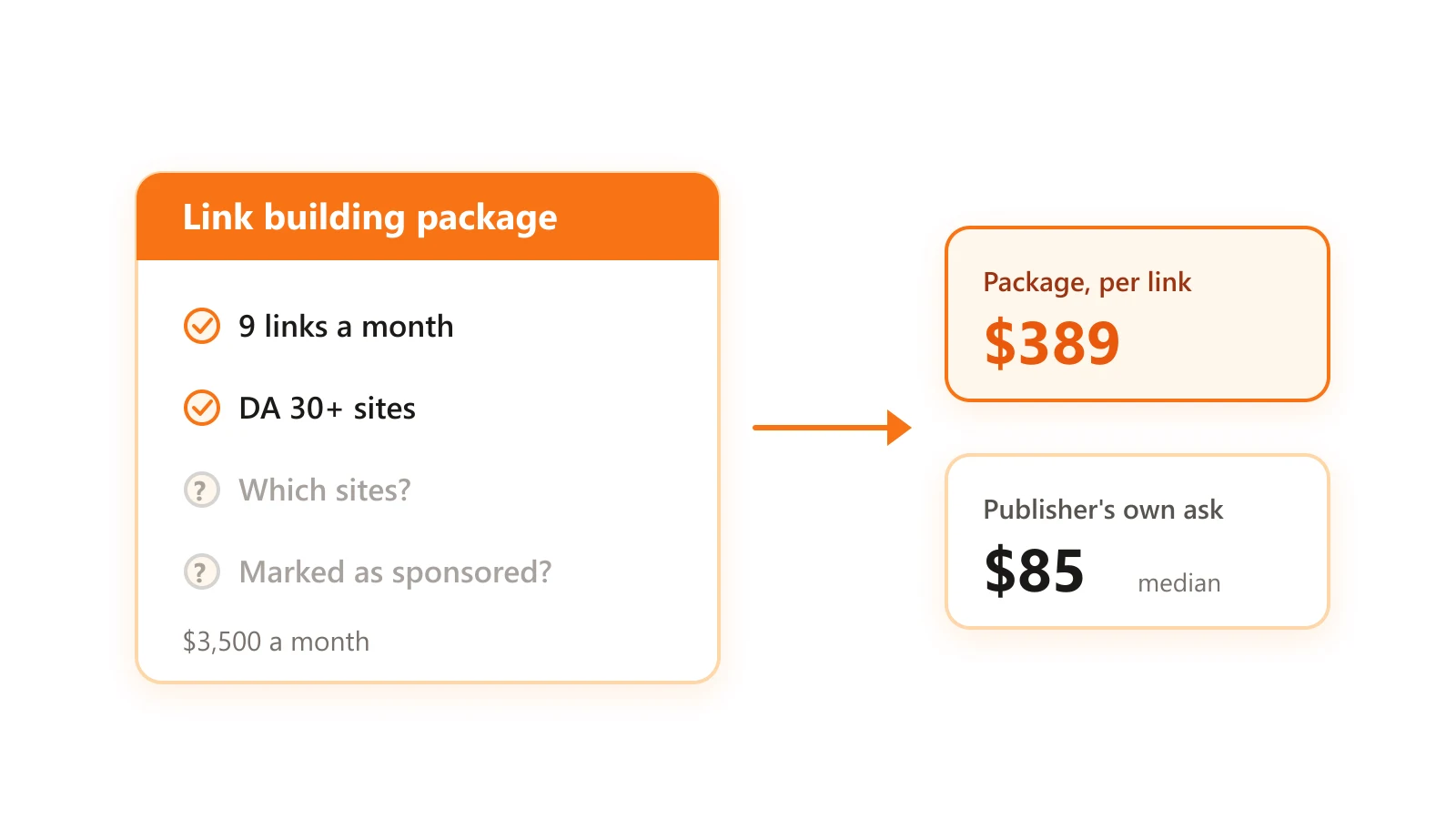
| Sure Oak | Starter | $3,500 a month | 9 | $389 |
| Sure Oak | Professional / Enterprise | $5,000 / $10,000 a month | 14 / 28 | $357 |
| FATJOE | Blogger outreach, by DR | Per placement | 1 | $72 (DR 10+) to $456 (DR 60+) |
| Authority Builders | Guest post | Per order | 1 | From $160 |
| Rhino Rank | Link in an existing article / guest post / list spot | Per order | 1 | From $60 / $75 / $135 |
Two patterns stand out. Managed monthly packages land at $250 to $500 per link, and the per-link price barely drops as the package gets bigger: Sure Oak's 28-link plan costs the same per link as its 14-link plan. Per-link catalogs start much lower, between $60 and $160, then climb steeply with DR.
Prices change often, so check the vendor's page on the day you buy.
The markup: package price vs what publishers ask
Between July 13 and November 10, 2026, Mentiohunt contacted 5,217 sites asking for free editorial links on behalf of the products using it. 719 replied, and 377 of them asked to be paid. Across the sites that named a price in dollars, the median ask was $85 for a guest post (206 sites), $90 for a link added to an existing article (63 sites) and $249 for a spot in a "best X" list (45 sites). The full numbers are in our link building outreach statistics.
Set against those asks, a $250 to $500 managed package link costs 3 to 6 times what the publisher asks. Some of that gap is real work:
- Writing the article, which you'd otherwise do yourself
- Finding a site that will take it and checking it isn't junk
- Following up until it's published
- Replacing the link if it disappears
That can be worth paying for if your time is scarce. The gap that's harder to justify is the DR ladder.
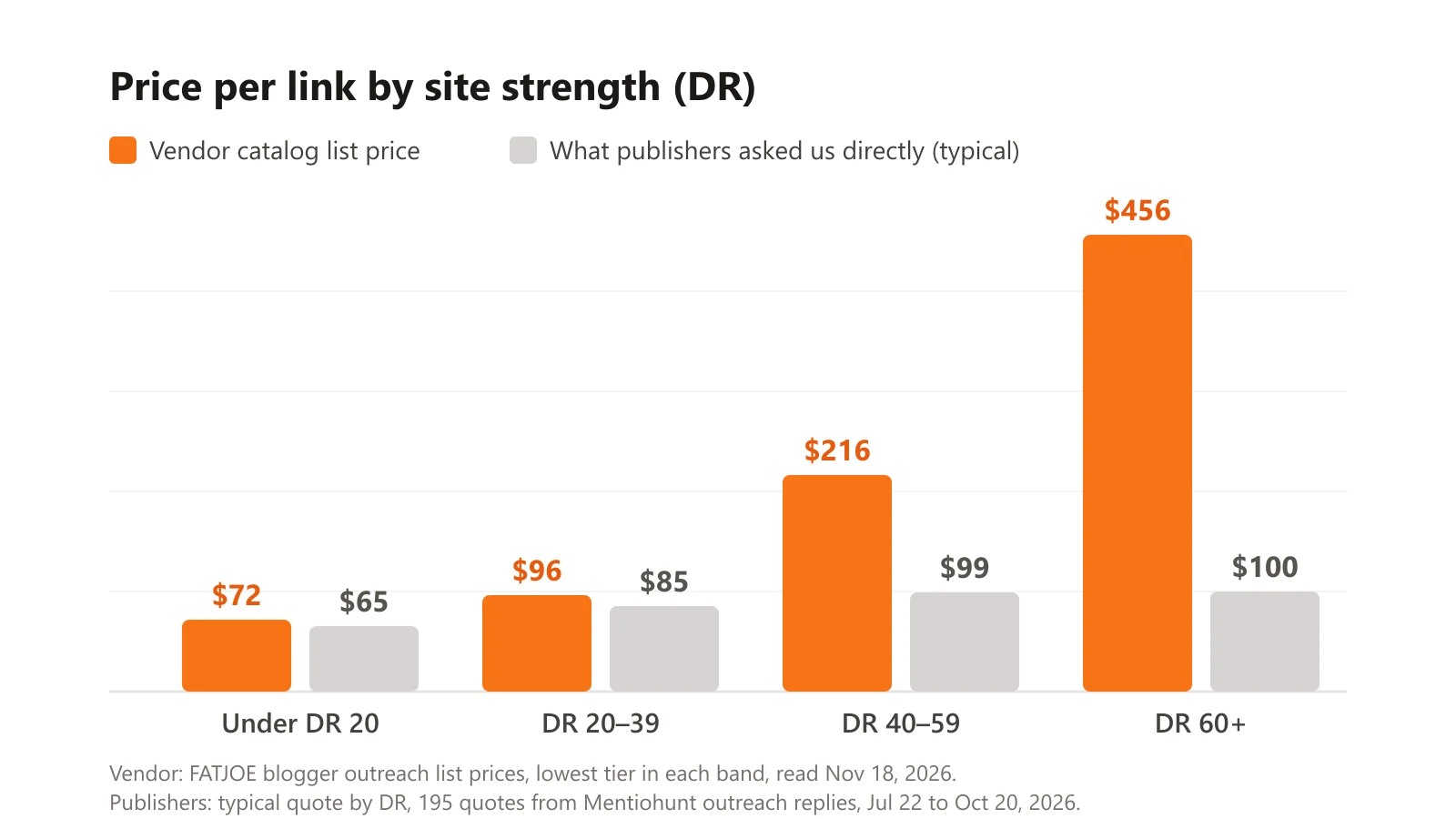
FATJOE's list price rises more than six times from its DR 10+ tier ($72) to its DR 60+ tier ($456). In an earlier sample of 195 priced quotes from our outreach (July 22 to October 20, 2026), sites under DR 20 asked a typical $65 and sites at DR 60 and up asked $100. That top group had only 14 quotes, and catalog sites aren't the same sites that answered our emails, so treat it as a hint. Still, the sites themselves don't price their links by DR anywhere near as steeply as the catalogs do. Most of a steep DR ladder is margin. We break down per-link prices by type in what publishers charge per link.
Red flags in a link building package
- DR is the only quality bar. DR is a third-party score of a site's backlinks. It says nothing about whether real people read the site or whether it covers your topic.
- A range instead of a count. "5 to 10 links a month" or "links may vary" means you can't compare it with anything.
- No sites until after you pay. If you can't see a single example before buying, you can't judge what you're buying.
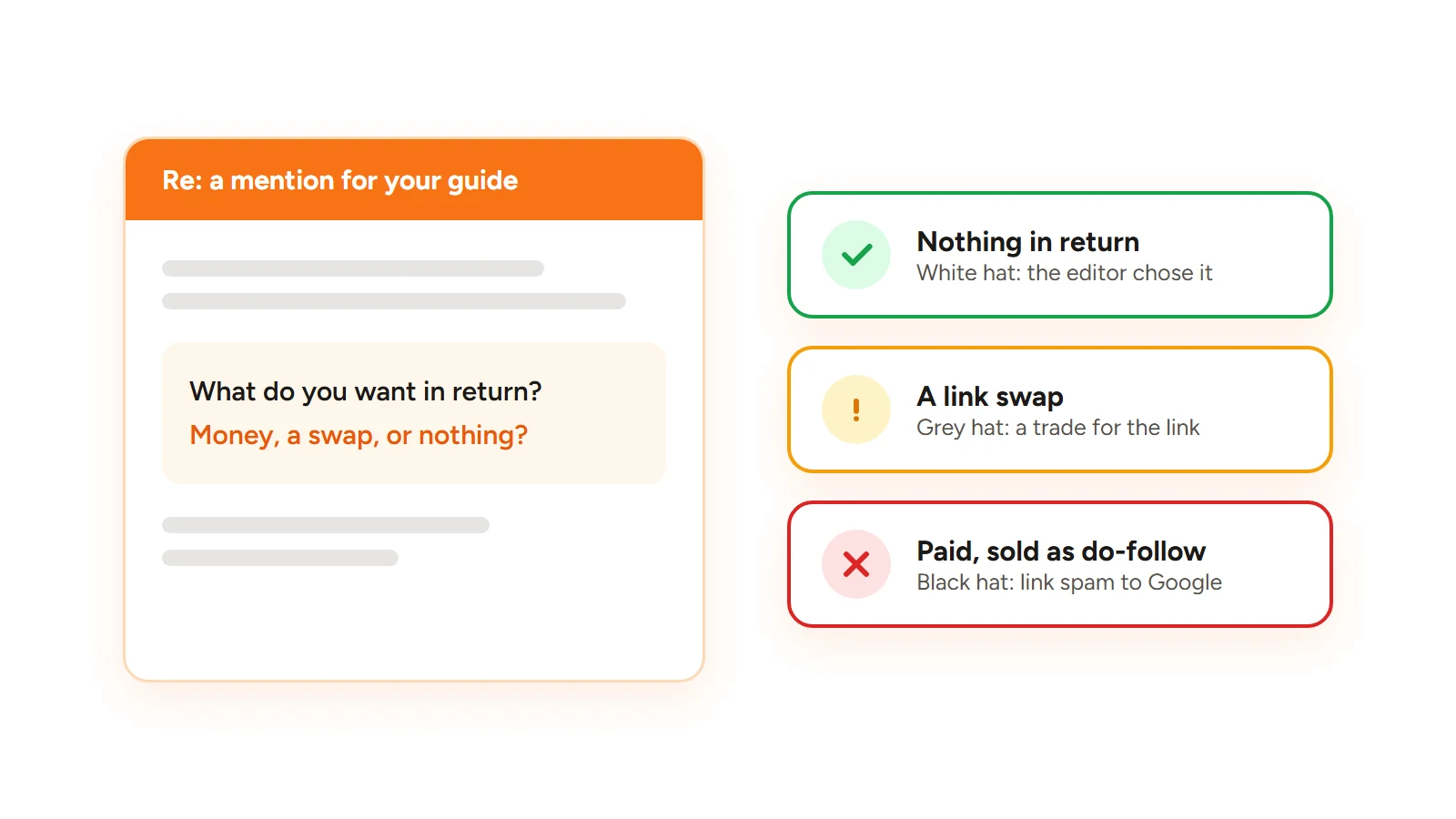
- "Do-follow guaranteed" on a link you pay for. Google's spam policies treat buying links that pass ranking credit as link spam, and Google asks that paid links be marked as sponsored. In our earlier sample, 121 of the 260 sites that asked for money explicitly promised a do-follow link.
- Sites that sell to anyone. 91 of those 260 sites listed casino, CBD, gambling or crypto rates in the same reply. A site that publishes for every topic is not a relevant site for yours.
- Ranking promises. Nobody controls where Google ranks your page. A vendor can promise the links it places, not the result.
The risk isn't only a penalty. When Google announced its December 2022 link spam update, it said its systems can detect both sites buying links and sites selling them, and that ranking credit passed by those links can be lost. A bought link that Google ignores is money spent on nothing.
How to check a package before you buy
- Ask for three placements from last month. Real URLs, live now, from clients in different niches.
- Open each site and read it. Does it publish for readers, on a topic, or is every post a thinly written article with a link in it? Check its organic traffic in any SEO tool, ideally for the page the link sits on.
- Look for signs it sells to everyone. A "write for us" page with a price list, or categories that mix your topic with casino and crypto, is a site you don't want a link from.
- Ask how the link will be marked. If the site was paid, the honest answer is
rel="sponsored". If the vendor says nobody was paid, ask what the package fee covers. - Start with one month or one order. Skip setup fees and long contracts until the first links are live and you've checked them.
Package, agency or automated outreach: which fits
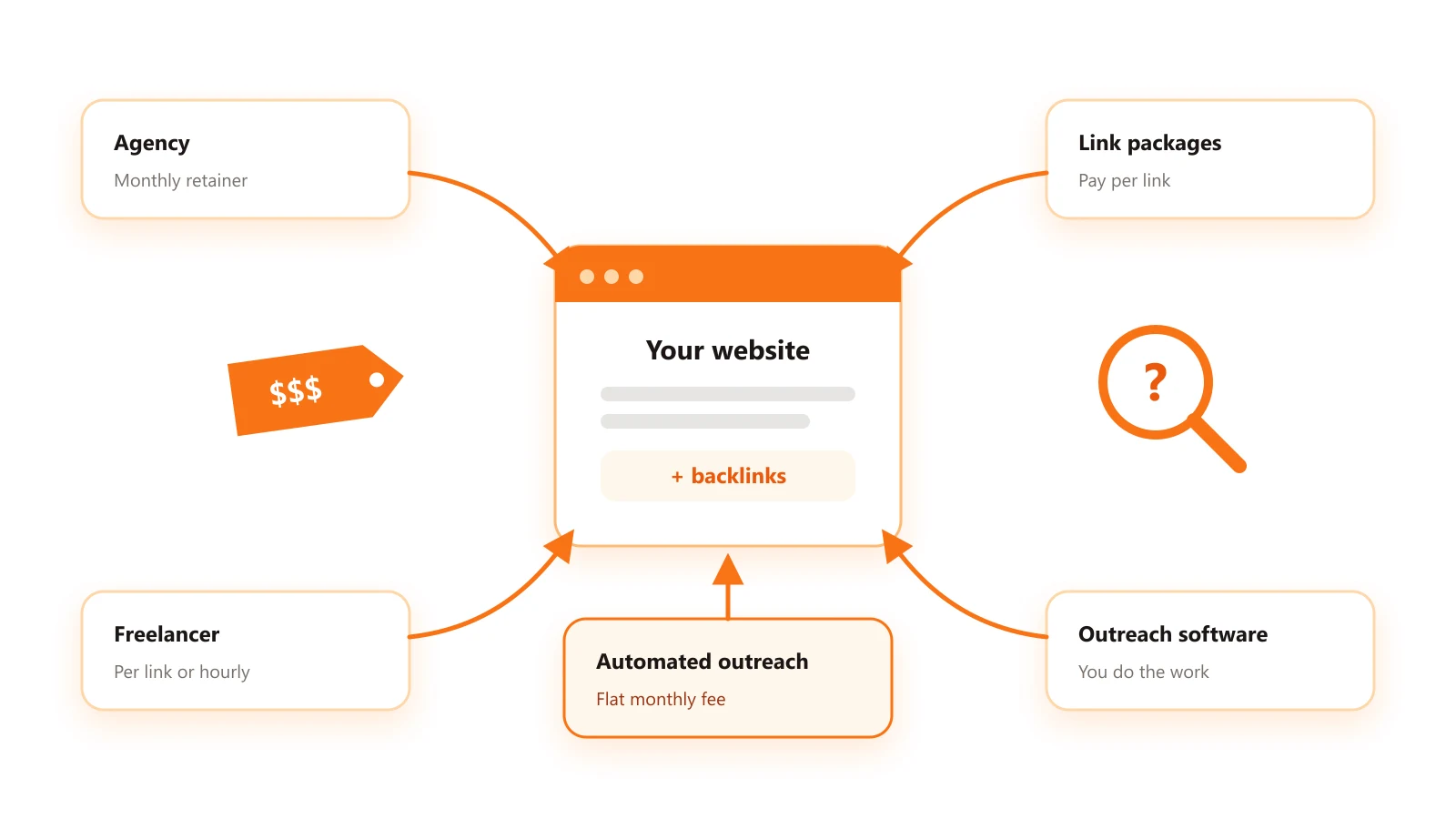
| Option | What it costs | What you get | Your time |
|---|---|---|---|
| Per-link catalog | $60 to $456 per link | Placements you pick from a list of sites | Low |
| Managed monthly package | $250 to $500 per link | A set number of placements each month | Low |
| Agency campaign | Custom, often thousands a month | Strategy, content and outreach run for you | Low to medium |
| Automated outreach | A flat monthly fee | Pitches to sites where your pages fit; links only where publishers agree | You answer the replies |
If you'd rather not pay per link at all, the last option swaps money for a little of your time. Mentiohunt is an automated link building tool of that kind. You add your site and the pages you want links to. Each day it finds sites where one of those pages fits, explains why it fits, finds a contact when one is available, writes the email and sends the first outreach on your behalf. When a site replies, the conversation is yours.
It doesn't sell placements or guarantee links. When a site answers with a price, you decide whether it's worth paying, with the numbers above as your reference. A free preview shows you the opportunities it found before anything is sent. If you're weighing whether to hand link building off at all, our guide to outsourcing link building covers when it makes sense.
FAQ
Are link building packages worth it?
Sometimes. A package is worth it when you see the sites before you pay, the sites have real readers in your topic, and any paid link is marked rel="sponsored". You pay for writing, site selection and outreach you would otherwise do yourself. If a vendor can't show you recent placements or promises unmarked do-follow links on paid placements, the money is at risk.
How much does a link building package cost?
The managed monthly packages we checked on November 18, 2026 cost $500 to $10,000 a month and worked out to $250 to $500 per link. Per-link catalogs start lower, at $60 to $160, and climb with the site's Domain Rating. For comparison, publishers that replied to our free outreach with a price asked a median $85 for a guest post.
Is a monthly package better than buying links one at a time?
A monthly package suits you if you want a steady number of placements without picking sites yourself. Buying one link at a time gives you more control over which sites you get and lets you stop after a single order. Either way, start small: one month or one order, with no long contract.
Are there free link building packages?
No real package is free, because someone has to write content and place it. What you can get for free is the link itself: editorial mentions from sites where your page genuinely helps their readers. That takes outreach time instead of money.
Does link building still work?
Links from relevant sites still help pages rank, which is why Google spends effort detecting bought ones. Its December 2022 link spam update said its systems can detect sites buying links and sites selling them. Paying for links that only exist to pass ranking credit is the part that stopped being a safe bet.
The bottom line
A link building package sells you a count of links at a fixed price. The managed ones we checked charge $250 to $500 per link, 3 to 6 times what publishers ask directly. That premium buys real work: writing, site picking, follow-ups. A steep DR ladder, though, is mostly margin.
Buy a package if you can see recent placements first, the sites have readers in your topic, and paid links are marked as sponsored. If a vendor can't meet those three conditions, keep the money and spend the time on outreach to sites where your page actually fits.
Founder at Mentiohunt. Building distribution tools for founders and small marketing teams. Writes about backlink building and founder-led growth.
Turn this guide into a weekly opportunity queue.
Mentiohunt finds relevant backlink opportunities from your site, competitors and keywords, explains why each one fits, and runs the outreach through the first reply. The preview is free and sends nothing.