Prefer AI? Summarize this with ChatGPT,
Claude,
Google AI Overview, or
Perplexity.
You've decided your site needs links, and you don't have the time to chase them yourself. So you search for a link building service and get two kinds of pages: agencies selling themselves, and "best link building services" lists written by agencies that put themselves first.
Neither tells you what you're actually buying, what a link really costs before the service adds its margin, or how to tell a careful provider from one that resells paid links.
This guide covers the five kinds of link building services, what each one does for the money, real prices from publishers, and the questions to ask before you pay anyone.
TL;DR: Link building services come in five kinds: agencies, link packages, freelancers, outreach software and automated outreach. When publishers name a price directly, the median ask is $85 for a guest post and $90 for a link insertion. Whatever a service charges above that is writing, site selection and margin. Before you pay, ask to see the sites, ask whether any link is paid, and walk away from anyone who guarantees rankings.
What a link building service actually does
Every link building service does some version of four jobs:
- Find sites where your page would genuinely be useful to readers.
- Find the right person at each site, usually an editor or the author of a relevant article.
- Pitch them with a reason to mention or link to your page, and follow up.
- Report what was placed: the exact URL, the anchor text and whether the link is still live.
What no service can honestly promise is a ranking. Google's own advice on hiring help is blunt: no one can guarantee a #1 ranking on Google, and you should be wary of anyone who claims they can. The same page reminds site owners that they are responsible for what a hired provider does on their behalf.
The difference between services is who does each of those four jobs, how they're paid for it, and how much you get to see.
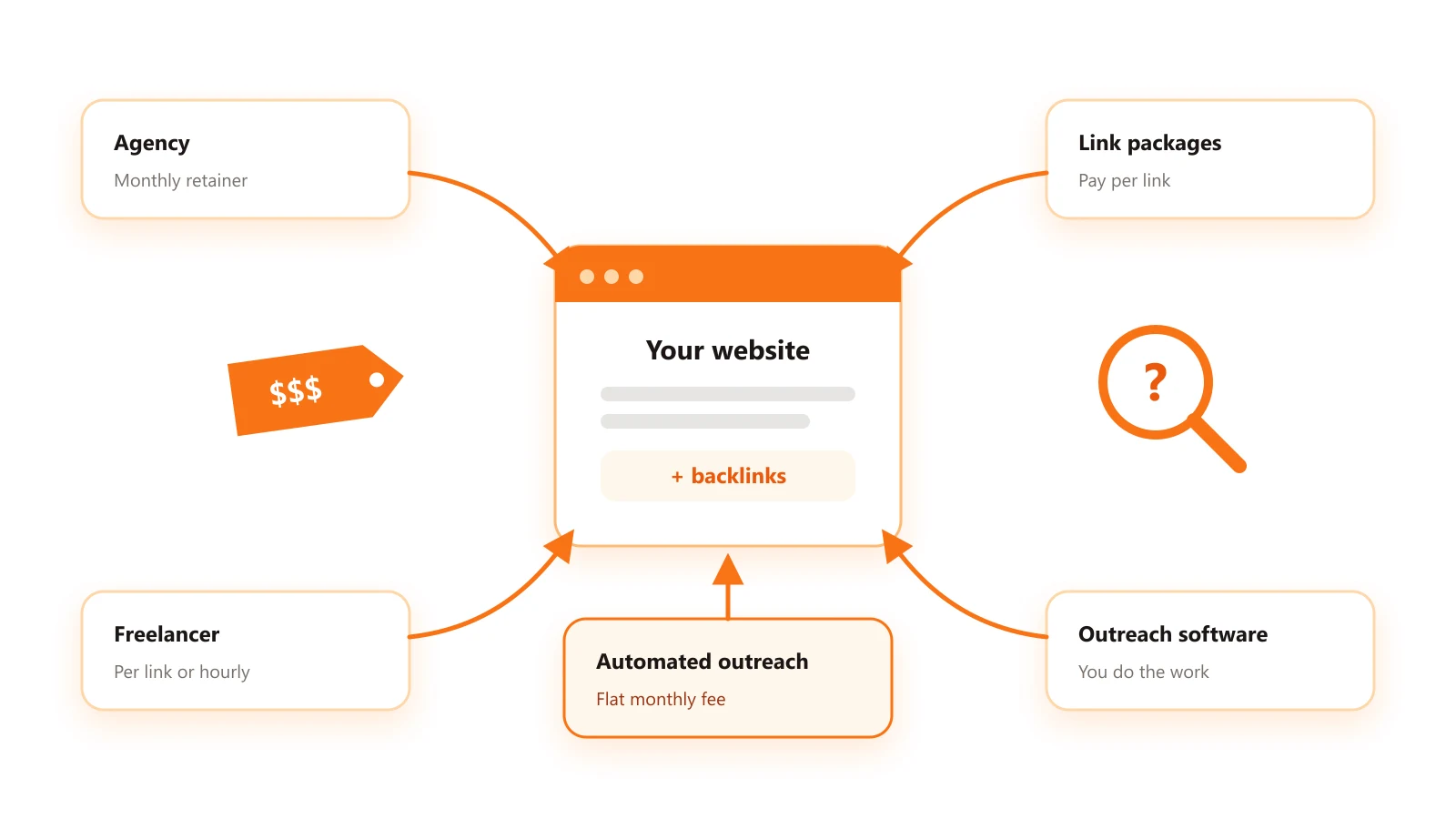
The 5 kinds of link building services
| Kind | Who does the work | How you pay | What you control | Main risk |
|---|---|---|---|---|
| Agency | An agency team runs the campaign | Monthly retainer | You approve a strategy and read a report | You pay for months before you can judge the links |
| Link packages and marketplaces | A vendor places links from its own list of sites | Per link | You pick from a catalog | Many listed sites sell to anyone, often as unmarked paid links |
| Freelancer | One person does everything | Per link or hourly | Depends on the person | Quality depends on one person, and sources are hard to check |
| Outreach software | You do the work with a tool | Monthly subscription | Everything | Your time: finding contacts, writing pitches, following up |
| Automated outreach service | Software finds sites and sends the pitches; you take the replies | Flat monthly fee | Which sites get pitched, and every conversation after a reply | Fewer links than paying for them; publishers still decide |
Two of these split the market. Agencies and packages sell you an outcome: a number of links. Software and automated outreach sell you the process: more relevant pitches going out, with you in charge of the conversations. If you're comparing agencies specifically, our list of SaaS link building agencies compares them by pricing, method and transparency, and the guide to outsourcing link building covers when handing it off makes sense at all.
What link building services cost in 2026
The cleanest way to price a service is to start from what publishers ask for directly, before anyone adds a margin. We have that number, because a lot of replies to free outreach are rate cards.
What publishers asked for in reply to free outreach, Jul 13 – Nov 10, 2026
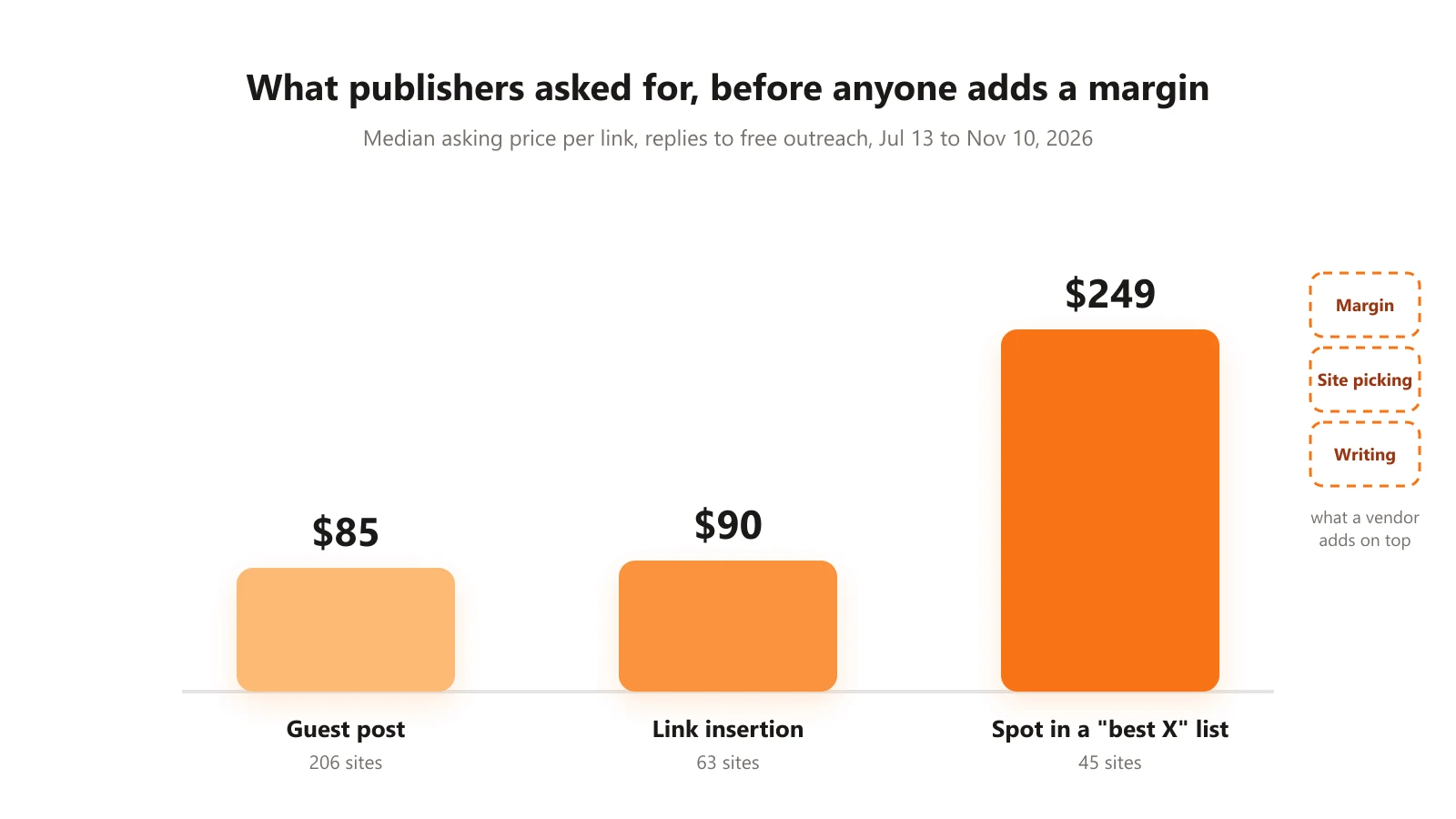
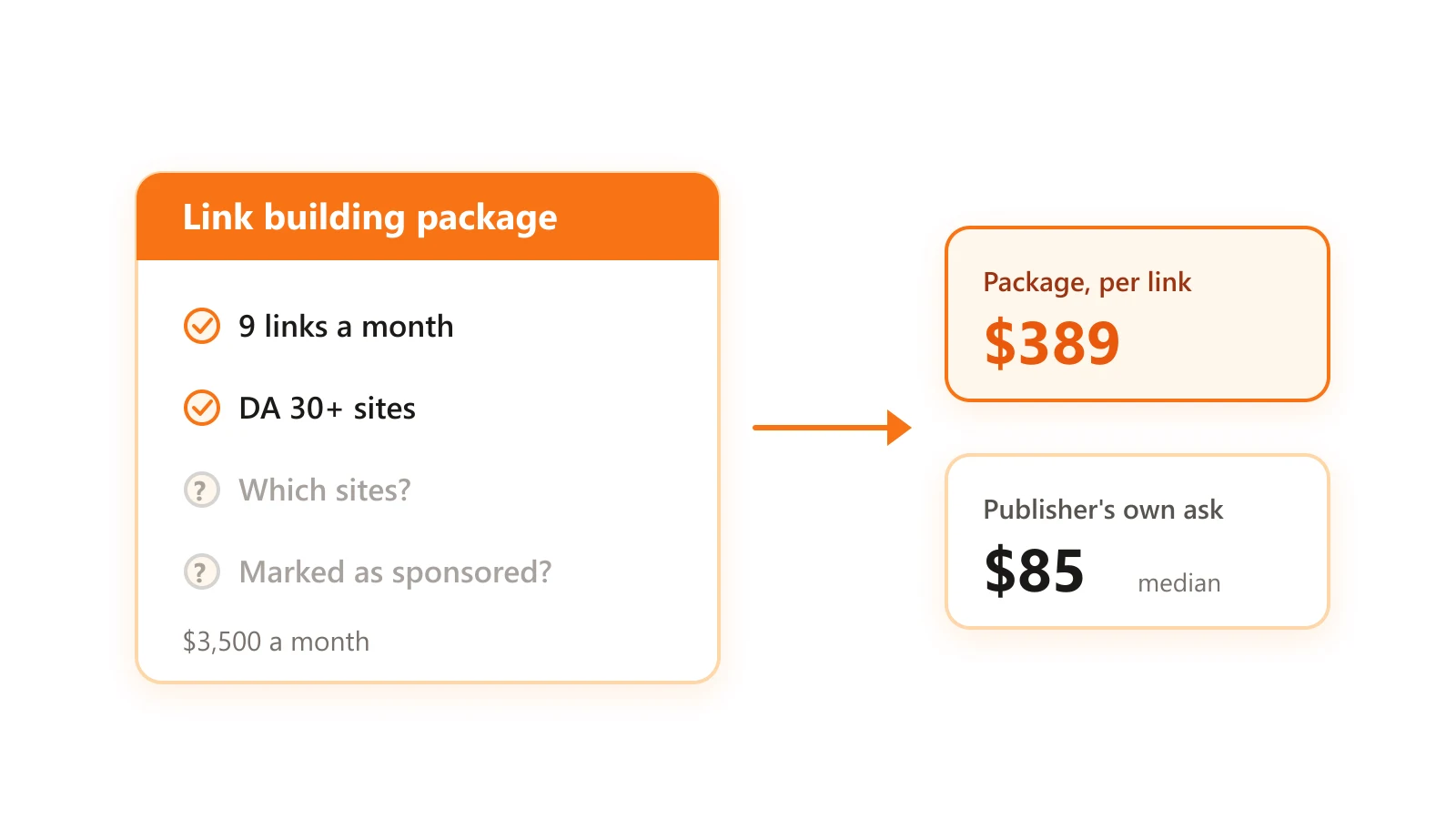
These are asking prices from the link building outreach statistics: 5,217 sites contacted, 719 replied, and 377 of those asked for money. They're the floor. A package or agency that sells you the same link adds the cost of writing the article, picking the site and its own margin.
That's how the main pricing models work:
- Per link (packages, marketplaces, many freelancers): you see a price per placement, usually tiered by the site's Domain Rating. Our quotes showed only a small price gap between low and high DR sites, so a steep DR ladder is mostly margin.
- Retainer (agencies): a fixed monthly fee for a campaign, sometimes with a target number of links.
- Subscription (software and automated outreach): a flat monthly fee for the process, with no charge per link.
For the full breakdown by link type and site strength, see what 260 publishers quoted us for a link. To estimate what a specific site should cost, run it through the backlink price calculator. And if a service mostly sells insertions into existing articles, this guide to link insertions explains what you're paying for.
The question every service avoids: are these links paid?
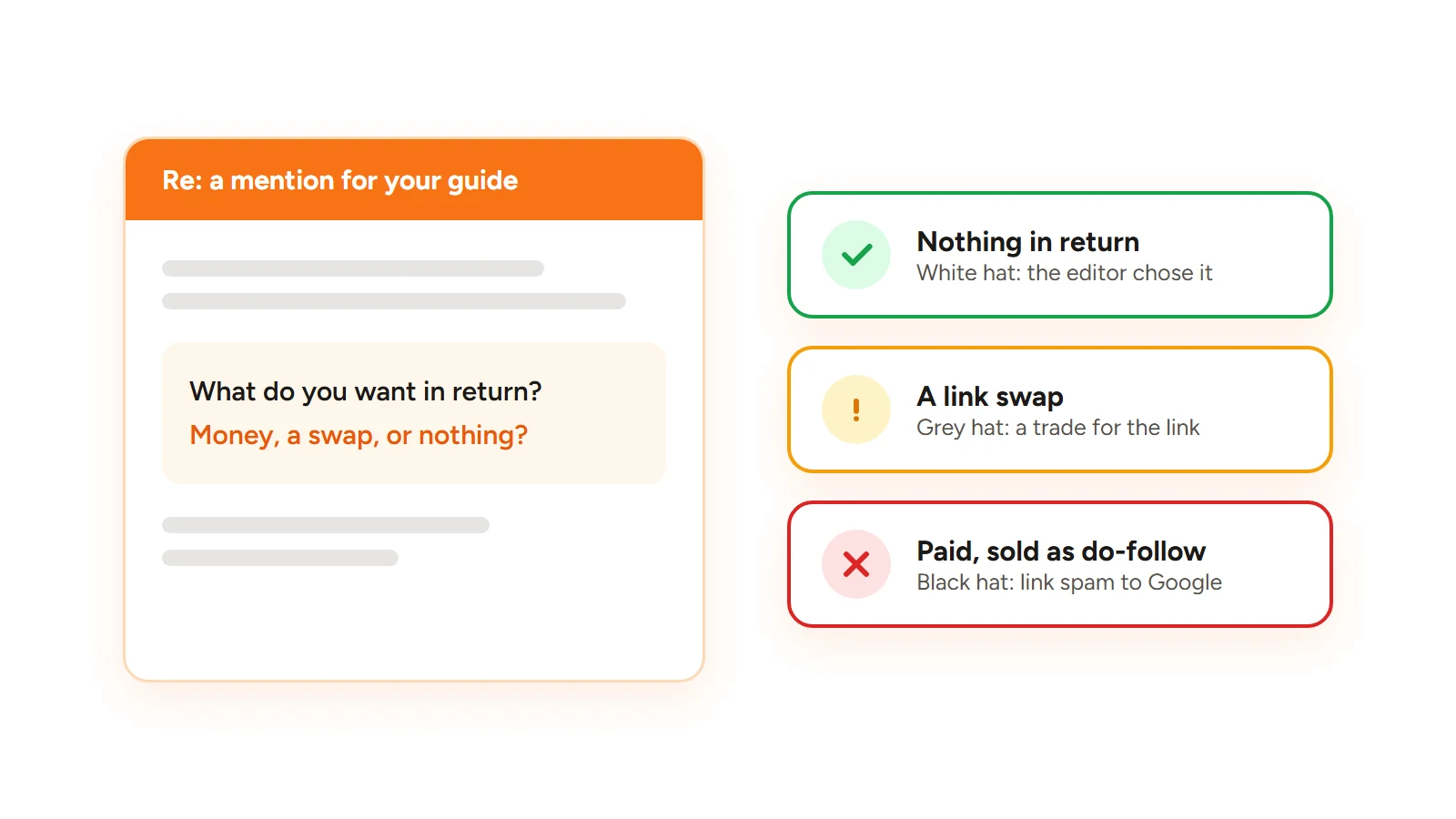
Here's the uncomfortable part. When we looked at the 260 sites that quoted a price in reply to free outreach, 121 of them promised a permanent do-follow link, and 91 mentioned casino, CBD, gambling or crypto rates in the same reply. A service that buys from sites like these and resells the link is selling you exactly that.
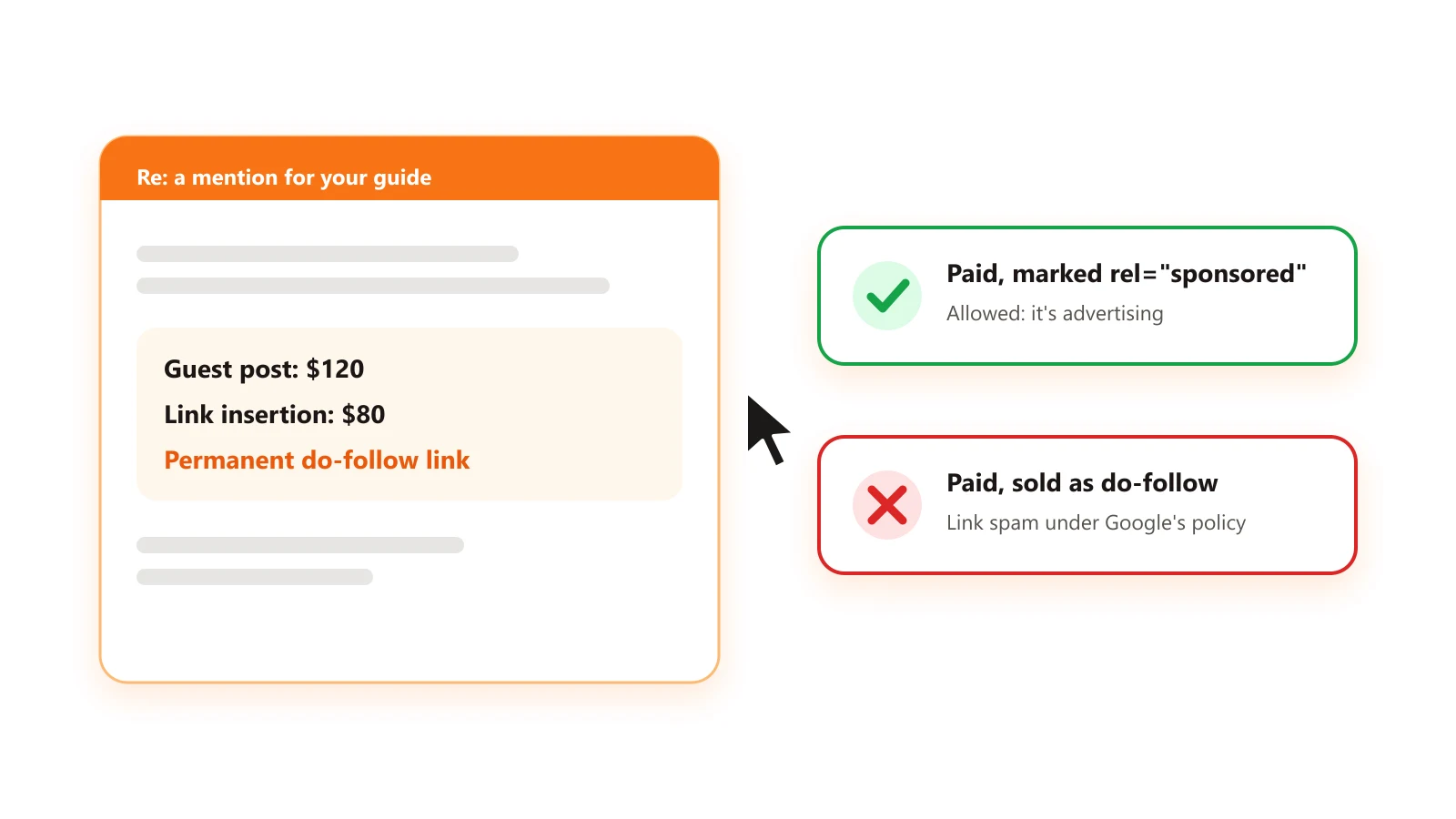
Google's rule is simple. Buying links to improve rankings is link spam under its spam policies. A paid placement is fine when the link is marked as an ad with rel="sponsored", which also means it passes no ranking credit. And Google says its systems can detect both the sites buying links and the sites selling them.
So when a service guarantees "10 high-DR links a month", ask how. Earning links from editors who choose to mention you is slow and uneven. A steady, guaranteed number usually means some of those placements are paid.
7 questions to ask before you pay
- Can I see the sites before you place anything? A good provider shows you the target pages and lets you veto them.
- Do you own any of these sites? Private networks and vendor-owned blogs look like links but rarely help.
- Why does each site fit my page? You want a reason tied to the page's topic and readers, not just a DR number.
- Will any placement be paid, and will it be marked sponsored? If the answer is "paid but do-follow", that's the risky kind.
- Will you report exact URLs and anchor text? "15 links built" isn't a report.
- What happens if a link disappears? Links get removed or switched to nofollow. Ask who checks, and how often.
- Do you guarantee rankings? If yes, walk away. That's Google's own advice.
Google's guide to hiring help covers the same ground in more detail and is worth the 12 minutes before you sign anything:
Which kind fits a small online business
Pick by two things: how much you can spend each month, and how much of your own time you can give it.
- Small budget, some time each week: outreach software, or run the process yourself with a guide to finding backlink opportunities and an outreach email that gets replies.
- Small budget, little time: an automated outreach service. You trade a guaranteed number of links for relevance and control.
- Mid budget, need placements soon: link building packages can work, if you get the site list up front and every paid link is marked sponsored.
- Large budget, no time at all: an agency, held to the seven questions above.
Mentiohunt is the automated option. It looks at your site and competitors, finds relevant pages where yours fits (competitor backlinks, "best X" lists, resource pages, unlinked mentions, guest post sites), writes a personal email to the right person and sends it, with follow-ups, until someone replies. From the first reply, the conversation is yours. It costs a flat monthly price for the automated link building tool, never per link, and it doesn't promise links: the publisher always decides. If you're weighing it against other tools, the comparison of automated link building tools lays them side by side.
The bottom line
A link building service is worth paying for when you can see what it does: the sites, the reason each one fits, and the exact links it placed. Start from what publishers actually charge, set a price ceiling, and treat any guarantee of rankings or a fixed number of do-follow links as a warning, not a selling point.
Not sure which sites would even fit your pages? Mentiohunt's free opportunity preview shows a few real ones for your site. It needs no card and sends nothing.
Founder at Mentiohunt. Building distribution tools for founders and small marketing teams. Writes about backlink building and founder-led growth.
Turn this guide into a weekly opportunity queue.
Mentiohunt finds relevant backlink opportunities from your site, competitors and keywords, explains why each one fits, and runs the outreach through the first reply. The preview is free and sends nothing.