Prefer AI? Summarize this with ChatGPT,
Claude,
Google AI Overview, or
Perplexity.
Resource pages exist for one reason: to save visitors a trip to Google by curating the best content on a topic.
For link builders, that means a page full of editorial links — maintained by someone who cares about quality, visited by a relevant audience — and usually no cost to get listed if your content actually belongs there.
It is one of the oldest link-building tactics in the book. It also still works. Here is the complete process, updated for 2026.
TL;DR
- A resource page is any curated-link page that exists to help visitors find the best content on a topic — from traditional static "useful links" pages to modern "best [tool category]" listicles
- Response rates average 8–15% on qualified, personalized outreach; placement rates run 5–15% (higher on the broken link variant)
- The tactic works best when your content is genuinely more useful than what the page already links to — pitching thin content is the most common reason campaigns fail
- In 2026, "best X tools" listicles are the functional equivalent of resource pages and often deliver more: editorial equity plus referral traffic plus AI citation coverage
- Before building a prospect list, confirm your content is pitch-ready — this one step eliminates most wasted outreach
What Is Resource Page Link Building?
Resource page link building is the practice of earning editorial backlinks from curated pages that exist to point visitors toward the best resources on a topic.
The canonical example is a page titled "Useful Links for SaaS Founders" or "Best Marketing Resources" — a human-maintained list of external links, organized by topic, with no comment or login wall. The curator built the page to help their audience, not to sell links. That editorial intent is what makes these links algorithmically valuable.
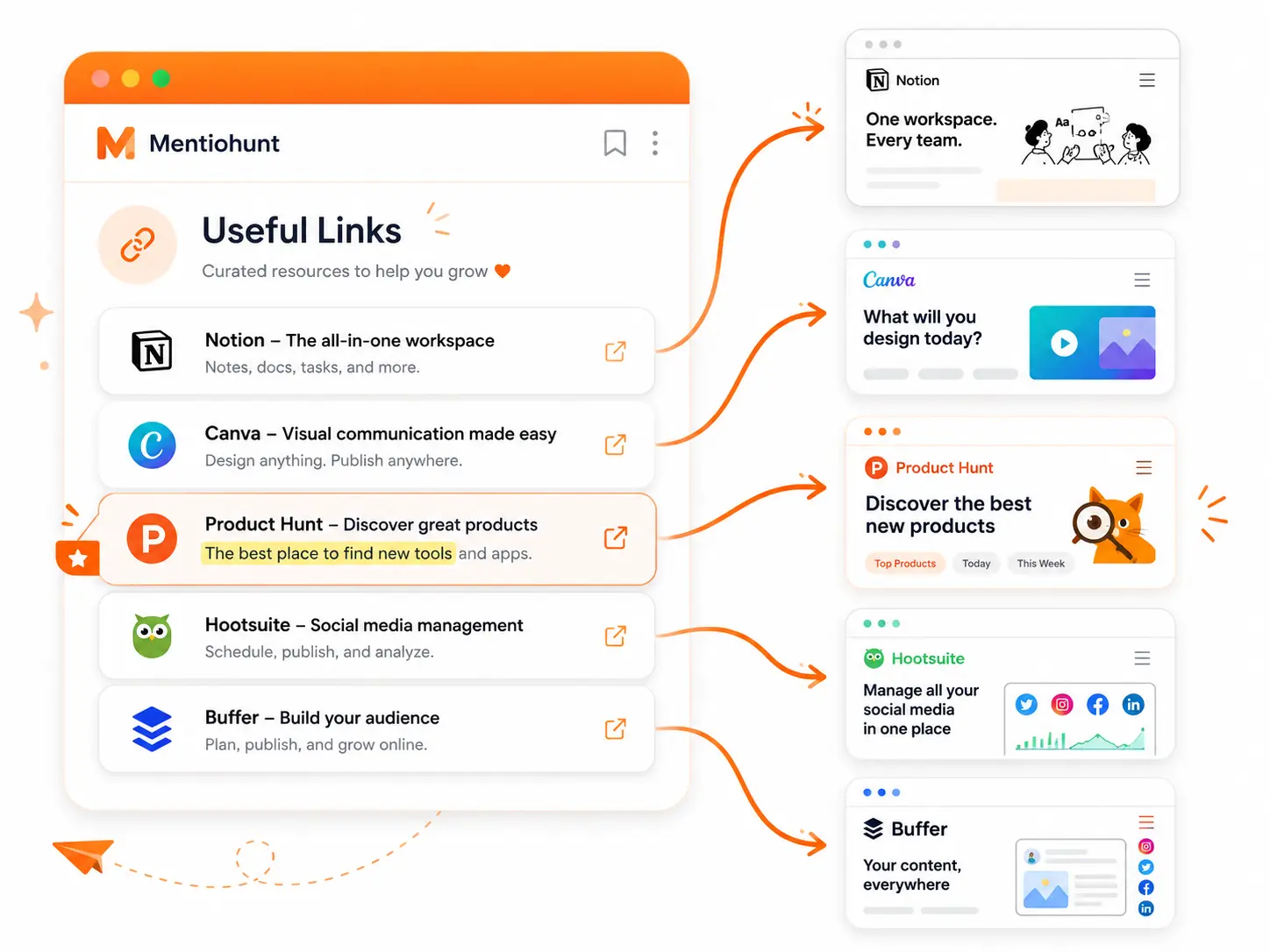
Types of resource pages worth targeting
| Type | What it looks like | Notes |
|---|---|---|
| Static "links" page | /resources, /useful-links, /recommended-tools | Classic format; some are well-maintained, many go stale |
| Embedded "further reading" | Resource section inside a guide or course | Curated by the author; often high topical authority |
| .edu / .gov directory | University library guide, government resource hub | High authority; formal outreach tone required |
| Tool / software roundup | "Best CRM tools for startups" listicle | The modern resource page — ranks in search, drives traffic |
| Integration or partner directory | SaaS tool's "integrations" or "tools we use" page | High topical fit for B2B SaaS products |
The last two categories are where most of the action is in 2026. Traditional static pages are increasingly rare and often stale. Maintained, ranking listicles have become the primary target for this tactic.
Why these links carry weight
Resource page curators choose what to include. The link is editorial — not paid, not automated, not exchanged. That voluntary endorsement is what Google values. Resource pages also tend to have low outbound-link-per-domain ratios compared to large blogs, which means each individual link passes more relative equity.
Does It Still Work in 2026?
Yes — with one important update to how you think about it.
Aira's 2022 State of Link Building Report found that 24% of SEOs actively use resource page link building, making it one of the more consistently used white-hat tactics in the industry. Google's position, as stated repeatedly by John Mueller, is clear: editorial links from pages where a human chose to include you are exactly what the algorithm rewards. Earned correctly, resource page links are as safe as links get.
The listicle evolution
Here is where the tactic has meaningfully changed. The most valuable "resource pages" in 2026 are not static .html pages with a list of twenty links from 2019. They are active, indexed, search-ranking articles — "best link building tools for SaaS," "top outreach platforms for founders," "essential resources for content marketers."
These articles serve the same function as traditional resource pages — curating the best options for a specific audience — but they are maintained, they rank in Google, they receive real traffic, and they appear in AI Overviews. A placement in a ranking listicle delivers three things simultaneously: an editorial backlink, referral traffic from visitors who clicked through, and citation visibility in AI search results.
Traditional static pages are still worth pursuing, especially from institutions and established publications. But for most SaaS founders, the effort-to-return ratio now favors ranking listicles over static link directories.
When to prioritize each:
- Static resource pages: when you need raw domain authority from institutions or established publications; lower competition to get listed
- Ranking listicles: when you want referral traffic and AI citation coverage alongside link equity; higher value per placement, more competitive to land
Step 1 — Check Whether Your Content Is Pitch-Ready
The most common reason resource page campaigns fail is not bad outreach. It is pitching content that was not ready to be pitched.
Before building a prospect list, answer these three questions honestly:
- Would a curator be embarrassed to link to this? If your page is a homepage, a sales page, or an article that answers one question in 500 words, the honest answer is yes. Curators are putting their reputation on what they recommend.
- Is your content more useful than what they already link to? Pull up two or three target pages and look at what they currently link to on your topic. If your content is not clearly better — more detailed, more current, better structured — the pitch will not convert.
- Would someone who finds this page through search be satisfied? Resource pages curate for their readers, not for link builders. If your content would genuinely help the audience that page serves, you have a pitchable asset.
Content that qualifies: comprehensive guides, original research, interactive free tools, updated reference resources, definitive tutorials on specific topics.
Content that does not qualify: your homepage, your product landing page, a thin how-to covering one step, or anything that requires a login to access the value.
Step 2 — Find Resource Pages
Search operator method
The simplest discovery method is Google search operators. Pair a topic-relevant term with queries that surface curated-link pages:
| Operator | Example |
|---|---|
[niche] inurl:resources | saas link building inurl:resources |
[niche] intitle:"useful resources" | seo tools intitle:"useful resources" |
[niche] intitle:"helpful links" | b2b marketing intitle:"helpful links" |
[niche] inurl:links | content marketing inurl:links |
[niche] intitle:"recommended tools" | founder tools intitle:"recommended tools" |
[niche] "further reading" | link building "further reading" |
[niche] "best tools for" | seo "best tools for" founders |
site:.edu [niche] resources | site:.edu digital marketing resources |
[niche] intitle:"top resources" | growth marketing intitle:"top resources" |
[niche] "tools we use" | saas startup "tools we use" |
[niche] intitle:"resources" inurl:blog | link building intitle:"resources" inurl:blog |
[competitor] "featured in" OR "alternatives" | Surfaces listicles that mention your competitors |
Run five to ten of these and you will have a raw list of 50–200 prospects to filter down.
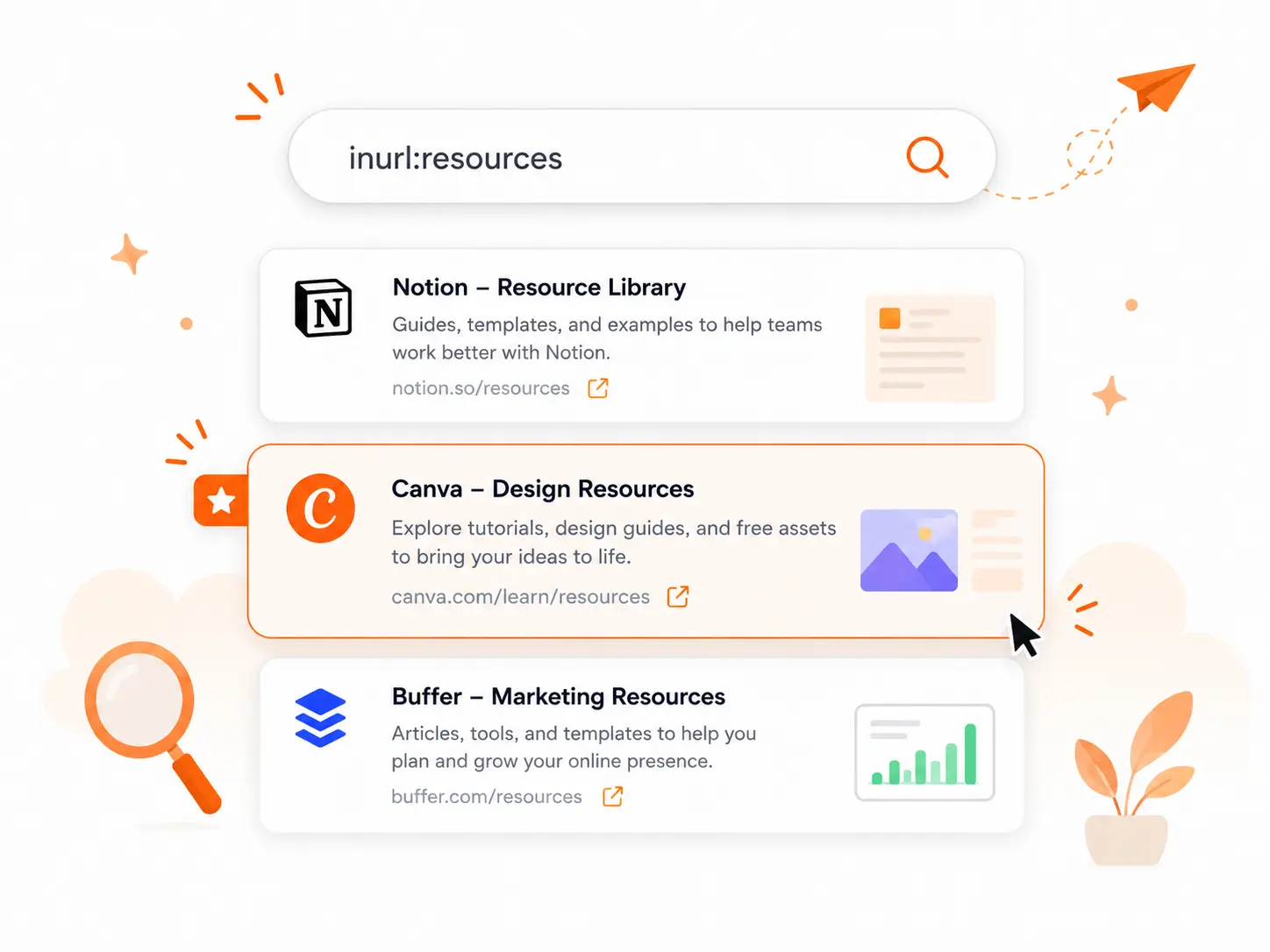
Competitor backlink analysis
In Ahrefs or Semrush, pull the backlink profile of a top-ranking competitor for the article you want to build links to. Filter referring domains for URLs containing "resources," "links," "tools," "best," or "recommended." Every resource or listicle page linking to your competitor is a legitimate target for you — they have already signaled that this topic is relevant to their audience.
Discovery for SaaS specifically
If you are building links for a B2B SaaS product, expand your search to:
- Integration and partner directories — software tools often maintain pages listing compatible products or tools in their category; high topical fit, often overlooked
- "Best [category] software" roundups — the highest-value targets; they rank in search, send referral traffic, and get updated regularly
- "Tools we use" posts — common on founder blogs and startup resource hubs
Mentiohunt scans your article URLs daily and surfaces resource-style pages where your content fits, queuing them as outreach opportunities with a fit rationale already written — so you are not starting from scratch on each prospect.
Step 3 — Qualify Before You Pitch
Raw search operator results include a lot of noise: abandoned pages, paid directories, low-authority domains, and pages where your content has no contextual fit. Filtering them down is the real work.
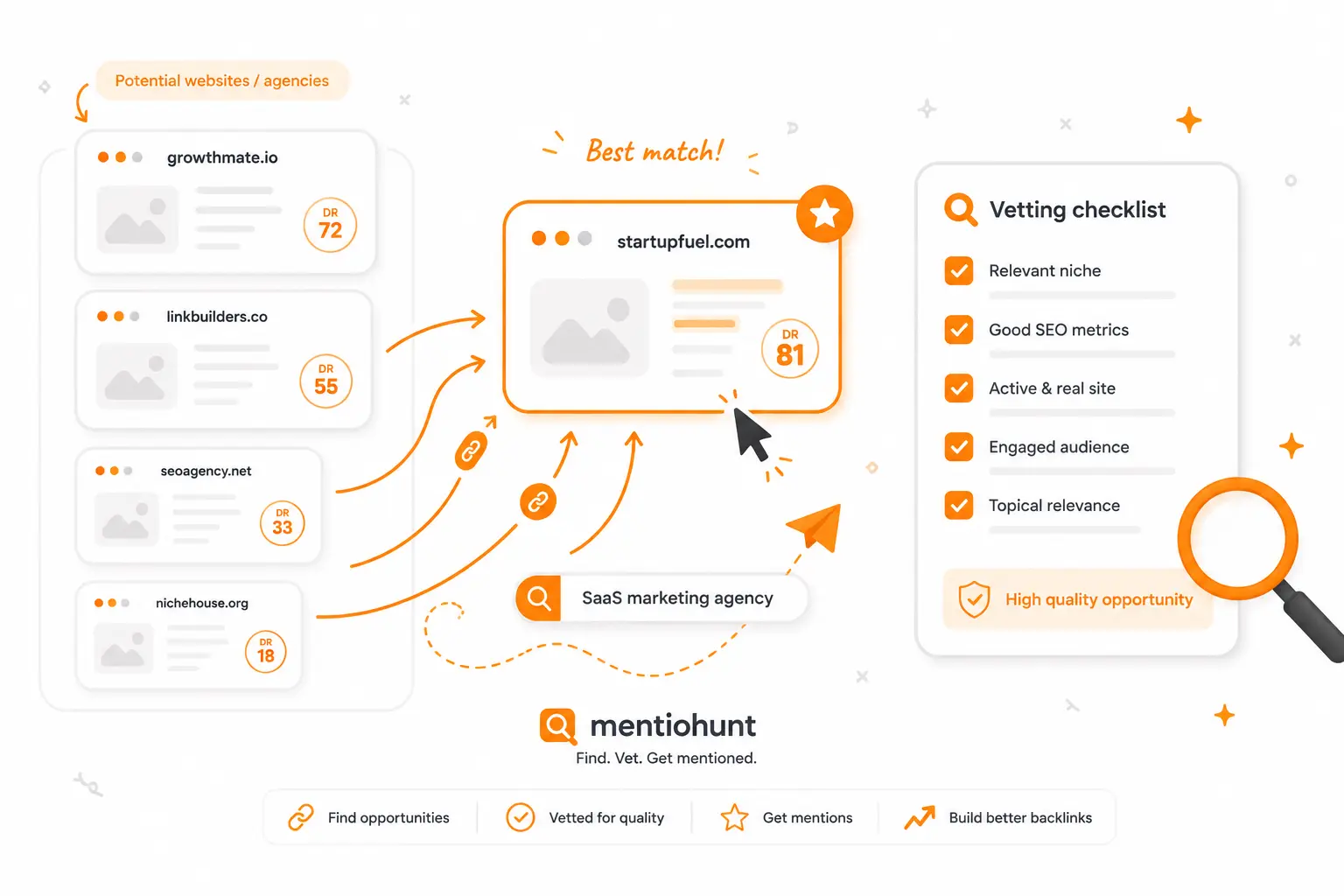
5-factor qualification filter:
- Topical relevance — Is the page specifically about the topic your content covers? A generic "marketing resources" page linking to your link building guide is weak. A "link building resources for SaaS teams" page is strong.
- Domain Rating ≥ 30 (Ahrefs scale) — Below DR 30, the link equity is minimal and the effort is rarely worth it.
- Organic traffic > 500/month — Check with Ahrefs Site Explorer or Semrush. A page with no traffic is usually not maintained, not indexed properly, or not trusted enough to benefit your rankings.
- Page updated within 3 years — Check the visible date or
<meta name="last-modified">tag. Stale pages rarely result in placements. - Page is indexed — Run
site:[URL]in Google. If it does not appear, the link will provide no value.
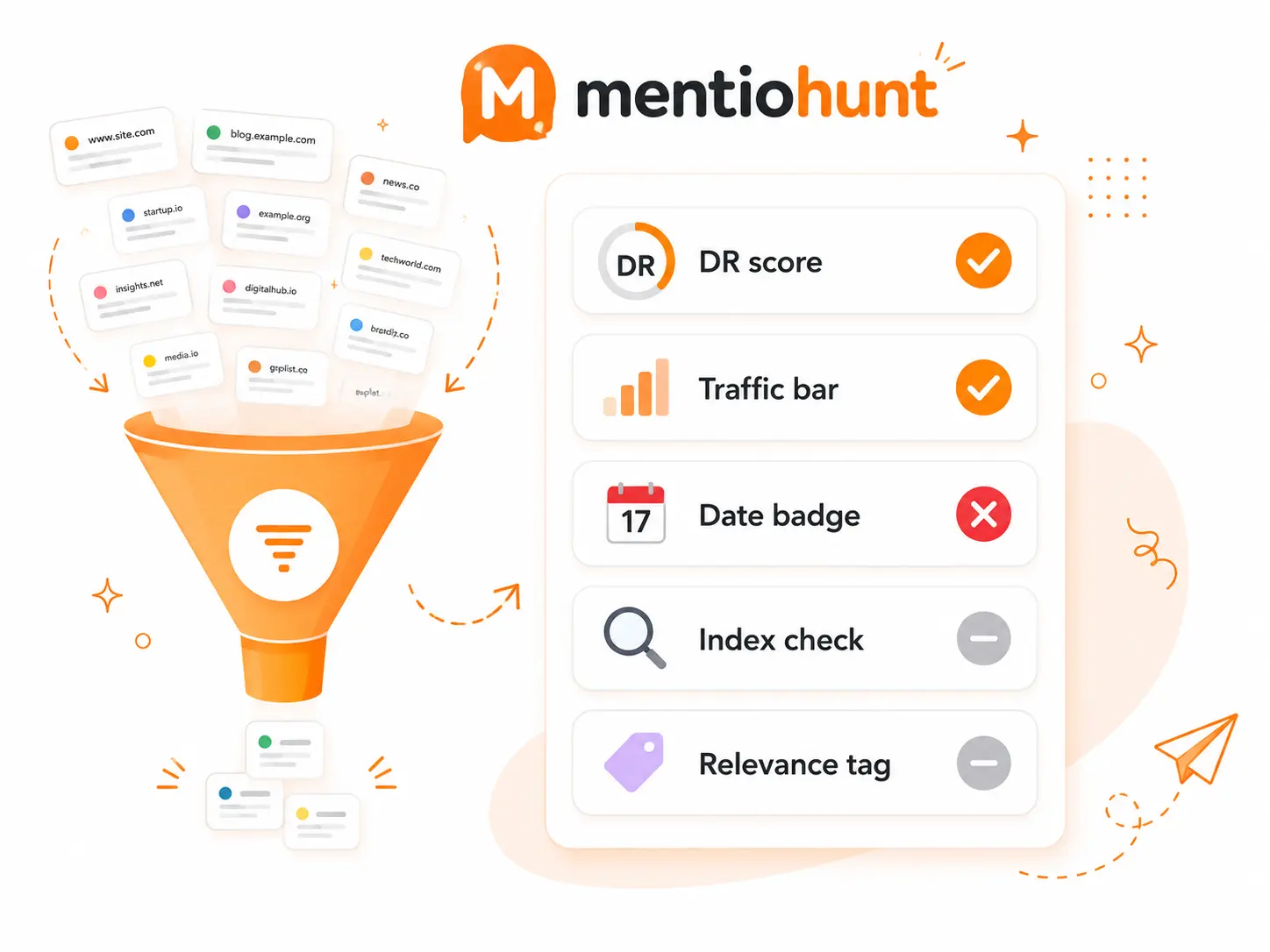
Hard disqualification signals:
- The page asks for payment to be listed — this makes the link paid and against Google's guidelines
- More than 150 outbound links on the page — link equity is too diluted to matter
- No external links at all — it is probably not a real resource page
- Page has no organic traffic and was last updated in 2021 or earlier
Expect to cut 60–70% of your raw prospect list after qualification. That is the correct outcome. A filtered list of 30 strong prospects will outperform a spray-and-pray list of 200 every time.
Step 4 — Write the Outreach Email
A pitch that converts has a specific subject line that references the page by name, one sentence of context explaining why your content fits, a brief description of what you are offering, and a soft ask with no anchor text demands.
What kills response rates:
- Generic subject lines ("I have a resource you might like")
- A mail-merged name swap as the only personalization
- Asking for a specific anchor text in the first email
- Pitching a page that did not pass the qualification filter
For subject line testing, follow-up sequencing, and deliverability setup that apply beyond resource pages, see the full link building outreach email guide.
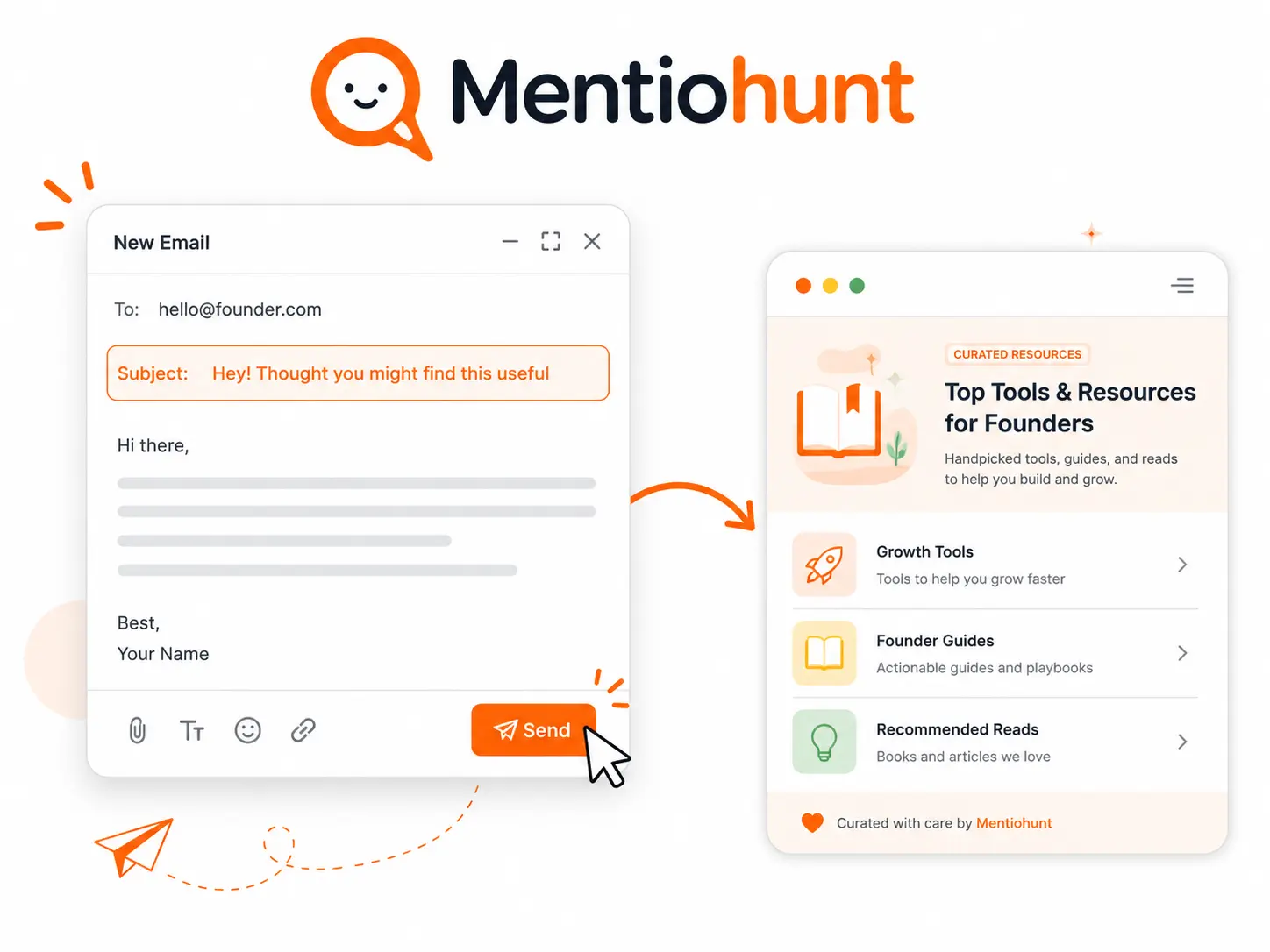
Here are two worked examples. Adapt the specifics — the voice and structure are the parts worth keeping.
Template 1 — Standard resource addition
Hi Maya,
Found your SaaS growth resources page while looking for outreach reading — ended up going through most of it. Solid curation, especially the link building section.
One thing that might be worth adding: I recently published a guide on resource page link building for B2B SaaS teams. It covers finding prospects with search operators, a five-factor qualification filter, and two outreach templates with real conversion benchmarks. Built for founders doing their own outreach rather than hiring an agency.
Here's the link: [your URL]
No pressure either way — wanted to flag it since it fits what you've built.
Nico
What works here: the opener proves you read the page (not just the title), the pitch names a specific value angle in one paragraph, and the close is soft with no anchor text demands or urgency pressure.
Template 2 — Broken link variant
Hi Jamie,
Quick heads-up — one of the links on your link building resources page is returning a 404:
[broken link URL]
Looks like it used to point to a guide on resource page outreach. I published one that covers the same ground — step-by-step process for finding and qualifying prospects, outreach templates, and real conversion data from documented campaigns.
Happy to share it as a replacement if it fits: [your URL]
Either way, thought it was worth flagging.
Nico
The broken link variant works because it leads with something genuinely useful — flagging a dead link — regardless of whether they add your content. The ask is a natural follow-on, not the reason for the email. That difference is what curators feel when they read it.
Follow-up: send one follow-up at day 7–10, one more at day 14. After two follow-ups with no response, move on. Persistent follow-up beyond that damages your sender reputation and rarely produces results.
What Conversion Rates to Expect
Conversion rate benchmarks in this space are widely circulated but rarely traced to primary sources. Here is what the data actually shows:
| Approach | Response rate | Placement rate | Sources |
|---|---|---|---|
| Generic, mass template | 1–3% | 1–2% | Backlinko outreach study (12M emails); QuickMail benchmark reports |
| Qualified + basic personalization | 8–15% | 5–10% | Woodpecker.co personalization study; Outreach Monks campaign data |
| Qualified + highly personalized | 15–25% | 10–15% | Pitchbox industry benchmarks; Woodpecker personalization uplift data |
| Broken link variant | 20–30% | 15–25% | Outreach Monks; TheLinksGuy agency reports |
| Institutional (.edu / .gov) | 3–8% | 2–6% | Lower response, but high authority when it converts |
Important caveat: These figures come from agency and tool vendor self-reported data, representing upper-end performance from practitioners running qualified, targeted campaigns. If your response rate is below 3% on a qualified list, the problem is usually the outreach copy — the personalization is too generic. If your placement rate is below 3% despite good responses, the problem is usually qualification — you are reaching pages that are maintained but not actively adding new links.
For first-party benchmark data instead of vendor self-reported figures, see Mentiohunt's link building outreach statistics, pulled directly from real outreach sends.
Expect 6–8 weeks from prospect list to live links you can count in analytics.
Resource Page vs. Other Tactics
| Tactic | Effort | Time to live link | Placement rate | Link type | Best use case |
|---|---|---|---|---|---|
| Resource page outreach | Medium | 2–6 weeks | 5–15% | Editorial dofollow | Guides, tools, data |
| Broken link building | Medium | 2–5 weeks | 10–20% | Editorial dofollow | Any strong content |
| Listicle placement | Medium–High | 4–10 weeks | 10–25% | Editorial + traffic | SaaS tools and products |
| Guest posting | High | 4–10 weeks | 20–40% acceptance | Editorial dofollow | Thought leadership |
| Digital PR / data study | Very high | 6–14 weeks | Unpredictable | Editorial, mixed | Research, brand campaigns |
Resource page link building sits in the middle of the effort-to-return curve. It is more systematic than digital PR and more scalable than guest posting, but one campaign will not produce 50 links. A well-run campaign on a focused topic typically produces 5–20 qualified placements.
For SaaS founders, the combination that works is: resource page outreach for foundational authority, and active pursuit of ranking listicle placements for search visibility and direct referral traffic.
Common Failure Modes
Targeting pages that are not real resource pages. Link scheme directories and low-quality "resources" pages with hundreds of outbound links exist specifically to attract link builders. Run the qualification filter every time.
Pitching before the content is ready. Sending outreach for a 600-word article competing with 3,000-word guides is the fastest way to train curators to ignore your domain. Build the content first.
Generic outreach on qualified prospects. The qualification work gets wasted when the email looks like a template. Reference the page by name. Mention something specific about it. Give the curator a real reason to reply.
Skipping the broken link check. The broken link variant consistently outperforms the standard pitch. Spending ten minutes running a broken link checker on your top prospects before sending outreach is one of the highest-leverage steps in the process.
Expecting results in two weeks. Most placements happen after the first follow-up, not the initial email. Build the timeline into your expectations.
Resource page link building works when you treat it as a quality filter, not a volume game. The output of the process is a short list of prospects where your content genuinely belongs, and outreach that makes the curator's decision easy. That combination earns links. The rest is noise.
If you want to find resource page opportunities without manual searching, Mentiohunt surfaces pages where your articles fit — with a fit rationale for each one — so you can spend your time on outreach, not prospecting. See how that looked for a brand-new blog with no backlink profile: Elevation Vibe earned 3 contextual placements in its first month, including a direct citation on a resource-style page.
FAQs
What is resource page link building, exactly?
Resource page link building is the practice of earning editorial backlinks from curated pages built to point visitors toward the best resources on a topic — pages like "Useful Links for SaaS Founders" or "Best Marketing Resources." A human curator maintains the list to help their audience, not to sell placements, which is what makes the link algorithmically valuable. In 2026 the category also includes ranking "best X tools" listicles, which function the same way but add referral traffic and AI citation coverage on top of the link.
Is resource page link building safe from Google penalties?
Yes — when done correctly. Resource page links are editorial: a human curator chose to include you because your content helps their audience. That is exactly the kind of link Google rewards. The risk comes from pursuing low-quality directory farms, paying for placements, or using exact-match anchor text that looks manipulative. Stick to topically relevant, maintained pages, pitch only quality content, and you are well within Google's guidelines.
Should I target traditional resource pages or listicles in 2026?
Both, but with different expectations. Traditional static resource pages deliver clean editorial authority with less competition to get listed. Ranking listicles ("best [category] tools") are more competitive but deliver editorial equity plus referral traffic plus AI citation coverage. For most SaaS founders, listicle placements have better ROI. Use both in proportion to what your content is.
What criteria should I use to qualify a resource page before pitching?
Run every prospect through five checks: topical relevance to your specific content (not just a generic category match), Domain Rating 30+, organic traffic above 500/month, a page updated within the last three years, and confirmed indexation via a site: search. Expect to disqualify 60–70% of your raw list — that is the correct outcome, not a sign your prospecting was bad.
What kind of content is most likely to get accepted on resource pages?
Comprehensive guides, original research, interactive free tools, updated reference resources, and definitive tutorials on a specific topic. What gets rejected: homepages, product landing pages, thin how-tos covering one step, or anything gated behind a login. The test before pitching: would a curator be embarrassed to link to this, and is it more useful than what they already link to?
What does a good resource page outreach email look like in 2026?
Short, and proof you actually read the page — reference something specific about it, name one clear value angle for your content in a single paragraph, and close with a soft ask with no anchor-text demands. The broken-link variant (flagging a dead link on their page, then offering your content as the replacement) converts noticeably higher because it leads with something useful regardless of whether they add your link.
What's a realistic response and success rate for resource page outreach?
On a qualified, personalized list: 8–15% response, 5–10% placement. Highly personalized pitches push that to 15–25% response, 10–15% placement. The broken-link variant performs best at 20–30% response, 15–25% placement. Generic mass templates barely clear 1–3% response — qualification and personalization are what separate the two ends of that range.
Can I combine resource page link building with broken link building on the same sites?
Yes, and it is one of the more efficient ways to run a campaign. When you qualify a resource page prospect, check the page for dead links while you are there — if you find one, the broken-link pitch template consistently outperforms the standard resource-addition pitch, and you are not running a second discovery pass to find the opportunity.

Founder at Mentiohunt. Building distribution tools for founders and small marketing teams. Writes about backlink building and founder-led growth.
@nicolasmore_Turn this guide into a weekly opportunity queue.
Mentiohunt helps founders turn article URLs, competitors, keywords, and product context into qualified backlink opportunities with fit rationale and outreach prep.