Prefer AI? Summarize this with ChatGPT,
Claude,
Google AI Overview, or
Perplexity.
Link prospecting is the work between "we need backlinks" and sending an email. You find a specific page that might cite your resource, inspect why it links to others, and decide whether adding your page would help its readers. The output is a small queue of qualified page-level opportunities, each with a clear reason to contact someone.
This guide is for a founder-led B2B SaaS team with a few useful pages and limited time. It focuses on the qualification decision. Mentiohunt’s link prospecting feature shows how the product handles this work. For a wider list of sourcing tactics, see how to find backlink opportunities.
Start with one page worth citing
Choose an asset that answers a question a third-party editor already covers: a free tool, original data, a detailed checklist, or a narrow comparison. Write down its reader, problem, and one thing it adds beyond competing pages. A generic homepage gives an editor little to cite unless the page is specifically comparing products.
For example, imagine you sell software for preparing sales calls. Your asset is a free call-review checklist with questions managers can use after a recorded call. Your prospecting target is not every sales blog; it is a page that recommends practical call-review resources and could use this checklist.
Find candidate source pages
Use two or three channels, then inspect the pages rather than collecting domains indefinitely. The backlink opportunity finder can supply additional candidate sites beyond competitor gaps:
- Competitor links: Use a competitor backlink gap report to find pages that reference comparable products or resources. A gap is a lead, not proof the editor wants another link.
- Resource and roundup searches: Search for phrases such as
sales call review resourcesorsales coaching templates. Read the page that appears, not just the domain summary. - Unlinked mentions: If someone has already discussed your product or research without a link, check whether a citation would help readers find the source.
- Broken references: Look for a dead resource on a relevant page only when your asset genuinely fills the same role.
Record the source URL, the section where a reference might fit, the asset you would offer, and the date you checked it. This makes the queue useful for outreach and for later review.
Qualify the page before the domain
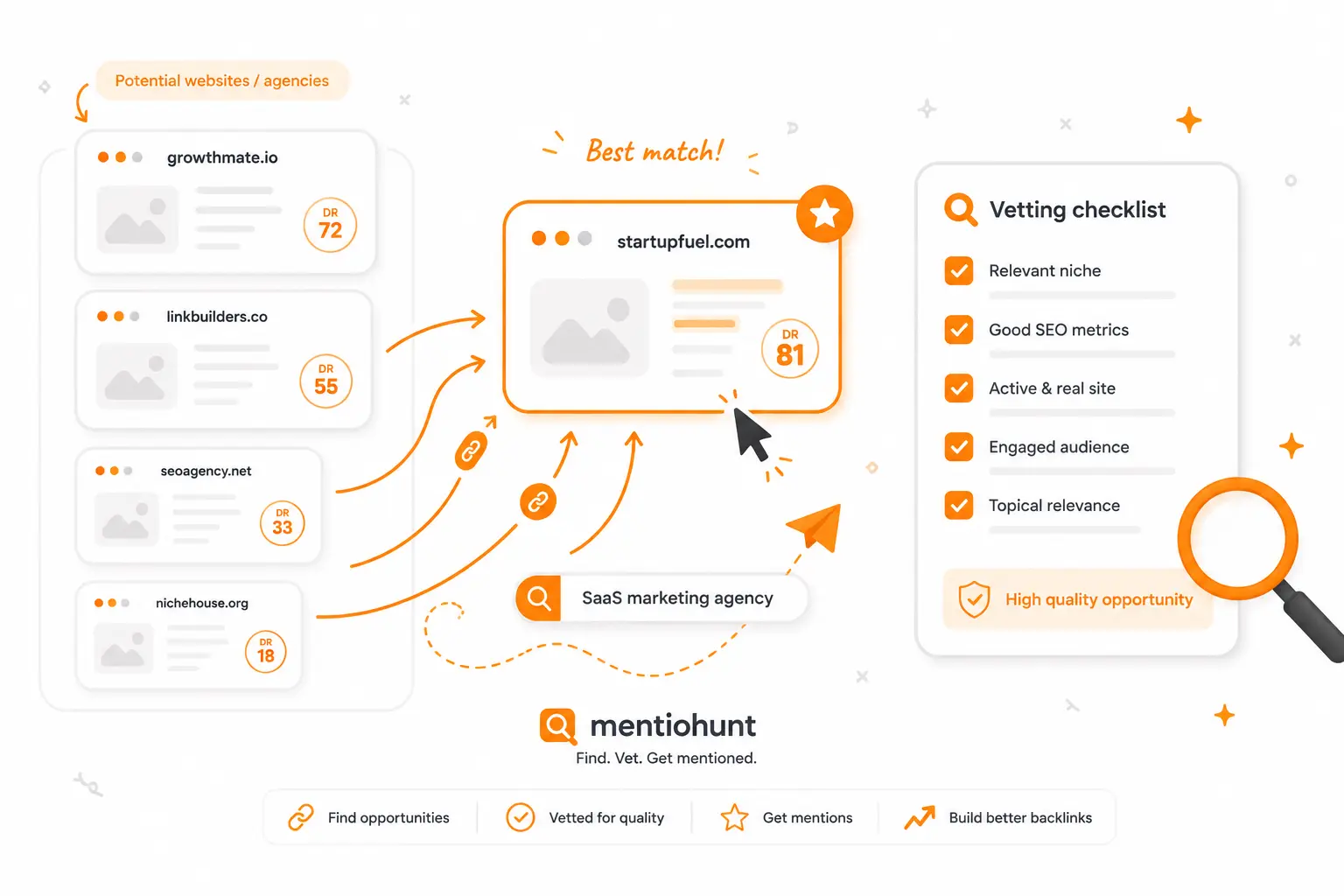
A domain metric is a secondary filter. Read the actual source page and ask:
| Check | Keep the prospect when... | Skip it when... |
|---|---|---|
| Reader and topic | The page serves the same buyer or practitioner as your asset | The topic overlap exists only at a broad category level |
| Editorial context | The page already cites independent resources for readers | Links are paid slots, partner obligations, or unrelated ads |
| Asset fit | Your page adds an example, data, or capability the page lacks | You would ask for a link simply because a competitor has one |
| Maintenance | The page is live and appears maintained | It is abandoned or the contact has moved on |
| Contact | You can identify an author or editor responsible for the page | Only a guessed address is available and there is no way to validate it |
For the sales-call checklist example, a current article listing call-coaching templates may qualify. A customer case study mentioning a competitor usually does not: the link is evidence for that customer's story, not an open resource slot. This distinction saves more time than raising a domain-rating threshold.
A real page check: when to skip
On October 5, 2026, we reviewed Close’s article on evaluating sales calls. It already explains a seven-part call review and provides a free template. For our hypothetical call-review checklist, this is a skip unless our asset offers something materially different for those readers. The page is relevant and maintained, but relevance alone does not justify asking for another checklist link. This is a useful stop decision before contact finding or pitch writing.
Turn the fit into one clear outreach angle
Open the source page again before sending. Note the exact section and explain the reader benefit in one or two sentences. For example: "Your call-coaching resource list covers scorecards and recording tools. We published a free review checklist managers can use after a call; it adds the post-call questions missing from the list. Would it be useful for that section?"
Find the author or editor of the specific page, check the confidence label on any email, and use the relevant blogger outreach template as a structure rather than copy to send unchanged. Keep the ask small. If the page does not have a natural place for your asset, do not pitch it.
Keep a queue you can actually work
A small spreadsheet needs only: your asset, source page, fit rationale, contact, contact confidence, status, and last checked date. Recheck older pages before follow-up because the page or editor may change. Measure qualified replies and useful placements, alongside referral traffic, rather than just the number of domains collected.
If prospecting and outreach have become regular work you cannot keep up with, Mentiohunt's automated link building tool finds relevant opportunities, explains the fit, and runs outreach through the first reply. You monitor the queue and cancel misfits; the publisher still decides whether to link.

Founder at Mentiohunt. Building distribution tools for founders and small marketing teams. Writes about backlink building and founder-led growth.
@nicolasmore_Turn this guide into a weekly opportunity queue.
Mentiohunt helps founders turn article URLs, competitors, keywords, and product context into qualified backlink opportunities with fit rationale and outreach prep.