Prefer AI? Summarize this with ChatGPT,
Claude,
Google AI Overview, or
Perplexity.
Most "best auto link building tools" lists are written for agencies running twenty client accounts at once. That's not your problem. As a founder, you're the researcher, the outreach person, and the one who has to notice when a placement actually moved the needle — usually in whatever hour is left after shipping product.
This comparison is for that constraint: the best automated link building tools worth paying for when you need prospecting, contact finding, outreach, or monitoring without adding a full-time operator. It is organized by workflow and budget rather than pretending every tool solves the same problem.
Disclosure: Mentiohunt publishes this comparison and is one of the products listed. It is best suited to founders who want prospect discovery and outreach handled through the first reply. Compare the workflow types below, then see how Mentiohunt works or the SaaS link building agencies if you prefer a service.
Every tool on this list, compared
This is a workflow comparison, not a ranking by backlink count. Research suites, email finders, outreach CRMs, managed outreach, and exchanges solve different jobs. We checked vendor pricing pages on October 5, 2026 where available, but plans and limits change. Use the linked vendor pages for current terms before buying. "Best for" is our editorial judgment, not a performance claim.
| Tool | Main job | Best fit | What you still do |
|---|---|---|---|
| Google Search Console | Own-site search research | Find pages already earning impressions | Identify external prospects |
| Ahrefs | Backlink and competitor research | Investigate link gaps regularly | Qualify pages and run outreach |
| Semrush | Broad SEO and backlink research | Teams already using its SEO suite | Qualify pages and run outreach |
| Hunter.io | Find and verify contacts | Turn a known prospect into a contact | Check editorial fit and pitch |
| Snov.io | Find contacts and run sequences | Teams wanting contact data plus sending | Set up and supervise campaigns |
| Featured.com | Expert-source requests | Answer relevant journalist or publisher questions | Write original responses |
| Pitchbox | Outreach CRM and sequencing | Higher-volume link building teams | Own the campaign and relationships |
| BuzzStream | Outreach CRM | Small teams managing many contacts | Source and qualify prospects |
| Mentiohunt | Managed prospecting and first-reply outreach | B2B SaaS founders who want execution handled | Monitor, cancel misfits, take over replies |
| AutoBacklinks | Prospect scans and outreach | Teams comparing several automated scan types | Review fit and connect a mailbox |
| LinkDR | Done-for-you link building service | Buyers who prefer a service | Audit delivered work and terms |
| BlazeHive | Reciprocal link exchange | Sites considering an exchange model | Evaluate reciprocal-link risk and fit |
A free starting stack is Search Console, a short prospect spreadsheet, and a contact finder only when you have pages worth pitching. If research is the bottleneck, test Ahrefs or Semrush; if sending and follow-up are the bottleneck, compare a CRM with managed execution. For the underlying prospect qualification steps, see link prospecting for B2B SaaS.
What these tools do (and don't do) for you
Link building tools solve three narrow problems: finding sites that might link to you, finding a real contact at those sites, and keeping track of who you've reached out to. Some draft or send pitches, but none can guarantee a useful reply or placement.
Some newer tools (more on this below) get closer to "hands-off" by running outreach on your behalf. That's a real option — but it's a different tradeoff, not a shortcut around the fact that link building is fundamentally a relationship-building activity a tool can only support.
The 4 stages a founder-friendly stack covers
Every tool on this list fits into one of four stages. Most competitor listicles skip straight to a flat ranking — buying tools stage-by-stage, only when the previous stage is actually producing more volume than you can handle manually, is what keeps a solo founder's stack from turning into unused subscriptions.
For founders managing multiple workflows at once, an AI workspace for businesses can also help centralize AI-powered tasks and reduce the need to switch between separate tools as the team grows.
- Research — finding prospects
- Contact-finding — getting a real email
- Outreach — sending and tracking pitches
- Monitoring — knowing what's working
Research & prospecting tools
This is where you find sites that already link to competitors, rank for terms you care about, or run the kind of roundup/resource page your content would fit into.
Google Search Console
Free, and probably the most underused tool on this list. It shows you which of your own pages already get impressions for a keyword — that's the signal for what's worth building links to first, before you spend anything on a paid tool. There's no plan to pick: every founder should already have this connected.
Ahrefs
The strongest link-specific data set of the mainstream tools: backlink index size, Content Explorer for finding sites that publish on your topic, and Link Intersect for finding sites that link to competitors but not you. Best for once you're prospecting weekly and need the depth Search Console can't give you.
Check Ahrefs pricing for current plan limits; its lower-cost Starter plan and Lite plan serve different levels of backlink research. If the price is the sticking point, see this breakdown of Ahrefs alternatives for founders.
Semrush
A broader all-in-one suite — SEO, content, competitive research — with link building as one module rather than the core product. Best for founders already using it for keyword research who don't want a second subscription; overkill if link prospecting is the only reason you're buying it.
Check Semrush pricing for the current SEO and AI Search plans; the older Pro/Guru/Business price ladder is no longer the right comparison. There's a similar founder-focused comparison of Semrush link building alternatives if you're weighing options.
Semrush
- Backlink Analytics module for referring-domain and anchor-text data
- Bulk Backlink Analysis for checking prospects at scale
- Bundled with keyword research, content, and competitive tools you may already use
At $0/month, Search Console plus manual competitor backlink checks (most tools offer a handful of free lookups) covers early research. Ahrefs or Semrush becomes worth it once you're prospecting weekly, not once a quarter.
Contact-finding tools
Once you've found a site, you need a real person to email — not info@.
Hunter.io
The standard here. Free tier covers a small number of searches/month, which is often enough for a solo founder's outreach volume.
Compare current credits and annual versus monthly billing on Hunter pricing. Best for founders who want the fastest path from "found a site" to "found an email."
Hunter.io
- Domain search returns every pattern-matched email tied to a site
- Email verification to cut down on hard bounces
- Bulk domain search for checking a prospect list in one pass
Snov.io
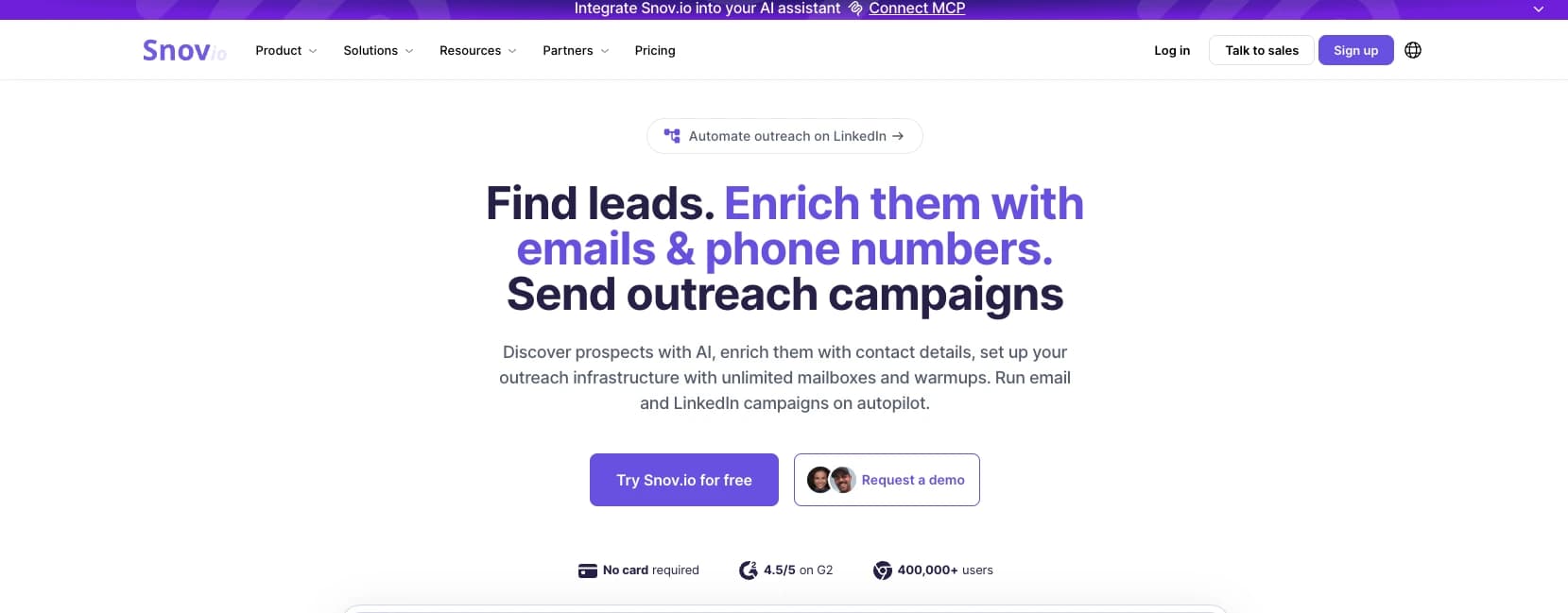
A comparable alternative with its own free trial. Worth comparing if Hunter's free-tier limits run out faster than your budget allows an upgrade — the two overlap enough that price and remaining free credits are usually the deciding factor.
Check Snov.io pricing for current credits and sending limits.
Snov.io
- Bundles email finding with verification and a lightweight CRM
- Drip campaign sending built in, not a separate purchase
- Free Trial plan has limited recurring credits and recipient capacity
One caution: "found" is not the same as "verified." The author contact finder labels whether an address passed a deliverability check, is uncertain, or is only a pattern guess. Even a verified address does not guarantee that the right editor will read or welcome your pitch.
Outreach tools at founder scale
This is where most listicles default to agency tools that assume a team and a client roster. Skip that assumption.
Featured.com

Featured operates HARO and offers a free starting plan for responding to source requests. Best for occasional publisher opportunities, not a repeatable weekly backlink pipeline. Treat it as a supplement to your main outreach, not the whole strategy.
Spreadsheet + inbox, or a lightweight CRM
For the volume a solo founder sends — tens, not hundreds, of pitches a month — a tracked spreadsheet does the job Pitchbox or BuzzStream are built for at 10x the scale. No image needed here: it's whatever spreadsheet tool you already use, with columns for site, contact, date sent, and status.
Pitchbox and BuzzStream
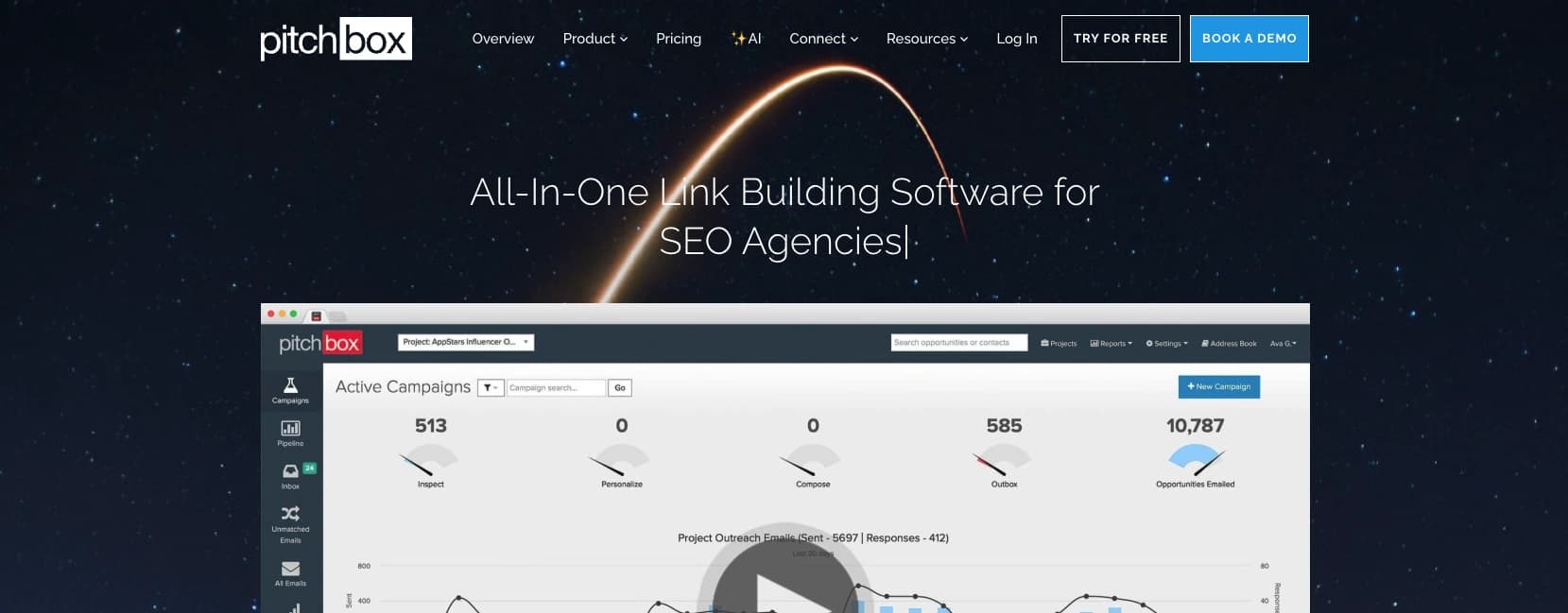
Genuinely useful once you're sending 100+ pitches a month or managing outreach for more than one site. At solo-founder volume, you're paying agency-tier pricing for a fraction of the feature set you'd actually use.
Pitchbox pricing now shows a Pro plan at $300/month when billed monthly ($210/month equivalent on annual billing), with higher team plans. Check the plan limits before comparing it with a small-team CRM.
BuzzStream has a lower entry point than Pitchbox; see current BuzzStream plans for contact and user limits. It still requires someone to run prospecting and campaigns.
Pitchbox
- Full outreach automation — sequencing, follow-ups, and team assignment
- Built-in prospecting layer on top of outreach tracking
- Priced and designed for agency-scale campaign volume
BuzzStream
- CRM-style contact and relationship tracking, not just send-and-forget
- BuzzMarker browser extension for capturing prospects while you research
- Cheaper entry tier than Pitchbox at similar core functionality
See the founder-focused breakdowns of Pitchbox alternatives and BuzzStream alternatives before paying for either at solo scale.
The "someone else does it" category: hands-off outreach and marketplace tools
A newer category has shown up targeting bootstrapped founders directly — tools that take the manual work out of finding and reaching link opportunities. People lump them all together as "AI link marketplaces," although only BlazeHive uses a reciprocal exchange model here.
Mentiohunt is a managed-autopilot product, not a marketplace or campaign CRM. It discovers opportunities and runs outreach through the first reply while the customer monitors the queue and cancels misfits.
AutoBacklinks is a similar self-serve entrant, built around scanning for six specific link types (guest posts, listicles, reviews, ChatGPT citations, directories, competitor backlinks) rather than a single fit-matching flow.
LinkDR is a done-for-you service, a team runs it on your behalf.
BlazeHive is a literal marketplace: a reciprocal exchange where sites trade link value instead of one pitching the other cold. Same "hands-off" pitch, four different mechanics.
Mentiohunt
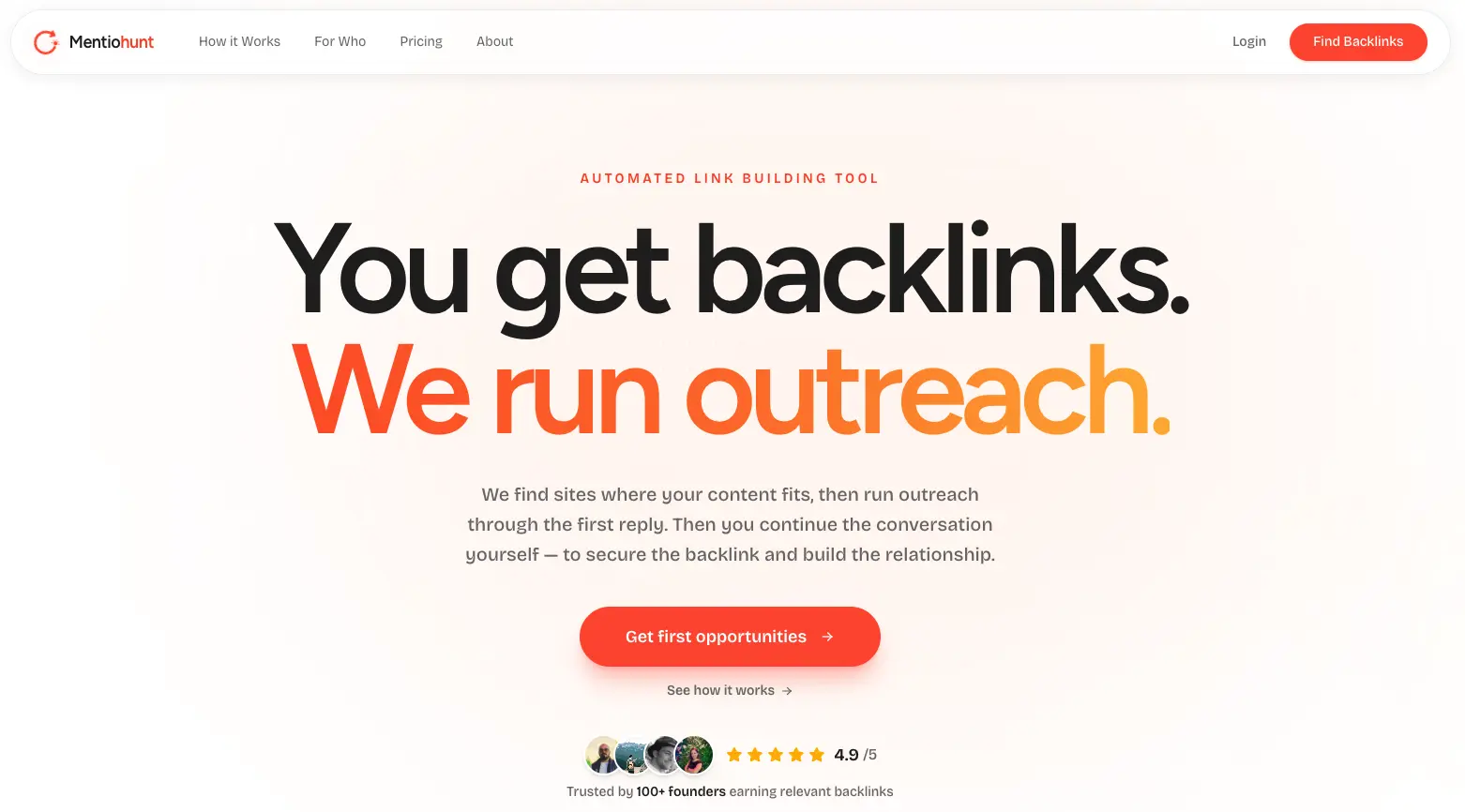
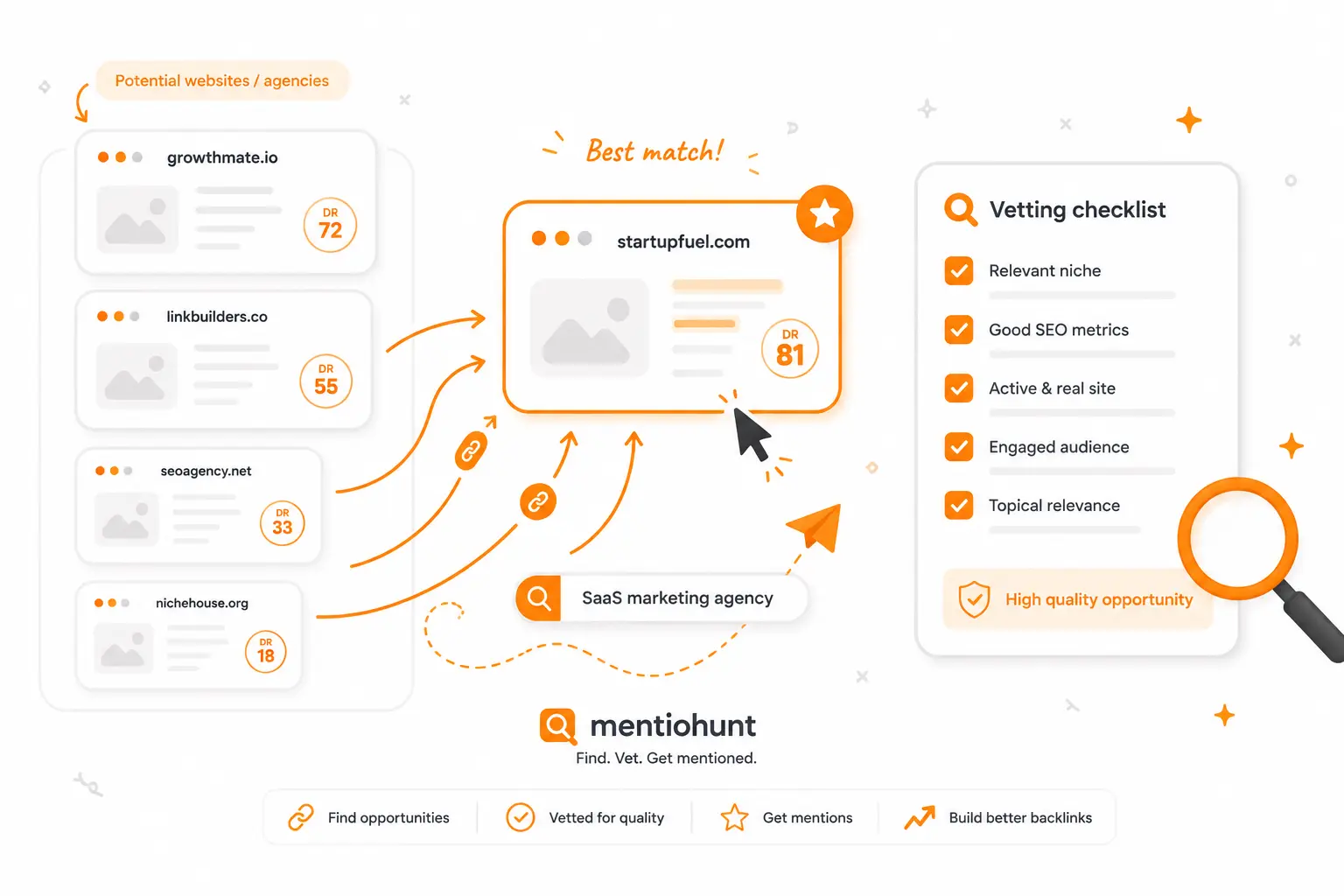
Our own tool, and the one we built this list's constraint around. Setup starts with your website, product, competitors, target keywords, and priority pages. The backlink opportunity finder then checks five discovery channels, explains why each prospect fits, finds the most relevant available contact, and schedules a tailored outreach sequence when the opportunity is created.
It is managed automation rather than do-it-yourself campaign software: Mentiohunt operates discovery and cold outreach, while you retain visibility and cancel control. Automation stops at the first real reply so the founder can continue the relationship personally. Plans start at $49/month for one site with up to 10 tracked competitors.
AutoBacklinks

Also self-serve, but built around a different entry point: instead of one fit-matching flow, it runs six separate scan types — competitor backlink analysis, guest posts, listicles, product reviews, ChatGPT citation outreach, and niche directories — and scores what each scan turns up by Domain Rating, traffic, and topical alignment before it reaches your queue. You connect your own mailbox (Gmail, Google Workspace, or SMTP) and it drafts and sends from there, then triages replies into a deal board.
Check AutoBacklinks' current credit allowances directly before subscribing; the number of prospects, metric checks, and verified contacts you can process may differ.
AutoBacklinks →LinkDR
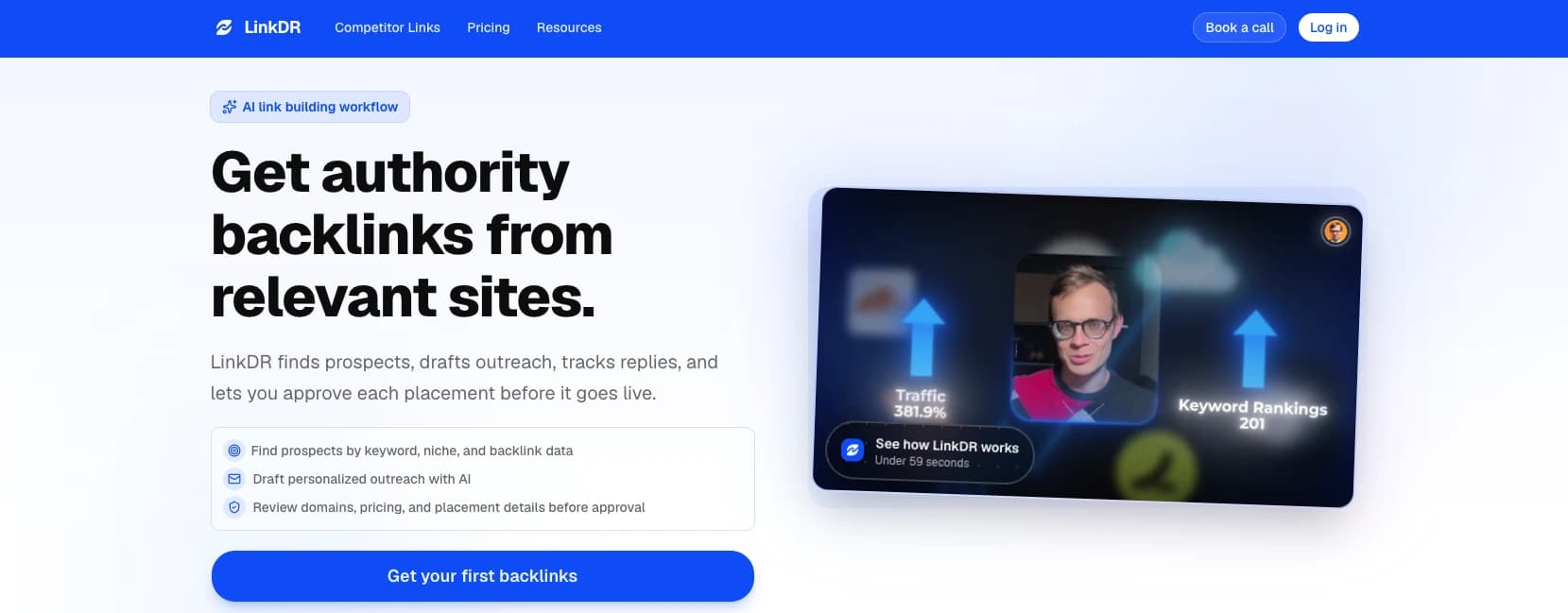
Positions itself as link building without the manual work — but unlike Mentiohunt, it's structured as a done-for-you service: a team on LinkDR's side finds prospects, drafts outreach, and tracks replies for you, rather than handing you a self-serve tool to run. That's a real tradeoff, not just marketing language — you're paying for someone else's labor, not automating your own.
Ask LinkDR for its current scope, pricing, and the way it reports placements before treating it as equivalent to software you operate yourself.
BlazeHive
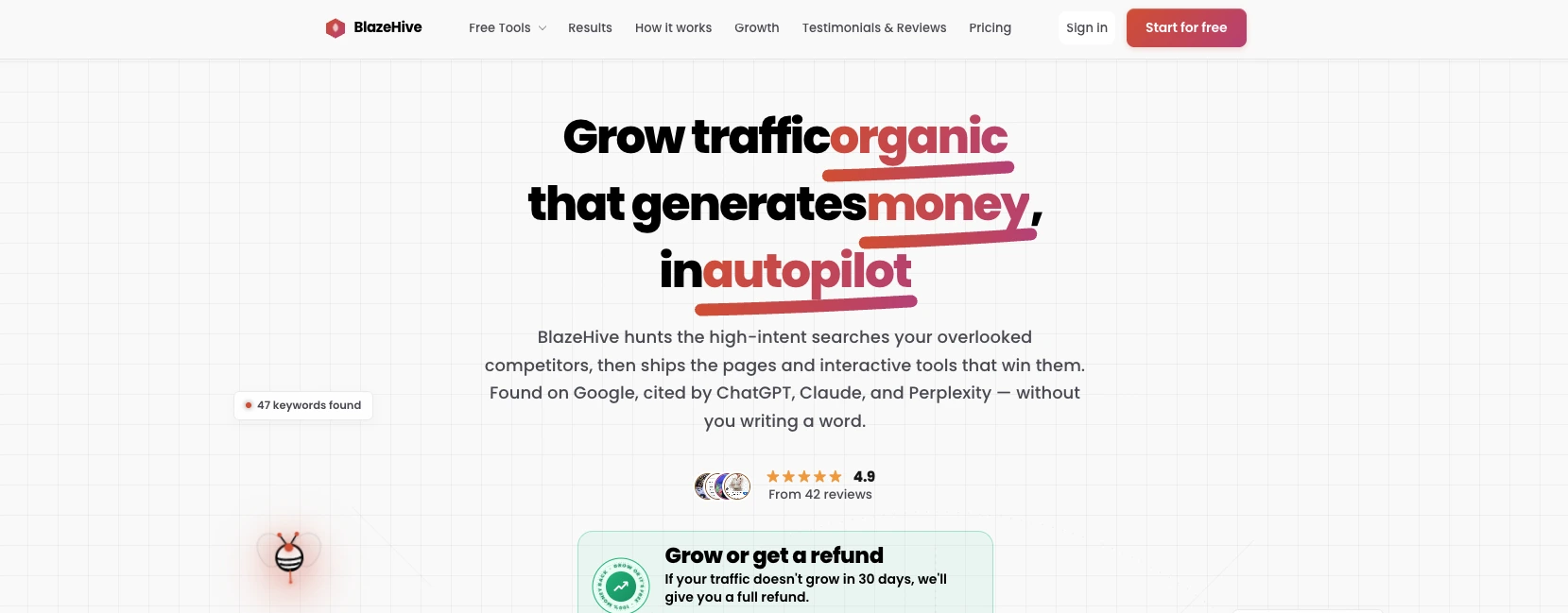
Mechanically the odd one out of the three: BlazeHive isn't cold outreach at all, it's a credit-based reciprocal exchange. Sites on the platform trade link value with each other rather than one site pitching another — closer to a link swap than a pitch. Check its current membership terms and whether the exchange model is appropriate for your site.
All four are a legitimate option if your time is worth more than the fee, but "AI-matched" doesn't mean the same thing across them.
The tradeoff to go in with eyes open, Mentiohunt included: you're trading some control over fit and pitch quality for speed, and a match doesn't guarantee every placement will make sense for your specific audience — you're still the one who has to decide whether a given site is worth being associated with.
The Boundless Leads alternative comparison explains another distinct model: bulk backlink packages. Inspect the source, context, and editorial process before treating any promised link count as a benefit.
How to choose your stack
Choose by the work you want to remove
| Your bottleneck | Start here | Check before paying |
|---|---|---|
| You do not know which pages to promote | Search Console and your own content audit | Do those pages help a reader enough to earn a citation? |
| You cannot find external prospects | Ahrefs, Semrush, or a free gap report | Are the source pages relevant, current, and editorial? |
| You cannot identify the right person | Hunter, Snov.io, or the author finder | Is the contact tied to the page and is the email verified? |
| You have more qualified pitches than time to send | BuzzStream or Pitchbox for a team-run campaign; Mentiohunt for managed first-reply outreach | Who approves fit, who sends, and who takes over on reply? |
Common mistakes to avoid
- Buying agency-tier tools before agency-tier volume. Pitchbox at scale-team pricing doesn't help if you're sending 15 emails a month — the workflow overhead outweighs what it saves you.
- Treating "found" contacts as verified. A contact-finder result is a lead, not a confirmed inbox. Build a quick sanity check into your process (recent activity on the site, a plausible name-to-domain match) before you send.
- Buying tools in isolation. A research tool with no connection to a contact-finder, and a contact-finder with no connection to outreach tracking, means you're re-doing manual work between every stage. Pick tools — or one workflow-covering tool — that actually connect stage to stage.
FAQ
Is it worth paying for link building tools when you're just starting out?
Start with Search Console and a spreadsheet. Pay for deeper research, contact finding, or outreach only when a specific step repeatedly slows down a qualified prospecting process.
Ahrefs or Semrush — which is better for link building specifically?
Ahrefs emphasizes backlink and link-intersection research. Semrush combines backlink research with a broader SEO toolkit. Test both on known competitor links and compare current plan limits for the tasks you actually do.
Do link building tools actually build links automatically?
Some do, but the level of automation varies. Research tools surface prospects and data; outreach CRMs help an operator send campaigns; managed automation can discover prospects and run the initial sequence. No category can guarantee a reply or placement because a real publisher still decides whether to link.
Mentiohunt runs outreach through the first reply. LinkDR is a service, and BlazeHive uses an exchange model. Verify the current scope and terms of each before buying. Either way, it's a tradeoff — money, time, or reciprocity — not a guarantee of placement.
How many backlinks does a startup actually need to rank?
There's no fixed number — it depends on your niche's competitiveness and the current backlink profile of pages already ranking for your target keywords. A handful of relevant, well-placed links from sites your audience actually reads typically outperforms a much larger volume of low-relevance links.
What's the minimum viable link building stack for a solo founder?
Research (Search Console, plus Ahrefs or Semrush once budget allows), a contact-finder (Hunter.io or Snov.io free tier), and an inbox you already have. Add an outreach or discovery layer only once you're consistently finding more good-fit opportunities than you have time to research manually.
What to do next
Start at $0: Search Console for research, a contact-finder's free tier, and a spreadsheet. Add a paid research tool once you're prospecting weekly.
Add an outreach or discovery layer — whether that's a CRM, a marketplace tool, or something like Mentiohunt — only once you're consistently finding more good-fit opportunities than you have hours to chase manually.
The right stack is the one that solves the step you are actually struggling to complete. For managed execution, see Mentiohunt's automated link building workflow. None of these tools replace a good list of link building resources — sites and communities in your niche worth knowing by name — but they make finding and prioritizing them faster.
Founder at Mentiohunt. Building distribution tools for founders and small marketing teams. Writes about backlink building and founder-led growth.
Turn this guide into a weekly opportunity queue.
Mentiohunt helps founders turn article URLs, competitors, keywords, and product context into qualified backlink opportunities with fit rationale and outreach prep.